Movie: Tu Hai Meri Kiran
Director: Karan Rawal
Cast: Sonakshi Sinha, Zaheer Iqbal, Ankit Gupta, Sherlin Seth, Zarina Wahab, Purnendu Bhattacharya
Genre: Psychological Thriller, Mystery, Romance
Release Date: October 23, 2026
PopcornRealm Critical Assessment: 2.5/5
Imagine discovering an old mobile phone that allows you to communicate with someone living ten years in the past. Now imagine that the person on the other end becomes dangerously obsessed with you. It’s an unsettling idea, and one that could easily support a gripping psychological thriller.
That is the unusual premise behind Tu Hai Meri Kiran, starring Sonakshi Sinha and Zaheer Iqbal. Written and directed by Karan Rawal, the film combines romantic obsession, time-bending mystery and psychological manipulation in an attempt to offer something different from conventional Bollywood thrillers.
The concept immediately generates curiosity, particularly because the story connects two timelines through a seemingly ordinary object.
Unfortunately, the film’s imagination frequently exceeds its storytelling discipline. While its central mystery produces genuine intrigue, an increasingly convoluted screenplay and uneven treatment of its disturbing subject prevent it from delivering a consistently satisfying experience.
Tu Hai Meri Kiran Story: When Love Becomes a Dangerous Obsession
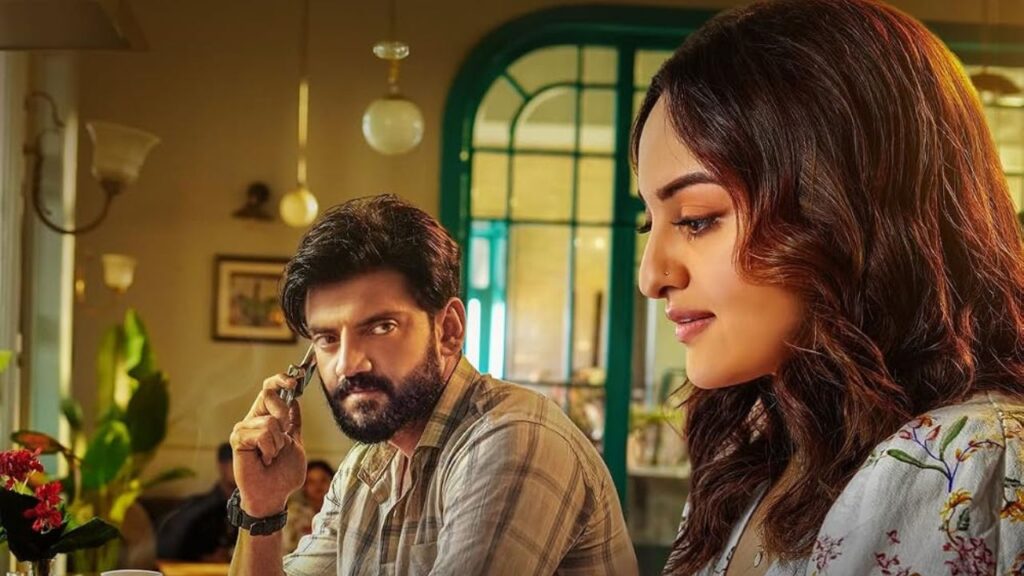
Sonakshi Sinha plays Kiran Mittal Malhotra, a successful novelist struggling to complete her second book.
Living in Mussoorie with her husband Riyaan (Ankit Gupta), Kiran is dealing with several personal difficulties. She suspects her husband may be unfaithful, while her strained relationship with her father adds another layer of emotional uncertainty.
Her already complicated life changes when she discovers an old flip phone.
The device mysteriously connects her to Samar (Zaheer Iqbal), a young man living in 2016, while Kiran exists in 2026.
Initially, the unusual connection offers the possibility of an intriguing relationship between two people separated by an entire decade.
However, Samar soon develops an unhealthy attachment to Kiran.
What begins as fascination gradually becomes possessiveness, manipulation and emotional pressure. Despite Kiran’s lack of romantic interest, Samar refuses to accept rejection.
The mysterious phone also gives him a dangerous advantage, turning an impossible connection into a threat that Kiran struggles to escape.
The film’s strongest idea lies in how a seemingly harmless conversation can become an instrument of control.
Rather than treating time travel as an opportunity for adventure, the screenplay connects it to stalking and the frightening consequences of unwanted attention.
Revealing more about the device’s influence would spoil several important developments, but its role becomes increasingly significant as the story progresses.
Sonakshi Sinha Brings Conviction to an Uneven Character
Sonakshi Sinha provides much of the film’s emotional stability.
Her portrayal of Kiran combines vulnerability with determination, particularly as the character recognizes that Samar’s affection has become something considerably more dangerous.
The performance benefits from Sinha’s ability to communicate discomfort without depending entirely on dramatic dialogue.
Kiran is already experiencing difficulties in her marriage and professional life, making her growing vulnerability more understandable.
However, the screenplay does not always give her enough agency. Some developments seem designed primarily to accommodate the film’s twists rather than emerge naturally from her decisions.
Zaheer Iqbal takes on the more unpredictable role.
As Samar, he must shift between apparent innocence, romantic longing and disturbing obsession.
Published assessments of his performance have been divided. Some praise his intensity and ability to reveal different sides of the character, while others find the portrayal insufficiently intimidating.
The character’s emotional volatility certainly provides opportunities for an unsettling performance. Yet the screenplay’s attempts to explain and occasionally soften his behavior complicate its depiction of him as a genuine threat.
Ankit Gupta appears as Kiran’s husband Riyaan, although the marital storyline could have benefited from greater depth.
Purnendu Bhattacharya plays Kiran’s father, while Zarina Wahab portrays Samar’s mother.
Both characters offer possibilities for exploring the protagonists’ emotional backgrounds, but their respective relationships remain comparatively underdeveloped.
Sherlin Seth completes the principal supporting ensemble.
The Time-Travel Mystery Starts Strong but Becomes Confusing
The film’s most effective storytelling tool is undoubtedly the mysterious phone.
Connecting two individuals across a ten-year gap creates immediate dramatic possibilities. A seemingly insignificant conversation could influence future events, while information available to one character might completely alter another person’s decisions.
For a while, Rawal uses this premise effectively.
The early developments encourage viewers to question how the connection works and what Samar might do with the information he receives.
However, the second half reportedly struggles to sustain the same clarity.
The narrative introduces additional complications without consistently explaining the rules governing its central supernatural device.
A mystery does not need to answer every question. In fact, uncertainty can strengthen psychological horror when used deliberately.
But there is a difference between purposeful ambiguity and leaving crucial storytelling mechanics unexplained.
When a film relies on a technological impossibility to drive its entire conflict, the audience needs enough internal logic to understand the consequences of the characters’ choices.
Here, some twists appear to create more confusion than suspense.
The repeated movement between 2016 and 2026 also disrupts the momentum during later portions.
Although the editing helps distinguish the timelines in certain sequences, the accumulation of revelations makes the narrative increasingly difficult to follow.
A more focused screenplay could have preserved the originality of the premise while making its emotional consequences considerably stronger.
The Film’s Treatment of Stalking Is Its Biggest Thematic Challenge
Tu Hai Meri Kiran takes its title from the famous song associated with Darr, the 1993 thriller starring Shah Rukh Khan and Juhi Chawla.
That connection is particularly relevant because both stories examine romantic obsession and the inability to accept rejection.
However, attitudes toward stalking in popular entertainment have changed considerably since the 1990s.
Modern audiences are increasingly aware of the distinction between persistent romantic interest and coercive behavior.
Rawal’s film recognizes that distinction by establishing Samar’s actions as threatening.
Yet its efforts to generate sympathy for him risk weakening the seriousness of his conduct.
Understanding why someone behaves destructively can make a character more complex. It should not automatically turn manipulation into an expression of misunderstood love.
This tension gives the film a potentially worthwhile subject, but its treatment is less consistent than the premise deserves.
Kiran’s experience could have anchored a sharper exploration of autonomy, fear and emotional coercion.
Instead, the screenplay sometimes becomes so occupied with its time-travel complications that the human consequences receive insufficient attention.
Music, Cinematography and Final Verdict
Visually, the film benefits from its atmospheric hill-station surroundings.
Utkarsh Marulkar’s cinematography supports the sense of isolation surrounding Kiran, while the production design gives her domestic environment an appropriately polished appearance.
The background score by Advait Nemlekar and Shalom Benjamin contributes to the suspense, particularly during moments of uncertainty surrounding the mysterious phone.
The music is comparatively restrained, allowing the psychological conflict to remain central.
However, technical competence cannot completely compensate for the film’s narrative problems.
The premise offers more originality than many conventional romantic thrillers, and its early developments demonstrate what the concept could have achieved with greater structural control.
Sonakshi Sinha’s committed performance provides another reason to remain invested.
Still, the uneven pacing, questionable character decisions and unresolved narrative mechanics prevent the film from fully realizing its potential.
The verdict: Tu Hai Meri Kiran is an ambitious but inconsistent psychological thriller with a fascinating central idea. Its first half creates genuine curiosity, while Sonakshi Sinha brings emotional credibility to the increasingly disturbing story.
Unfortunately, the complicated second half and uncertain treatment of romantic obsession undermine what could have been a much stronger film.
Viewers interested in unconventional mysteries may find enough intrigue to stay engaged, but those expecting a tightly constructed psychological thriller are likely to be disappointed.
Tu Hai Meri Kiran ultimately demonstrates that an unusual premise can attract attention, but compelling storytelling requires more than surprising the audience.