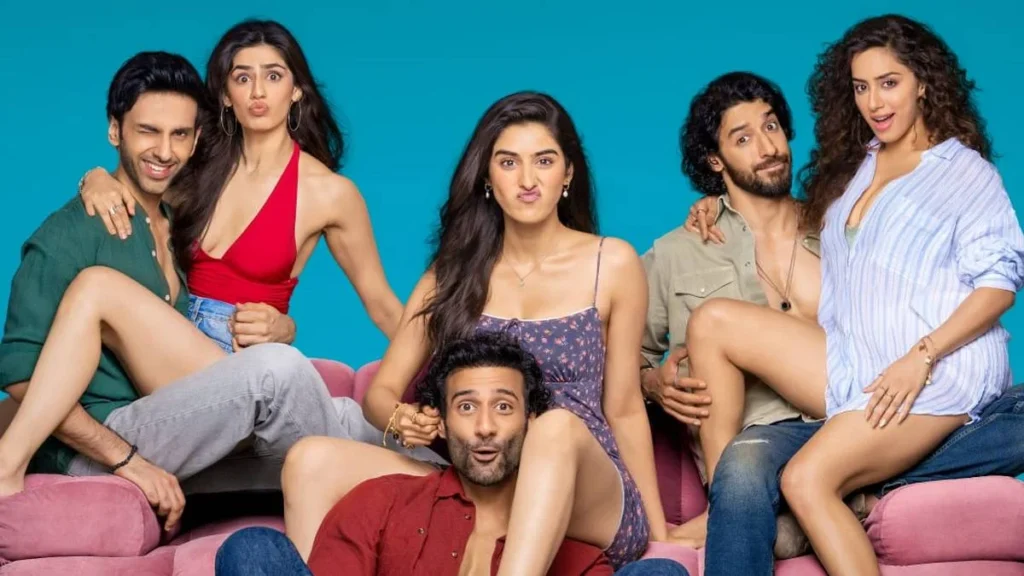
Movie: Pehla Pyaar Doosri Baar
Director: Anuj Saini
Cast: Sparsh Walia, Kunal Vaid, Sargun Kaur Luthra, Alisha Chopra, Sakshi Vaidya, Tushar Chhibber
Writers: Luv Ranjan, Jehan Handa, Anuj Saini
Genre: Romantic Comedy
Runtime: 2 hours 22 minutes
Release Date: October 23, 2026
Critical Assessment: 2.5/5
Everyone remembers their first school crush. The nervous glances, imaginary conversations and embarrassing attempts to impress someone who might not even remember your name can remain surprisingly vivid years later. But what happens when adulthood offers another opportunity to pursue that unfinished romance?
That familiar question drives Pehla Pyaar Doosri Baar, a romantic comedy directed by Anuj Saini and backed by Luv Ranjan.
Featuring six relatively fresh faces, the film combines childhood nostalgia, complicated relationships, picturesque locations and the chaotic energy of longtime friendships. It attempts to recreate the conversational humour associated with Ranjan’s Pyaar Ka Punchnama films while giving its central group a more contemporary identity.
The result is a pleasant but inconsistent entertainer.
Pehla Pyaar Doosri Baar works better as a comedy about friendship than as a convincing exploration of second chances in love. Its young cast brings welcome energy, and the music occasionally supplies the emotion missing from the screenplay. Unfortunately, the film struggles to transform its relatable premise into memorable romantic storytelling.
Pehla Pyaar Doosri Baar Story: Three Friends, Three Old Crushes
The story follows Gautam Govind Sharma (Sparsh Walia), Vedant Rawat (Kunal Vaid) and Shivi Pradhan (Sargun Kaur Luthra), three childhood friends now sharing an apartment and working at the same company in Delhi-NCR.
Despite their professional lives, none seems particularly satisfied with adulthood. Their corporate routines have become repetitive, while their romantic lives remain largely unfulfilled.
An invitation to a school reunion in Mussoorie initially generates little enthusiasm.
That changes when the trio discovers that their respective childhood crushes will attend.
Gautam hopes to reconnect with Gehna Gundecha (Alisha Chopra), Vedant remains attracted to former class topper Simran Sandhu (Sakshi Vaidya), and Shivi wants another opportunity with Karan Shergill (Tushar Chhibber).
The three friends consequently embark on a journey that promises to revive old feelings and perhaps settle questions they never dared to ask in school.
Naturally, their carefully imagined romantic reunions do not unfold according to plan.
The film explores the misunderstandings, arguments and unexpected discoveries that follow, allowing its characters to confront the difference between youthful attraction and adult relationships.
The setting provides an accessible foundation. Most viewers can relate to wondering what might have happened with someone they admired years earlier.
However, recognizable emotions alone cannot sustain an entire romantic comedy. The screenplay needs convincing reasons for these adults to fall in love again, and that is where the film begins encountering problems.
Performances: The New Cast Brings Youthful Energy
One of the film’s more encouraging qualities is its willingness to build an ensemble without relying on established leading stars.
Sparsh Walia brings an approachable charm to Gautam, whose romantic uncertainty drives some of the comedy. His expressions and dialogue delivery occasionally recall Kartik Aaryan’s early performances, particularly in Pyaar Ka Punchnama.
Nevertheless, Walia displays enough natural screen presence to suggest that he can develop an identity of his own.
Kunal Vaid makes a positive impression as Vedant, balancing confidence with the awkwardness of someone confronting feelings that have survived since adolescence.
Sargun Kaur Luthra is equally comfortable as Shivi, especially during conversations with her two male friends.
Their easy camaraderie gives the central trio considerable appeal.
Among the romantic interests, Alisha Chopra brings lively energy to Gehna, a character whose possessiveness becomes increasingly important to her relationship with Gautam.
Sakshi Vaidya adopts a more restrained approach as Simran, helping distinguish her performance from the film’s louder personalities.
Tushar Chhibber looks comfortable as the charming Karan, although his character receives fewer opportunities to demonstrate emotional depth.
The performances are not uniformly polished, but the ensemble generally feels more engaging when its members interact as friends than when the screenplay demands sudden romantic intensity.
Rajkummar Rao also makes a special appearance, adding a playful reference to Bollywood’s fascination with one-sided love. His cameo offers a recognizable moment without dominating the newcomers’ story.
The Biggest Problem Is the Romance Itself
Luv Ranjan has frequently explored relationships through arguments, insecurities and exaggerated everyday situations.
Pehla Pyaar Doosri Baar follows a similar approach, but its attempts at contemporary romance sometimes feel surprisingly old-fashioned.
The screenplay, credited to Ranjan, Jehan Handa and Saini, establishes an interesting contrast between childhood memories and adult expectations.
Unfortunately, it does not examine that contrast deeply enough.
One relationship becomes difficult to believe because a character expects an old school crush to make an enormous romantic commitment after reconnecting for an exceptionally short period.
Another introduces possessiveness without giving the audience enough emotional context to understand the resulting conflict.
Some disagreements also resolve too conveniently, leaving important questions about accountability and emotional maturity unexplored.
The film might have been more interesting if it had seriously considered the possibility that childhood crushes are sometimes best remembered rather than pursued.
Instead, it frequently treats romantic persistence as sufficient justification for increasingly complicated decisions.
The humour fares somewhat better.
There are amusing exchanges between the friends, particularly when their ambitious romantic plans collide with reality. The informal dialogue gives several conversations a recognizable quality.
However, repeated slang, exaggerated reactions and occasional forced jokes reduce the freshness of the comedy.
The pacing is another concern.
Although some published reviews find the opening half breezy, others consider it unnecessarily stretched. There is broader agreement that later developments introduce more movement, with the climax providing several of the film’s livelier moments.
Yet the additional twists cannot completely compensate for the lack of convincing emotional development.
At 142 minutes, the film would likely have benefited from a tighter screenplay.
Music, Visuals and Verdict: Is Pehla Pyaar Doosri Baar Worth Watching?
The soundtrack is among the film’s stronger elements.
Rochak Kohli’s compositions support the youthful atmosphere, with songs including Purane Din, Zulmi, Kamaal and Jaane Kis Mod Pe.
Purane Din particularly suits the school-reunion setting, capturing the sentimental appeal of revisiting memories that once seemed enormously important.
The music gives several romantic sequences a warmth that the writing sometimes struggles to establish independently.
Vidushi Tiwari’s cinematography also makes effective use of the attractive locations around Mussoorie and Dehradun.
The scenic surroundings, colourful costumes and polished production design reinforce the film’s cheerful romantic-comedy identity.
Nevertheless, beautiful landscapes and appealing songs can only accomplish so much when the relationships themselves remain difficult to believe.
The film also struggles to escape comparisons with Pyaar Ka Punchnama and Sonu Ke Titu Ki Sweety. Its friendship-based humour clearly belongs to the same creative tradition, but it rarely demonstrates the distinctive personality needed to stand independently.
That does not make Pehla Pyaar Doosri Baar an entirely unsuccessful experience.
The cast shows promise, several jokes work, and the school-reunion premise may inspire entertaining conversations among viewers remembering their own teenage crushes.
The verdict: Pehla Pyaar Doosri Baar is a watchable romantic comedy with appealing newcomers, enjoyable music and occasional bursts of humour. However, predictable writing, uneven pacing and underdeveloped relationships prevent it from becoming a memorable love story.
Viewers seeking lighthearted entertainment with friends may find enough to enjoy. Those expecting a genuinely moving romance or a particularly fresh take on first love are likely to leave wanting more.
Perhaps the film’s most unintentionally revealing idea is that reconnecting with your first crush can be exciting, but excitement alone does not guarantee that the romance deserves a second chance.