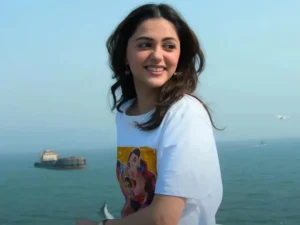
Swara Bhasker has reopened a debate surrounding Sanjay Leela Bhansali’s Padmaavat, eight years after the Deepika Padukone-led period drama reached cinemas. Speaking at the Woman Life Freedom talk at the India International Centre in Delhi on August 31, the actor questioned the way the film presents its climactic Jauhar sequence. Her concern centred on what she believes the scene could communicate to women who survive sexual violence.
Bhasker’s remarks quickly travelled online, where they produced sharply divided responses. Some users accused her of misunderstanding the historical context of Jauhar, while others focused on the larger question she raised about whether cinema should portray death as preferable to surviving sexual violence. The discussion has also brought Padmaavat back into the spotlight, particularly its treatment of history, honour, violence and women’s agency.
Why Swara Bhasker Objected To Padmaavat
Bhasker said her discomfort with the sequence was rooted in the message it could send to a rape survivor. She described imagining herself in that situation and questioned whether the film could make a survivor feel that remaining alive after sexual violence meant failing to protect her honour.
“I was watching it, and I thought that if God forbid, I was a rape survivor, what is this film telling me? I would feel like a coward that I didn’t commit suicide to save my honour. Is that what you want to tell in a society like ours where I feel like anyway there is a rape epidemic. Is this what we want to tell our survivors that they don’t deserve to live, that if you actually would have be a honourable and brave women, you would have killed yourself. Are we saying that rape is end of a woman’s life? This scene was so problematic,” she said.
She also singled out a moment involving a pregnant woman in the Jauhar sequence. Bhasker said the image disturbed her because she questioned the idea of an unborn child being denied the chance to live because of the possibility of future sexual violence.
“Then there was this one shot, which made me so mad that I shouted ‘chii’ loudly, there is a close-up of a pregnant woman’s belly performing jauhar. So you are telling me that fetus, which might be a female, doesn’t deserve to be born because she might be raped by a Muslim ruler. I was so mad. I waited for five days to check if I still feel like that, and after five days, I wrote a letter,” she said.
The remarks were not entirely new. Bhasker had previously written to Bhansali after watching Padmaavat, raising concerns about the Jauhar portrayal. Her latest comments essentially revisit that criticism from the perspective of women’s rights and the way audiences, particularly survivors of sexual violence, might interpret the scene.
The Historical Debate Behind Padmaavat
The controversy becomes more complicated when the film’s historical basis is examined. Padmaavat is based on Malik Muhammad Jayasi’s Padmavat, an Awadhi epic poem written in the 16th century, more than two centuries after Alauddin Khalji’s 1303 siege of Chittor. Historical accounts agree that Khalji attacked and captured Chittor, but the story of Padmini or Padmavati is far more disputed.
The Indian Express has noted that contemporary accounts of the siege, including the writings of Amir Khusrau, do not mention a queen named Padmavati. Modern historians have therefore generally treated the Padmini story as legend or literary fiction rather than established history. Jayasi’s work itself contains substantial allegorical and fantastical elements, meaning Bhansali’s film was adapting a literary tradition rather than simply recreating a verified historical record.
That distinction matters when discussing the Jauhar sequence. The practice of Jauhar has historical documentation in the context of some Rajput sieges, but attaching the specific story of Padmini and the 1303 siege to a historically verified individual remains contested. In other words, the existence of Jauhar as a historical practice and the historicity of the particular Padmini narrative are two separate questions.
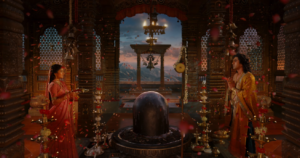
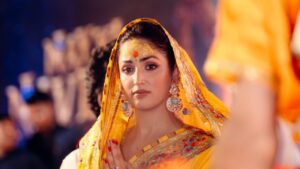
Padmaavat itself presents the sequence as the devastating final act of the Chittor story. Deepika Padukone’s Rani Padmavati leads the women of the fort into the fire after the Rajput forces are defeated, while Ranveer Singh’s Alauddin Khalji ultimately enters Chittor after the battle.
Social Media Pushes Back At Swara
Bhasker’s remarks triggered a strong response on social media, particularly from users who rejected her interpretation of Jauhar. Several commenters argued that calling the women in the sequence cowardly or framing their deaths solely as suicide ignores the wartime context in which the practice developed.
Some users described Jauhar as an act of resistance or bravery in the face of anticipated captivity, while others accused Bhasker of applying a contemporary framework to a medieval practice without sufficiently considering the circumstances surrounding it. There were also comments invoking historical accounts of women being taken captive after defeated kingdoms, although many of those online claims were presented without supporting evidence.
The backlash itself has become part of the story, but social-media commentary should not be confused with historical consensus. The internet debate reflects competing interpretations of the film and the practice rather than providing a definitive answer about what happened at Chittor in 1303.
Bhasker’s argument, meanwhile, is focused on a different question: regardless of how Jauhar may have been understood historically, what responsibility does a modern film have when it depicts women choosing death rather than the possibility of sexual violence? That question is ultimately about representation and messaging rather than simply deciding whether Jauhar should be labelled brave or cowardly.
Padmaavat’s Legacy Remains Complicated
Released in January 2018, Padmaavat starred Deepika Padukone as Rani Padmavati, Shahid Kapoor as Maharawal Ratan Singh and Ranveer Singh as Alauddin Khilji. The ensemble also featured Aditi Rao Hydari, Jim Sarbh, Raza Murad and Anupriya Goenka. Bhansali directed the film from a screenplay written with Prakash Kapadia, drawing inspiration from Jayasi’s Padmavat.
The film became one of the biggest commercial successes of Hindi cinema despite the controversy surrounding it. Its scale, music, performances and visual design were widely discussed, while Ranveer Singh’s portrayal of Khalji became one of the most talked-about aspects of the film.
Yet its historical status has never been straightforward. The film is best understood as a lavish cinematic interpretation of a centuries-old literary legend rather than a documentary reconstruction of the siege of Chittor. That does not make discussions about its themes irrelevant; instead, it makes questions about how the filmmakers chose to present those themes even more important.
Bhasker’s renewed criticism has therefore revived an argument that Padmaavat never completely escaped. Is the Jauhar scene intended as a tragic depiction of women trapped by war, a celebration of resistance and honour, or a problematic romanticisation of death? Eight years after the film’s release, audiences are still arriving at very different answers.
Frequently Asked Questions
Why is Swara Bhasker criticising Padmaavat again?
Swara Bhasker revisited her criticism of the film’s Jauhar sequence while speaking at a Woman Life Freedom event in Delhi. She said the scene could send a troubling message to rape survivors by connecting honour with death.
What did Swara Bhasker say about the Jauhar scene?
She questioned whether a rape survivor could feel like a “coward” for choosing to live rather than die, and asked whether rape should ever be presented as the end of a woman’s life.
What is the Jauhar scene in Padmaavat?
Near the end of Padmaavat, Deepika Padukone’s Rani Padmavati leads the women of Chittor into a collective act of self-immolation after the fort is defeated by Alauddin Khalji’s forces.
Was Rani Padmavati a real historical person?
The historicity of Padmini or Padmavati is disputed. Contemporary accounts of Alauddin Khalji’s 1303 siege of Chittor do not mention her, while the detailed Padmini story appears in Malik Muhammad Jayasi’s Padmavat, written in the 16th century.
Is Padmaavat based on a true story?
Padmaavat is based on Jayasi’s Padmavat, a literary epic containing historical elements alongside allegory and fiction. The siege of Chittor is historical, but the central Padmini narrative is not accepted as established history by most modern historians.
Why did Padmaavat face controversy before release?
The film faced protests over its portrayal of Rajput history, Padmavati and Alauddin Khalji. Concerns over alleged historical distortion contributed to major protests before the film eventually released under the title Padmaavat.