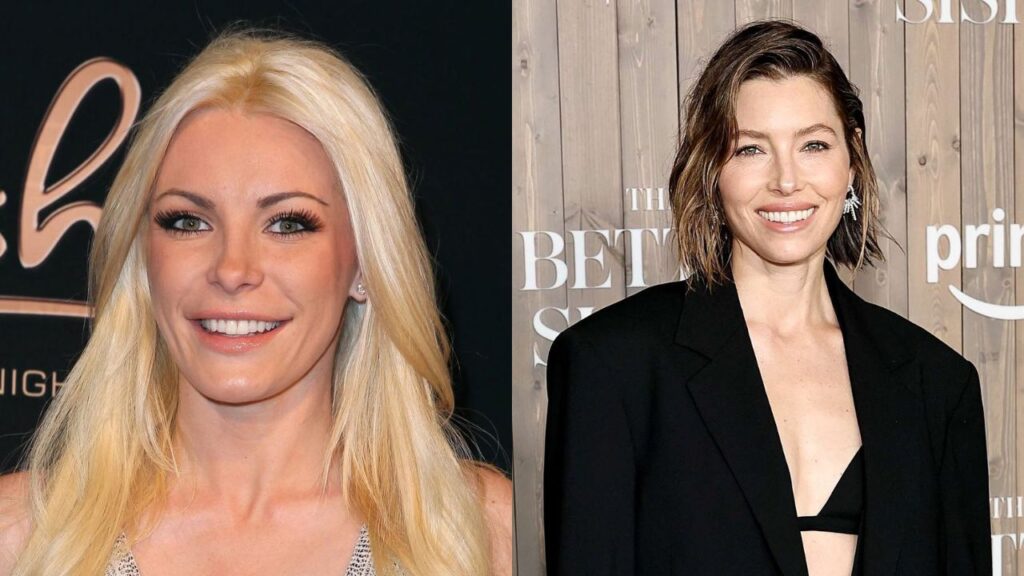
Hugh Hefner’s widow, Crystal Harris, has publicly urged Jessica Biel to reconsider playing a fictional version of the Playboy founder’s wife in the upcoming film Playmates. In an Instagram post shared on October 8, 2026, Harris expressed concern that the movie could romanticize Hefner and the world surrounding his famous Playboy Mansion. Drawing on her own experiences, she alleged that she suffered sexual, emotional, financial and physical abuse during their marriage.
Harris shared a screenshot of a direct message she had sent to Biel following the announcement of the actress’s casting in the Searchlight Pictures film. Her appeal was conditional, asking Biel to rethink the role if the production intends to present Hefner or his lifestyle in a nostalgic or flattering light. The message also raised questions about how Hollywood should approach stories involving controversial public figures, particularly when people connected to those figures have previously spoken about alleged mistreatment.
“Please reconsider playing Hugh Hefner’s ‘wife’,” Harris wrote, explaining that she experienced “sexual, emotional, financial and physical abuse” in her relationship with the late publishing mogul.
She also referred to allegations made by other women involving sexual assault, coercion, drugging and exploitation, along with concerns about minors. Those statements reflect Harris’s account and her references to other women’s allegations, rather than findings established by the upcoming film.
Jessica Biel’s character in Playmates is fictional
One important distinction in the controversy is that Biel will not actually portray Crystal Harris.
According to Deadline and Variety, the actress has joined Playmates as a fictional wife of Hugh Hefner, who will be played by Bill Pullman. The character is described as a former Playmate, but she is not directly based on Harris or any of Hefner’s other real-life spouses.
The film is being written and directed by Lorraine Nicholson, daughter of actor Jack Nicholson, and marks her feature directorial debut. Inspired in part by Nicholson’s childhood experiences visiting the Playboy Mansion, the coming-of-age comedy-drama will also star Lily-Rose Depp and Indiana Elle.
Rather than focusing entirely on Hefner’s personal life, Playmates follows Elle, a 13-year-old girl who considers the Playboy Mansion her second home. Her life becomes intertwined with Anna, played by Depp, one of seven women hoping to become Playmate of the Month. The two develop an unlikely friendship while pursuing their respective ambitions.
That premise makes the situation more complicated than a straightforward objection to a Hugh Hefner biopic. Although Hefner will appear as a character, the story primarily follows two fictional young women navigating the environment surrounding him.
The distinction does not necessarily address Harris’s concerns, however. A film can use fictional characters while still shaping how audiences remember a real person or institution. Equally, the premise alone does not establish whether Playmates intends to celebrate, question or critically examine the culture of the Playboy Mansion.
Crystal Harris has previously spoken about life inside the Playboy Mansion
Harris’s appeal to Biel is not the first time she has challenged the glamorous public image associated with Hefner and Playboy.
Harris married Hefner in December 2012, when she was 26 and he was 86. She remained married to him until his death in September 2017 at the age of 91. Before their marriage, she had appeared on the reality television series The Girls Next Door, which presented life at the Playboy Mansion to television audiences.
In January 2024, Harris published her memoir, Only Say Good Things: Surviving Playboy and Finding Myself. The book examined her experiences living with Hefner, including what she described as controlling behaviour, restrictions on her independence and the psychological impact of the relationship.
Speaking to The Guardian in 2024, Harris described how she gradually lost control over aspects of her everyday life while living at the mansion. She said she had become accustomed to following Hefner’s routines and expectations, even when they conflicted with her own wishes. Her account presented a markedly different perspective from the luxurious lifestyle frequently associated with Playboy.
Other women connected to Hefner have also publicly discussed alleged exploitation and troubling experiences. Their accounts have contributed to a broader reassessment of the Playboy founder’s legacy in the years since his death.
Harris’s latest comments therefore extend a conversation she has been having publicly for several years. Rather than objecting to the existence of a film about the Playboy Mansion altogether, her message focuses on whether the people making it are willing to acknowledge the experiences of women who lived there.
That concern is particularly relevant because Playmates is being developed as a coming-of-age story involving young female characters. The difference between examining the Playboy world critically and presenting it as an appealing backdrop could become central to how the finished film is received.
As of October 9, Biel had not publicly responded to Harris’s appeal, and there has been no confirmed indication that she intends to leave the project. Entertainment Weekly reported that representatives for Biel and Searchlight had been contacted for comment.
For now, the controversy has emerged before audiences have seen the film or its intended treatment of Hefner. What Harris has made clear is that she wants the people behind Playmates to consider the accounts of women associated with Playboy before turning that world into another Hollywood story. Whether the film ultimately reflects those concerns will become clearer as more details about its creative direction emerge.