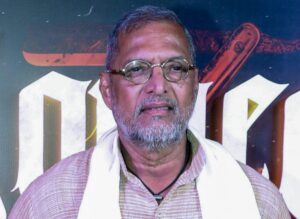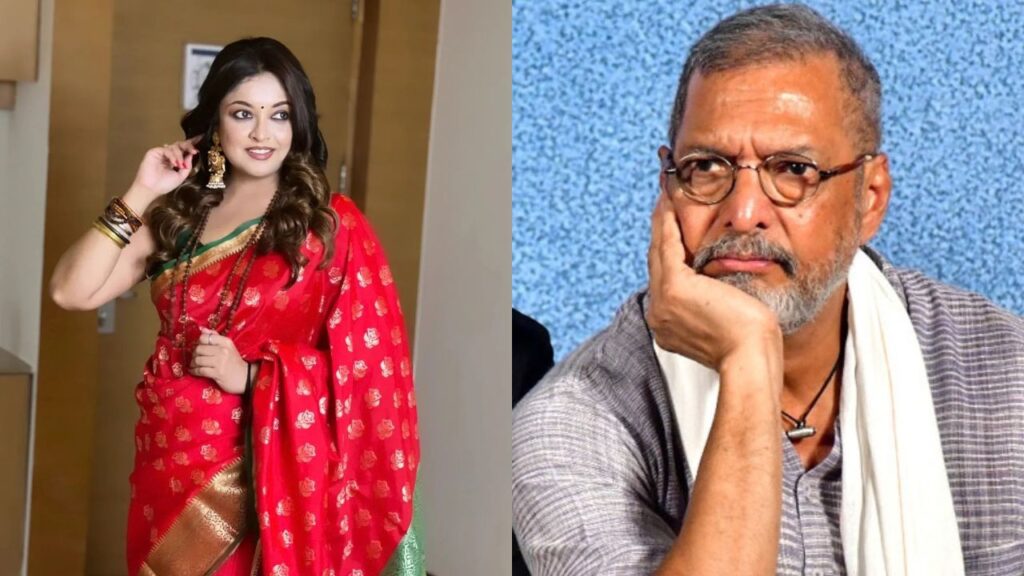
Tanushree Dutta has spoken at length about Nana Patekar following the veteran actor’s death at 75, saying that the years since she publicly accused him during India’s #MeToo movement left lasting scars on her life.
Dutta initially offered condolences to Patekar’s family while travelling to a work event in Lucknow on October 8. Hours later, however, she spoke more directly about their contentious history and what she says she endured after reviving her allegations against the actor in 2018.
“My life had become difficult, but maybe every pain has an end,” Dutta told Mid-Day, while describing how unsafe and unsettled she had felt in recent years. She said the experiences since 2018 were not something that could simply be erased because Patekar had died.
Her remarks echo an even stronger description she gave in a 2024 interview with The Week, when she accused Patekar of “making my life hell on a daily basis.” Those claims remain Dutta’s account; Patekar repeatedly denied her original sexual-harassment allegations.
Dutta says the years after #MeToo changed her life
Speaking after Patekar’s death, Dutta returned repeatedly to what happened after she spoke out.
“What I’ve been through in the last five years after #MeToo… I’ve been so troubled,” she said, adding that pressure had been placed on her to withdraw her case. She also repeated previous claims about an accident, tampered car brakes and food poisoning, while stressing that she was speaking from her own experience and perspective. Those additional allegations have not been independently established.
Dutta has made similar claims in earlier interviews. In 2022, she said she believed attempts had been made to harm her after #MeToo and also alleged that her efforts to return to acting had repeatedly fallen apart because people in the industry were reluctant to work with her. Again, those claims were made by Dutta and were not established as findings against Patekar.
Her public comments after his death have nevertheless been sharper than the conventional tributes offered by much of the film industry. In one Instagram Story, Dutta referred to Patekar as “evil dead,” while later telling reporters in Lucknow that she had no immediate reaction beyond saying, “Jo guzar chuke hain, guzar chuke hain.”
She later explained that she did not believe death required her to erase her own experience or change how she viewed the person she had accused.
What happened to Tanushree Dutta’s case against Nana Patekar?
The controversy dates back to the production of the 2008 film Horn Ok Pleassss. Dutta alleged that Patekar behaved inappropriately while she was filming a song and that changes involving him were introduced despite her objections. When she revived those allegations publicly in 2018, the discussion became one of the major catalysts for Bollywood’s #MeToo reckoning. Patekar denied the allegations.
An FIR was registered against Patekar and three others in October 2018. Mumbai Police subsequently filed a closure report in 2019, saying there was insufficient evidence to support Dutta’s allegations; police said the witnesses they interviewed did not corroborate the alleged inappropriate behaviour.
There was another legal development in 2025, when a Mumbai magistrate declined to take cognisance of Dutta’s complaint, citing the length of time that had elapsed beyond the prescribed limitation period. That decision is important context: Dutta continued to maintain her accusations, but the allegations did not result in a criminal conviction against Patekar.
Her reaction has also drawn criticism
Dutta’s post-death comments have divided opinion. The All Indian Cine Workers Association criticised her “evil dead” remark as insensitive and accused her of seeking publicity at a time when Patekar’s family and colleagues were mourning. Dutta, however, has defended her right to speak from her own perspective, arguing that her personal experience does not disappear because the person she accused has died.
That tension is what makes her reaction different from the wave of career retrospectives and tributes that followed Patekar’s death.
For Dutta, the story remains tied to 2018 and to the personal consequences she says followed her decision to speak publicly. Patekar’s death closes one chapter of that long-running dispute, but it does not resolve the disagreement over what happened on the Horn Ok Pleassss set or how the years afterward should be remembered.