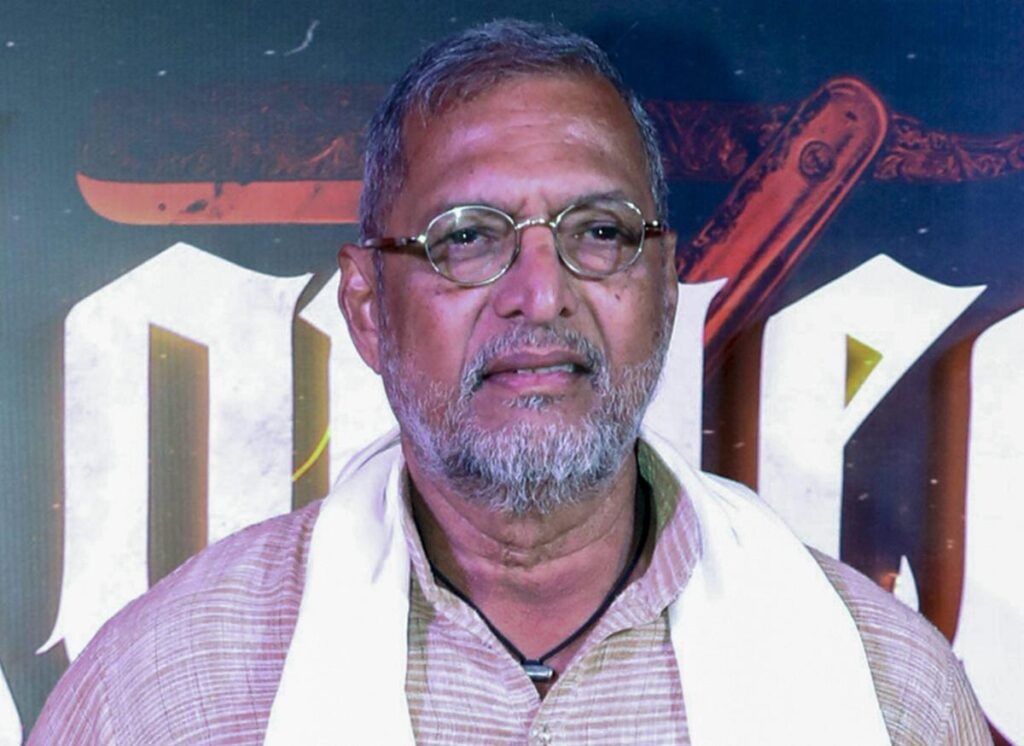
Veteran actor and filmmaker Nana Patekar has died at the age of 75 after suffering a cardiac arrest at his residence in Goa. Patekar was found unresponsive at his home in Dona Paula in the early hours of Thursday, October 8, and could not be revived despite prolonged efforts by medical personnel.
His son Malhar Patekar confirmed the news, saying, “Yes, the information is true. I am in Pune right now and reaching Goa.” He added that a more detailed statement would follow and described his father’s death as being due to natural causes.
Dr. Shekhar Salkar of Manipal Hospital said Patekar was brought to the hospital without signs of life and that doctors attempted cardiac massage for roughly 45 minutes to an hour. He was declared dead at around 5:30 a.m. A post-mortem was subsequently ordered to establish the precise medical circumstances surrounding his death.
Patekar leaves behind one of the most distinctive bodies of work in modern Indian cinema — a career that could move from explosive drama and morally complicated characters to comedy without ever losing the unmistakable voice and screen presence that made him instantly recognizable.
From Parinda and Krantiveer to Uday Shetty
Born Vishwanath Patekar in Maharashtra in 1951, Patekar began his screen career with Muzaffar Ali’s Gaman in 1978 after working in theatre. His rise was gradual, but performances in films such as Salaam Bombay! and Parinda established him as an actor capable of turning volatile, difficult characters into something far more layered than conventional villains.
His portrayal of gangster Anna in Vidhu Vinod Chopra’s 1989 crime drama Parinda earned him the National Film Award for Best Supporting Actor. Five years later, Krantiveer brought another career-defining performance, with Patekar winning the National Film Award for Best Actor for playing Pratap Narayan Tilak. A third National Film Award followed for Agni Sakshi, again in the supporting actor category.
Those three victories alone show the dramatic range of his career, but they tell only part of the story. Films including Tirangaa, Khamoshi: The Musical, Ab Tak Chhappan, Apaharan, Raajneeti and Marathi drama Natsamrat continued to reinforce his reputation for performances built around intensity, sharp dialogue delivery and characters who rarely felt passive.
Then came a role that introduced another generation of viewers to a very different Nana Patekar.
As gangster Uday Shetty in 2007’s Welcome, Patekar turned his naturally intimidating screen persona into comedy. His scenes with Anil Kapoor’s Majnu became some of the film’s most enduring moments, and he later reprised Uday in Welcome Back. The role remains a useful reminder that Patekar’s appeal was never confined to the serious characters for which he first became famous.
Three National Awards and a career that resisted one label
Across nearly five decades, Patekar worked extensively in both Hindi and Marathi cinema and also moved behind the camera, directing 1991’s Prahaar: The Final Attack while starring as an Army officer in the film.
His work earned him three National Film Awards, multiple Filmfare honors and the Padma Shri in 2013 for his contribution to the arts.
Yet reducing his career to awards misses what made him unusual. Patekar developed a performance style so specific that audiences often knew what emotional temperature a scene had reached simply from the way he spoke. His clipped dialogue delivery, sudden changes in intensity and ability to make anger feel both threatening and vulnerable became part of his screen identity.
That identity could also be turned on its head. A generation that discovered him through Uday Shetty may remember his comic timing as readily as earlier audiences remember the political fury of Krantiveer or the instability of Anna in Parinda.
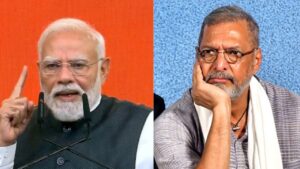
Tributes began arriving quickly after news of his death. Akshay Kumar, who worked with Patekar in Welcome and later Housefull 5, remembered him as an actor with a singular voice and intensity, while Prime Minister Narendra Modi highlighted the versatility of his performances and the characters he created across generations.
Patekar remained professionally active well into his seventies, making his death feel less like the closing of a career that had already faded from view and more like the abrupt end of one still connected to contemporary Indian cinema.
His legacy is therefore difficult to place inside one genre or even one language. For some viewers, Nana Patekar will always be the furious moral force of Krantiveer. For others, he is Anna from Parinda, Sadhu Agashe from Ab Tak Chhappan, Ganpat Belwalkar from Natsamrat or the endlessly quotable Uday Shetty.
Few actors manage to make all of those versions feel equally believable.