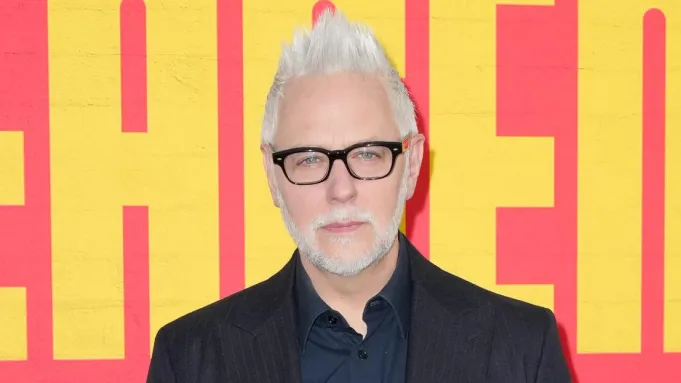
James Gunn is pushing back against criticism that the new DC Universe lacks a clear destination, arguing that superhero films should be meaningful even when they don’t build toward a massive crossover. The DC Studios co-chairman defended his approach on Threads on October 24, following questions about how projects including Superman, Supergirl, Peacemaker and Clayface fit into the franchise’s larger plans.
Rather than treating every movie as preparation for a future team-up, Gunn wants audiences to appreciate individual stories on their own terms.
James Gunn Rejects the Idea That Every DC Film Needs a Crossover
The discussion began when a social media user shared an image listing several DCU projects, including Creature Commandos, Lanterns and Clayface, questioning what they were collectively building toward.
Another commenter argued that Gunn shouldn’t need to establish a single overarching storyline if individual projects work independently.
Gunn agreed, writing:
“I dislike the idea that individual stories aren’t meaningful unless they lead to something else.”
He explained that the DCU allows filmmakers to explore different characters, locations and periods without requiring every installment to advance one central storyline.
The director pointed to Star Wars as an example of a franchise that has successfully explored its fictional universe across films, television, books and video games for decades.
His argument challenges an expectation popularized by Marvel’s interconnected storytelling model, where individual releases frequently contribute to larger crossover events.
However, Gunn isn’t abandoning continuity. He is distinguishing between a shared universe and a franchise in which every story exists primarily to promote the next installment.
Why Clayface Represents Gunn’s DCU Strategy
Gunn highlighted Clayface as an example of the creative freedom he wants DC Studios to maintain.
Directed by James Watkins, the R-rated body-horror thriller stars Tom Rhys Harries as Matt Hagen, a disfigured actor whose experimental treatment leads to terrifying consequences.
Rather than positioning the character primarily as a future Batman antagonist, the film explores his transformation through a standalone horror narrative.
Gunn hopes audiences will appreciate Clayface as “a great, fun horror movie unto itself”, rather than judging its importance by potential appearances in future DC projects.
The approach has already produced an encouraging theatrical result. Released on October 23, Clayface opened at No. 1 in North America with approximately $24 million during its first weekend.
Its performance suggests that lesser-known comic-book characters can attract audiences without relying entirely on established superheroes or crossover appearances.
Man of Tomorrow Will Still Connect DCU Stories
Despite his emphasis on standalone storytelling, Gunn confirmed that connections remain an important part of the franchise.
The Superman storyline will continue from 2025’s Superman into Man of Tomorrow, incorporating characters introduced elsewhere in the DCU.
The upcoming film, directed by Gunn and starring David Corenswet, is scheduled for July 9, 2027.
This creates a useful distinction for audiences: DC’s films and series can share characters and continuity without requiring viewers to follow every release to understand the central story.
For Gunn, the goal appears to be a flexible universe capable of supporting different genres while preserving connections where they naturally serve the narrative.