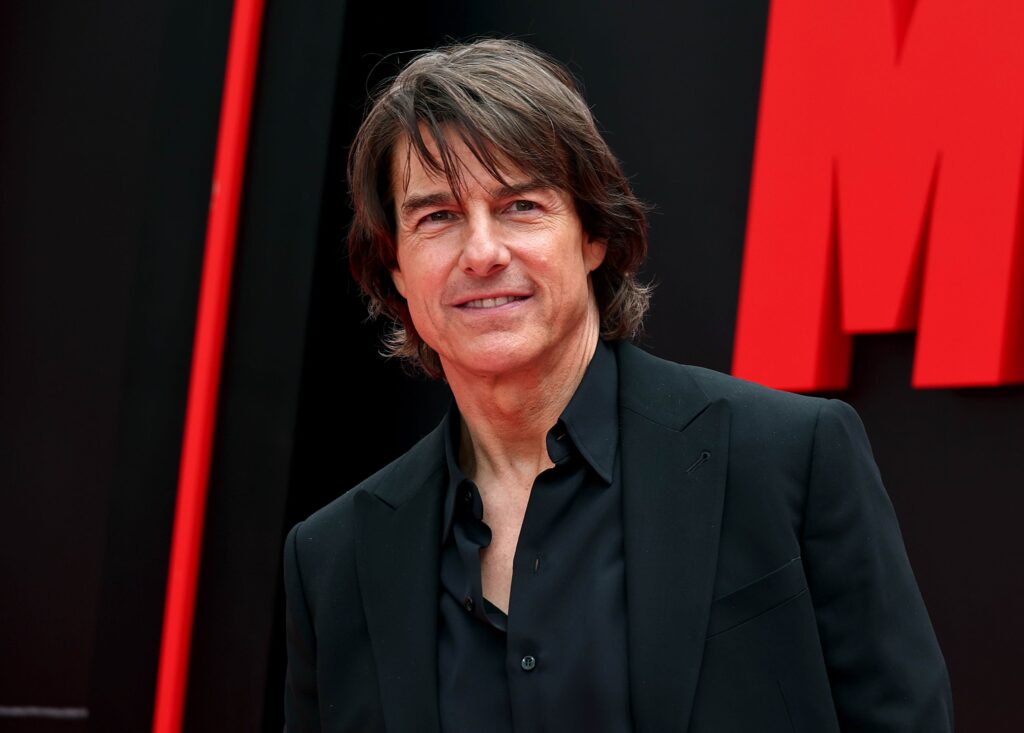
Tom Cruise is firmly on board with Paramount’s proposed merger with Warner Bros. Discovery. While the $111 billion deal has become a major point of debate across Hollywood, with critics raising concerns about its impact on competition and the industry’s future, Cruise offered an entirely different perspective during an appearance on The Pat McAfee Show. For the actor, the biggest attraction is simple: more movies and a stronger Hollywood community.
“I think it’s awesome.”
That was Cruise’s immediate reaction when Pat McAfee asked him about the proposed ParaBros combination and Paramount CEO David Ellison’s promise to deliver 30 movies a year. The Mission: Impossible and Top Gun star then expanded on why he believes the plan could benefit the broader filmmaking community, arguing that reviving Hollywood will require artists and studios to work together.
Tom Cruise supports David Ellison’s 30-film plan
Cruise’s support comes at a particularly complicated moment for the Paramount-Warner Bros. Discovery deal. The proposed transaction has faced opposition from a coalition of state attorneys general, while industry groups and Hollywood figures have raised concerns about the consequences of combining two major entertainment companies. Cruise, however, focused on what the merger could mean for theatrical filmmaking rather than the legal battle surrounding the transaction.
“They’re going to deliver 30 movies,” Cruise said of Ellison’s plan to increase Paramount’s annual film output. He then framed the proposal as something that should involve the entire creative community rather than being left entirely to the studio.
“It’s a community to me. It’s not an industry. The people in these studios are not just people in the studios. They’re my family.”
That sentiment is consistent with Cruise’s long-standing public advocacy for theatrical cinema. The actor has repeatedly positioned the big-screen experience as something worth protecting, particularly at a time when streaming has transformed the economics and viewing habits of Hollywood.
Cruise went further when discussing the proposed 30-film strategy. “I know we’re going to get those 30 movies,” he told McAfee. “I want us all to come together as a community to help make those 30 movies. It’s not just going to be, you know, Paramount doing it. Everyone’s going to need all the help of every artist to be able to do it.”
For Cruise, the number of movies is therefore only part of the equation. His comments suggest that he sees increased production as a way of creating more opportunities for writers, directors, actors, technicians and other people whose careers depend on the film business remaining active.
Hollywood remains divided over the merger
Cruise’s enthusiasm stands in sharp contrast to the concerns being expressed elsewhere in Hollywood. The proposed Paramount-Warner Bros. Discovery transaction has become the subject of an ongoing antitrust dispute, with a group of state attorneys general challenging the deal. The legal fight has placed the proposed merger under much greater scrutiny than a conventional corporate transaction.
The situation has also become politically charged. The supplied report notes that Paramount has faced scrutiny over its request to retain a $1.88 billion bond in connection with the antitrust proceedings, while there have also been reports about a possible move away from Los Angeles if a settlement is not reached by October 1.
Those developments provide important context for Cruise’s comments. His support does not amount to a legal endorsement of the merger or address the antitrust arguments being made against it. Instead, the actor is speaking primarily from the perspective of someone deeply invested in theatrical movies and the people who make them.
That distinction matters because the merger debate is much broader than the question of whether Hollywood needs more films. Opponents are concerned about market concentration and the power that could be created by combining major studios, while supporters can point to the possibility of greater resources and a more aggressive production strategy.
Cruise’s position is clearly rooted in the latter argument. He believes that a studio willing to make more movies can help strengthen the wider filmmaking ecosystem, provided the creative community gets behind the effort.
Cruise is also promoting Days of Thunder 2
The conversation with McAfee was not solely about the corporate future of Hollywood. Cruise also used the appearance to discuss his own work, including the recently announced Days of Thunder sequel.
The original Days of Thunder arrived in 1990 and starred Cruise as NASCAR driver Cole Trickle. More than three decades later, the prospect of returning to that world gives Cruise another opportunity to combine his interest in large-scale theatrical filmmaking with a franchise audiences already recognize.
That promotional instinct is also part of what makes Cruise an interesting voice in the merger conversation. Few contemporary actors have been as closely associated with the theatrical experience in recent years, particularly following the enormous success of Top Gun: Maverick. His approach has consistently emphasized the idea that major films can still become shared cultural events when audiences have a reason to leave home and see them on a big screen.
His comments about Paramount therefore go beyond the corporate transaction itself. Cruise appears to be looking at the proposed changes through the lens of production, cinema and employment across Hollywood rather than through the financial mechanics of the merger.
Tom Cruise and the Paramount-Warner Merger: Q&A
What did Tom Cruise say about the Paramount-Warner Bros. merger?
Cruise described the proposed merger as “awesome.” He also expressed support for David Ellison’s plan to produce 30 movies a year and called for Hollywood’s creative community to work together.
Why does Tom Cruise support the 30-film plan?
Cruise sees increased movie production as an opportunity for the wider filmmaking community. He emphasized that producing 30 films would require the involvement and support of artists across Hollywood.
What is the Paramount-Warner Bros. Discovery merger?
It is a proposed $111 billion combination involving Paramount and Warner Bros. Discovery. The transaction has attracted significant attention because of the size of the companies involved and concerns about competition in the entertainment industry.
Is the Paramount-Warner merger officially completed?
The material supplied for this article describes the transaction as a proposed merger that remains involved in an ongoing antitrust dispute. It should therefore not be presented as a completed deal.
What did Cruise mean when he called Hollywood a community?
Cruise said, “It’s a community to me. It’s not an industry,” before describing the people working at studios as his family. His comments reflected his broader belief that Hollywood needs collective support to increase film production.
What other movie is Tom Cruise promoting?
Cruise also discussed the recently announced Days of Thunder sequel during his conversation with Pat McAfee. The project would bring him back to the world of the 1990 racing film.
Tom Cruise’s position is therefore unusually clear at a time when Hollywood remains divided over Paramount’s proposed combination with Warner Bros. Discovery. While the legal and business questions surrounding the transaction continue to play out, Cruise is focused on the potential creative upside, particularly the promise of 30 movies a year. Whether that vision becomes reality will depend on the outcome of the merger process, but Cruise clearly believes Hollywood should be helping to build that future rather than standing on the sidelines.