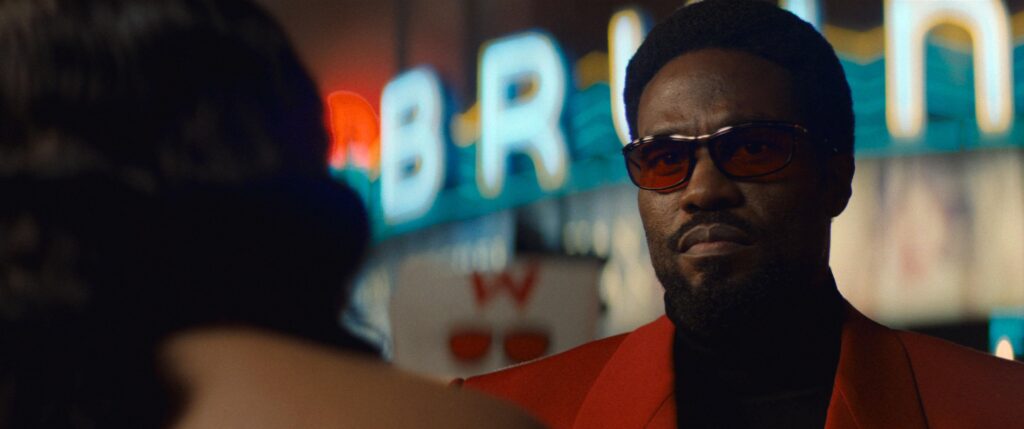
Marvel takes an unexpected detour with Wonder Man—and that’s exactly what makes it work. Instead of multiverse chaos or world-ending stakes, this eight-episode series zooms in on something far more personal: a struggling actor chasing relevance, friendship, and purpose, all while hiding a dangerous secret that could derail everything.
Co-created by Destin Daniel Cretton and Andrew Guest, Wonder Man feels refreshingly human for a Marvel project. It’s smaller, quieter, and far more emotionally grounded than expected—and that’s its biggest strength.
Story: A Superhero Tale About Wanting to Be Seen
At the centre of the series is Simon Williams, played with vulnerability by Yahya Abdul-Mateen II. Simon has been obsessed with the fictional superhero Wonder Man ever since childhood, when he watched the old films with his late father. As an adult, reality has been far less heroic. He’s talented but unstable, intense to a fault, and stuck on the fringes of Hollywood.
His life shifts when he crosses paths with Ben Kingsley’s Trevor Slattery—yes, the same washed-up actor last seen in Iron Man 3. Trevor becomes both mentor and friend, helping Simon land an audition for a high-profile Wonder Man reboot directed by eccentric auteur Von Kovak.
What Simon doesn’t realise is that the Department of Damage Control (DODC) is quietly monitoring him, classifying him as a potential threat. The tension builds not through spectacle, but through questions: can Simon control who he really is? And can he survive Hollywood without losing himself?
Writing & Direction: Meta, Measured, and Surprisingly Warm
Guest also serves as showrunner, while Cretton directs the opening episodes, setting a confident tone early on. The show understands its own meta appeal—jokes about fame, superhero casting, and celebrity culture land naturally without turning smug.
For the most part, Wonder Man stays tightly focused on Simon and Trevor. Their evolving friendship forms the emotional spine of the series. A brief mid-season detour introduces DeMarr “Doorman” Davis, but the show quickly recentres itself, knowing exactly where its heart lies.
The writing balances humour, melancholy, and quiet ambition, making the show feel more like a Hollywood dramedy than a traditional MCU entry.
Technical Side: Less Noise, More Control
Visually, Wonder Man resists excess. When it leans into its Marvel identity, it does so with restraint. Simon’s powers are teased rather than flaunted, using practical effects, clever cuts, and implication instead of VFX overload.
One standout episode—shot largely in black and white—adds texture to the series and even sneaks in a playful cameo by Josh Gad. The result is tension built through storytelling rather than spectacle, keeping viewers hooked till the end.
Performances: Character First, Ego Last
Abdul-Mateen II delivers one of his most layered performances to date. Simon is fragile, arrogant, hopeful, and afraid—sometimes all at once. You understand his desperation even when he makes the wrong call.
Kingsley continues his redemption arc as Trevor Slattery with warmth and self-awareness, transforming what was once a divisive MCU character into someone genuinely endearing. Their chemistry sells the show completely.
Supporting performances shine too: Arian Moayed returns as DODC agent Cleary, while X Mayo brings sharp energy as Simon’s agent. A cheeky cameo from Joe Pantoliano adds to the fun without breaking immersion.
Final Verdict
Wonder Man is Marvel taking a calculated risk—and winning. By stripping away franchise noise and focusing on flawed people instead of power levels, the series feels intimate, confident, and refreshingly different.
It works beautifully as a standalone story, even with a few familiar MCU faces. If this is Marvel testing new creative lanes, it’s a direction worth exploring. Simon Williams doesn’t save the world here—but he might just save Marvel from its own formula.