Film Details & Backstory
- Title: The Black Phone 2
- Director: Scott Derrickson
- Writers: Scott Derrickson & C. Robert Cargill (based on Joe Hill’s story)
- Release Date: October 17, 2025 (United States)
- Runtime: 1 hour 54 minutes
- Rating: R (for strong violent content, gore, and language)
- Main Cast:
- Mason Thames as Finney Blake
- Madeleine McGraw as Gwen Blake
- Ethan Hawke as “The Grabber”
- Jeremy Davies, Anna Lore, Demian Bichir, and Miguel Mora in supporting roles
The Black Phone 2 arrives as the much-anticipated sequel to Scott Derrickson’s 2022 supernatural horror hit. The original film’s haunting tone and the terrifying presence of Ethan Hawke’s masked killer made it an instant favorite among horror fans. The sequel brings back the same creative team, hoping to expand the story’s eerie mythology while diving deeper into the trauma left behind.
Storyline
Set several years after the events of the first film, The Black Phone 2 follows Finney Blake, now older and still struggling with the psychological scars of his childhood encounter with the Grabber. His sister Gwen, now a teenager, begins experiencing disturbing dreams and psychic visions — similar to the ones that saved Finney years ago.
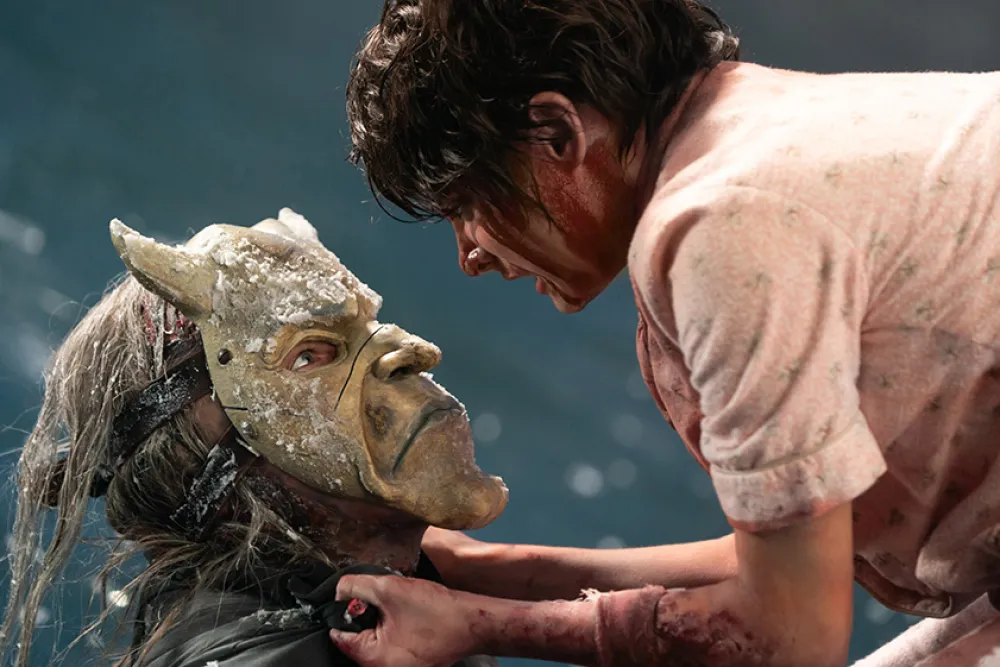
When a series of strange disappearances occur at a snow-covered winter camp, Gwen starts receiving mysterious calls on the black phone, hearing the desperate voices of missing boys. As she pieces together the clues, she realizes that the Grabber’s evil presence might not have ended with his death — something darker has returned, reaching beyond the grave.
The sequel shifts its setting from the humid, claustrophobic basements of the first film to the cold, desolate expanse of a winter landscape. This change not only makes the film visually striking but also amplifies the sense of isolation and helplessness.
What Works
One of the biggest strengths of The Black Phone 2 lies in its atmosphere. Derrickson once again proves his mastery at crafting mood and tension. The snowy backdrop, flickering lights, and surreal dream sequences build a world that feels nightmarishly real.
Mason Thames and Madeleine McGraw deliver strong performances, grounding the supernatural chaos with raw emotion. Their sibling dynamic — protective, wounded, and quietly loving — is the film’s emotional anchor. Gwen’s expanded role gives her more agency and depth, turning her from a side character into the film’s moral and psychic center.
Ethan Hawke’s return as the Grabber is both surprising and unsettling. His performance retains the creepiness that made him iconic, but this time it’s layered with something spectral and otherworldly. The Grabber’s reappearance as a lingering supernatural force gives the film an eerie ambiguity — is he a ghost, a curse, or something much worse?
The horror sequences are well-executed. Derrickson relies more on tension and dread than on cheap jump scares. The black phone’s ring remains one of modern horror’s most effective symbols — a bridge between guilt, death, and memory.
What Doesn’t Work
While The Black Phone 2 aims higher, it sometimes stumbles under its own ambition. The expanded lore around the black phone, ghosts, and the Grabber’s origins adds mystery but also clutters the story. The first film thrived on simplicity — one boy, one killer, one phone — and its minimalism made it terrifying.
Here, the story tries to balance character development, emotional drama, and supernatural mythology all at once. The pacing occasionally drags, especially in the middle act, as the film jumps between Finney’s trauma and Gwen’s visions. Some scenes feel repetitive, and the dream sequences, while visually striking, sometimes overstay their welcome.
The Grabber’s transformation from a human monster into a ghostly figure also divides audiences. In the original, his menace came from his humanity — he was someone terrifyingly possible. Making him supernatural risks losing that grounded fear.
Despite these flaws, the film remains watchable thanks to Derrickson’s confident direction and Hawke’s unforgettable performance.
Performances and Direction
Scott Derrickson once again shows his understanding of how horror can coexist with heartbreak. He doesn’t just make scary movies — he builds emotional experiences where fear and grief overlap. You can feel the characters’ trauma in every quiet moment, every lingering shot of the black phone, every dream Gwen has.
Mason Thames captures Finney’s post-traumatic guilt beautifully. His portrayal of a survivor trying to live a normal life while haunted by his past is both painful and believable. Madeleine McGraw’s performance as Gwen is equally compelling — bold, emotional, and mature. She carries much of the film’s weight on her shoulders and nails it.
And then there’s Ethan Hawke. Even with less screen time, his presence dominates the film. His voice, mannerisms, and unpredictable movements keep the audience on edge. Hawke proves again that subtlety can be more horrifying than brutality.
Audience Response
The audience reaction so far has been mixed but generally positive. Fans of the first film appreciate the continuation of the story and the attempt to build a larger universe. Many praise the performances, the cinematography, and the emotional storytelling. Horror fans love the darker tone and the throwback feel reminiscent of ’80s supernatural thrillers.
However, some viewers felt the sequel tried too hard to explain the mystery. What made the first film chilling was the lack of explanation — the black phone just was. By over-expanding the mythos, the sequel risks diminishing that original mystique.
Still, audiences have applauded the ambition. Many agree that it’s a rare sequel that tries to do something new instead of recycling old scares. The winter setting, in particular, received high praise for its haunting beauty and visual freshness.
My Thoughts and Review
Watching The Black Phone 2 feels like returning to a nightmare you thought you’d escaped — familiar yet evolved. It keeps the spirit of the first film alive while daring to explore new territory. I admired its ambition, even when it faltered.
I loved the emotional depth between the siblings — their quiet resilience, their fear, and the way they refuse to give in. I also appreciated how Derrickson weaved themes of memory, trauma, and faith into the horror. The scares are effective not because of blood or monsters, but because they remind us how fear lingers long after the danger is gone.
That said, the film does feel longer than necessary. Some subplots could have been trimmed, and the ending, though powerful, feels slightly rushed after such a long buildup. Still, by the time the credits rolled, I was left thinking about its imagery — the phone ringing in the snow, Gwen’s tears, the Grabber’s distorted mask — and that, to me, is the mark of memorable horror.
The Verdict
Strengths:
- Excellent performances, especially by McGraw and Hawke
- Atmospheric cinematography and chilling setting
- Strong emotional undercurrent
- Memorable visuals and effective scares
Weaknesses:
- Uneven pacing and occasional over-explanation
- The Grabber’s supernatural turn may divide fans
- A few scenes feel unnecessary or repetitive
My Rating
⭐ 3.5 out of 5 stars (or 7/10)
The Black Phone 2 may not capture the exact terror of the original, but it succeeds in expanding the story and deepening its emotional roots. It’s a haunting, visually rich sequel that dares to be different — not perfect, but definitely chilling.
If you loved the first movie, this one is worth your time. Just don’t expect another claustrophobic masterpiece — expect something larger, colder, and perhaps a little more tragic.