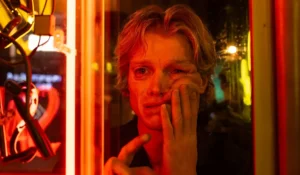
Parasakthi finally arrived in theatres on January 10 after weeks of buzz, delays, and controversy. Directed by Sudha Kongara, the historical political action drama marks an important milestone — it is Sivakarthikeyan’s 25th film as a lead actor and Kongara’s ninth directorial venture.
Set against the charged political climate of the 1960s, Parasakthi aims big. It tackles language politics, systemic oppression, student movements, and personal sacrifice — all wrapped in a mainstream cinematic package. The ambition is undeniable. The execution, however, is far more inconsistent.
Story: Resistance, Brotherhood, and Buried Rage
The film follows Chezhiyan, played by Sivakarthikeyan, a railway fireman living a modest life with one clear goal — securing a better future for his younger brother Chinna (Atharvaa). Chezhiyan believes in stability and restraint, while Chinna is actively involved in student protests against language imposition.
Their ideological clash deepens when Chezhiyan travels to Delhi for a TTR interview, only to be rejected due to his lack of Hindi fluency. What begins as quiet frustration soon turns into suppressed rage after he witnesses a student driven to suicide following newly enforced language and education policies.
This moment cracks open Chezhiyan’s past — revealing him as a former student leader who once spearheaded a movement called Operation Purananooru. Forced back into resistance, he joins his brother’s cause, only to be pulled into a dangerous game by a ruthless police officer (Ravi Mohan) with his own political agenda.
What unfolds is a story about rebellion, guilt, and the price of standing up to power — but also one weighed down by excess and uneven pacing.
Performances: Sivakarthikeyan’s Sincerity Carries the Film
This is one of Sivakarthikeyan’s most restrained and sincere performances in recent years. He handles Chezhiyan’s emotional transitions — from gentle caretaker to hardened rebel — with conviction. His strength lies not just in action scenes, but in quieter moments where frustration and helplessness seep through his calm exterior.
Atharvaa brings intensity to Chinna, fully committing to the role of a fiery student activist. However, his arc feels underdeveloped, especially in scenes involving the antagonist, where more emotional weight could have elevated the conflict.
Ravi Mohan delivers a starkly different performance from his usual heroic roles. He is intimidating and controlled, but the writing doesn’t give him enough depth. Without a strong backstory, his motivations feel vague, making him more confusing than compelling as a villain.
Sreeleela, in her Tamil debut, shows promise but struggles with pronunciation — a noticeable drawback in a film so deeply rooted in language politics. Her styling also feels overly glamorous for a grounded period drama, which affects the film’s authenticity.
Supporting actors including Guru Somasundaram, Basil Joseph, Dev Ramnath, and Prithvi Rajan add texture, though several cameos feel more distracting than organic.
Direction, Music, and Craft
Sudha Kongara’s intent is clear — to merge political history with commercial cinema. The first half works best, building atmosphere steadily and delivering a strong interval reveal that repositions Chezhiyan as a saviour figure. While predictable, the placement is effective.
The second half struggles. The pacing slows, emotional beats repeat, and stylistic choices — including exaggerated villain moments — feel unnecessary. Certain sequences lean into spectacle at the cost of realism, weakening the film’s grounded tone.
Music by G. V. Prakash Kumar supports the narrative effectively, especially during protest and emotional sequences, though it doesn’t always elevate the drama.
What Worked
- Sivakarthikeyan’s grounded, sincere performance
- Strong political intent and historical setting
- Engaging first half and interval block
- Themes of resistance and identity handled with conviction
What Didn’t
- Uneven writing and sluggish second half
- Underwritten antagonist
- Forced cameos and tonal inconsistencies
- Authenticity issues in styling and character detailing
Final Verdict
Parasakthi is an earnest film weighed down by its own ambition. It wants to say a lot — about language, power, protest, and sacrifice — and while it succeeds in parts, it doesn’t always know when to pull back. Sivakarthikeyan emerges stronger from the experience, and Sudha Kongara’s vision remains admirable, even when the screenplay falters.
For viewers who enjoy political period dramas with strong ideological themes, Parasakthi offers moments of impact — but patience is required.
Rating: ⭐⭐½ (2.5/5)