Introduction
Netflix’s Last Samurai Standing walks into the ring with obvious comparisons. The moment you hear “292 fighters in a deadly survival game,” Squid Game flashes in your mind. Set it in Meiji-era Japan with political undertones, and Shōgun enters the conversation too.
But while those parallels are easy, the series quickly proves it’s carving its own path — blending a gripping historical setting with some of the most impressive samurai action TV has seen in years.
Based on Shogo Imamura’s Ikusagami novels, the six-episode drama is fast, brutal, emotional, and surprisingly layered.
Storyline Overview
The series is set shortly after the Boshin War, a turning point that dismantled the samurai class and left thousands stripped of status, wealth, and purpose. Into this emotional wreckage comes a mysterious invitation.
292 desperate samurai are called to compete in the Kodoku, a violent tournament that stretches across the Tokaido route from Kyoto to Tokyo. The rules are chillingly simple:
- steal numbered tags from rivals,
- reach seven checkpoints alive,
- and survive long enough to claim the grand cash prize.
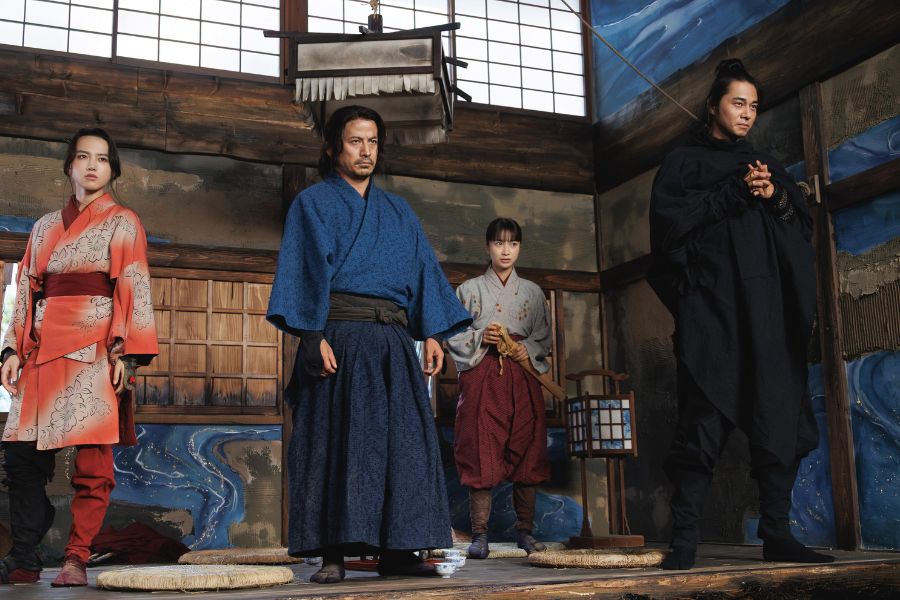
At the center is Shujiro Saga (Junichi Okada), once a feared assassin, now a man fighting to save his cholera-stricken family. On the brutal road, he forms an unlikely alliance with:
- Futaba (Yumia Fujisaki), the youngest and most vulnerable competitor,
- Iroha (Kaya Kiyohara), a skilled fighter with a simmering past,
- Kyojin (Masahiro Higashide), a ninja with unpredictable motives,
- Kocha (Shota Sometani), a devout archer caught in moral conflict.
Together, they must face enemies, uncover a shadowy conspiracy, and stay alive in a game designed to destroy what remains of the samurai identity.
Cast & Performances
Junichi Okada is outstanding as Shujiro Saga — fierce in combat, restrained in emotion, and quietly heartbreaking in grief. His dual role as producer and action choreographer gives the show a grounded realism rarely seen in streaming action dramas.
Yumia Fujisaki and Kaya Kiyohara steal several scenes, playing underestimated characters who must constantly prove themselves. Masahiro Higashide brings charm and unpredictability, while Hideaki Ito is unforgettable as a ferocious, unhinged warrior.
This is a cast that understands physicality, emotion, and historical weight — and it shows.
What Worked
✔ Next-Level Action
The sword-fighting here ranks among the best on television. Distinct styles, fluid choreography, practical stunt work, and jaw-dropping set pieces — the finale, especially, is spectacular.
✔ Strong Historical Backdrop
The Meiji-era transformation adds weight to the violence. These aren’t just fighters in a game — they’re men pushed to the margins of a rapidly modernizing nation.
✔ Compelling Group Dynamics
The alliances feel believable, emotional, and often tense — especially with betrayal always a possibility.
✔ A Mystery That Hooks
The series plants hints about the powerful figures running Kodoku, tying the story into Japan’s industrial past in interesting ways.
What Didn’t Work
✘ Short Runtime
At only six episodes, the show races through backstories and political layers that deserved more space.
✘ Some Characters Underused
A few intriguing competitors vanish for long stretches, diluting their emotional impact.
✘ Pacing Dips Between Set Pieces
The quieter episodes don’t always match the intensity of the action-heavy ones.
Final Verdict
Last Samurai Standing could have settled for being a stylish death game. Instead, it delivers something richer — a fast, fierce action saga rooted in historical pain, elevated by strong performances and breathtaking combat.
It doesn’t replace Shōgun or Squid Game, but it stands proudly beside them as one of the most exciting action series of the year. Even with areas that needed more depth, the show’s emotional pull and stunning sword fights make it a must-watch.
If you want tension, blood, spectacle, and heart — this is a series you shouldn’t miss.