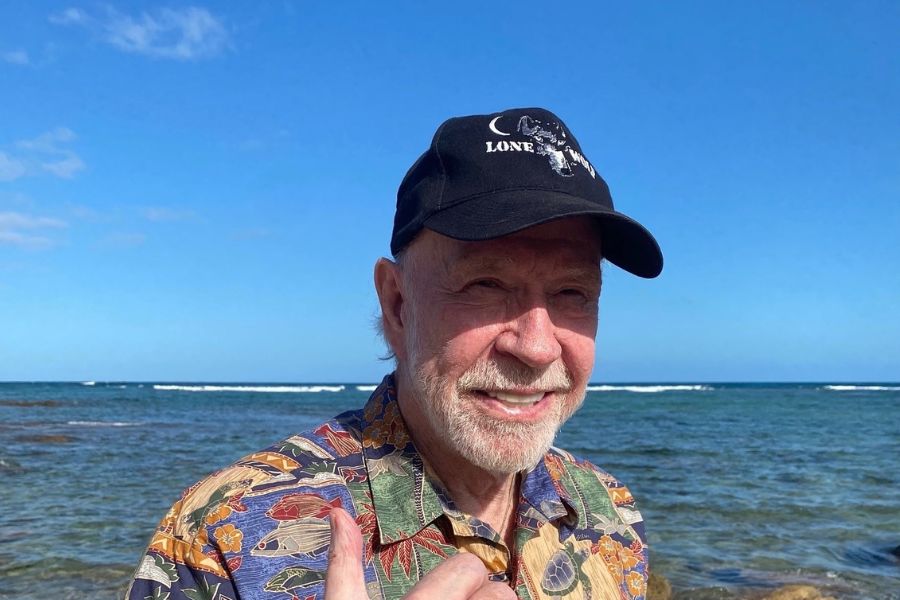
The world of action cinema has lost one of its most enduring and unmistakable faces. Chuck Norris, the martial arts champion who became a defining figure in Hollywood’s action era and a household name through television, has passed away at the age of 86.
According to a statement released by his family, Norris died peacefully on Friday morning after being hospitalized in Hawaii a day earlier. While the exact circumstances have been kept private, the message made one thing clear — he was surrounded by loved ones in his final moments.
For millions across generations, Norris wasn’t just an actor. He was a symbol of discipline, strength, and quiet intensity. But for his family, as they shared in their emotional note, he was something far more personal — a devoted husband, a caring father and grandfather, and the emotional anchor of their lives.
From Real Fighter to Screen Legend
What set Chuck Norris apart from many of his contemporaries was authenticity. Before Hollywood embraced him, he had already built a reputation as a serious martial artist with an extraordinary record.
His credentials were not just impressive — they were almost unmatched. Norris held black belts across multiple disciplines, including karate, taekwondo, Brazilian jiu-jitsu, and judo, and even went on to develop his own martial arts system, Chun Kuk Do. This wasn’t a case of an actor learning to fight for the camera — this was a fighter bringing real-world credibility to the screen.
That authenticity became evident early in his film career, especially when he starred opposite Bruce Lee in the 1972 film The Way of the Dragon. Their now-iconic fight sequence in the Roman Colosseum remains one of the most celebrated moments in martial arts cinema, cementing Norris as a force to watch.
The Rise of an All-American Action Star
Through the late 1970s and 1980s, Norris carved out a distinct space in the action genre. Unlike stars who leaned into humor or flamboyance, his screen presence was defined by seriousness, grit, and a no-nonsense approach.
Films like Good Guys Wear Black, The Octagon, and Lone Wolf McQuade built his reputation, but it was franchises like Missing in Action and The Delta Force that turned him into a box office staple.
These films often tapped into themes of patriotism, resilience, and justice, resonating strongly with audiences at the time. In particular, the Missing in Action series carried personal significance for Norris, as it was dedicated to his younger brother Wieland, who lost his life during the Vietnam War.
While critics occasionally compared these films to Sylvester Stallone’s Rambo series, Norris maintained his own identity — less flashy, more grounded, and unmistakably American in tone.
Reinventing Stardom on Television
As the action film landscape began to shift in the 1990s, Norris made a strategic move that would redefine his career. He transitioned to television with Walker, Texas Ranger, a show that would go on to become one of his most recognizable works.
Running from 1993 to 2001, the series followed Cordell Walker, a Texas Ranger who balanced martial arts skills with a strong moral compass. The role allowed Norris to connect with a broader audience, bringing his brand of action into living rooms around the world.
The show’s success extended beyond its original run, with television movies and reruns continuing to keep the character alive in pop culture long after its finale.
For many fans, Walker, Texas Ranger became synonymous with Norris himself — a reflection of his on-screen persona and the values he consistently portrayed.
A Cultural Phenomenon Beyond the Screen
In the later stages of his life, Norris experienced an unexpected resurgence in popularity — not through films or television, but through internet culture.
The rise of “Chuck Norris facts” turned him into a larger-than-life figure in memes, with exaggerated and often absurd statements celebrating his toughness and invincibility. Lines like “Chuck Norris doesn’t do push-ups, he pushes the Earth down” became part of online folklore.
Rather than resisting this wave, Norris embraced it, showing a sense of humor that many hadn’t associated with his earlier, more serious screen image.
This phase introduced him to an entirely new generation — one that may not have grown up watching his films but still recognized his name and persona instantly.
The Man Behind the Myth
Behind the action hero image was a life shaped by discipline, service, and perseverance.
Born Carlos Ray Norris in Oklahoma, he grew up in modest circumstances before joining the U.S. Air Force in 1958. It was during his time stationed in South Korea that he began training in martial arts — a decision that would ultimately define his life’s path.
After returning to the United States, Norris opened a chain of karate schools, where he trained several high-profile students, including Steve McQueen. It was McQueen who later encouraged him to pursue acting, setting the stage for his Hollywood journey.
Even as his fame grew, Norris remained closely tied to his roots in martial arts, continuing to promote discipline and physical fitness through his work and public appearances.
Later Years and Personal Life
In his later years, Norris stepped back from acting, with one of his final major appearances being in The Expendables 2, where he shared the screen with a new generation of action stars.
Outside of entertainment, he became known for his political views, writing, and involvement in various causes aligned with his beliefs. He also appeared in infomercials and continued to engage with fans through public appearances.
Norris was married twice and is survived by his wife, Gena O’Kelley, along with his children and grandchildren — a family that remained central to his life despite his global fame.
A Legacy That Goes Beyond Action
Chuck Norris leaves behind more than just a filmography. He represents a particular era of action cinema — one defined not by spectacle alone, but by physical authenticity and moral clarity.
He stood apart in a crowded field of action stars, not because he tried to outshine them, but because he stayed true to his identity. Whether it was on the big screen, television, or even in internet culture, Norris carried a presence that was instantly recognizable and deeply respected.
His journey — from a small-town upbringing to martial arts champion, and eventually to global icon — is a story of persistence, reinvention, and quiet strength.
And while the man may be gone, the legend he built over decades will continue to live on — in films, in stories, and in the countless fans who grew up watching him stand tall, fight hard, and never back down.