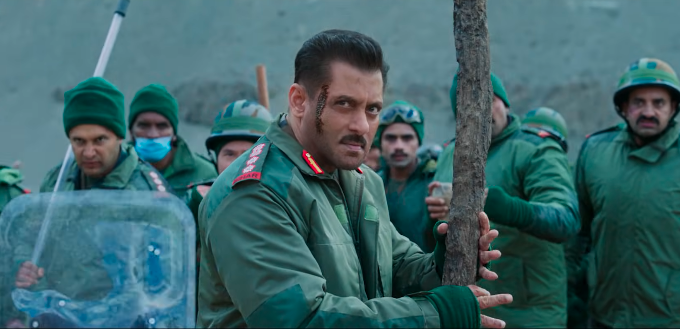
Salman Khan’s upcoming war drama has quietly transformed into something far more layered than initially expected. What began as a hard-hitting film titled Battle of Galwan is now evolving into Maatrubhumi: May War Rest in Peace — and the change is not just in name, but in the film’s entire emotional direction.
The shift signals a deeper, more reflective take on war, moving beyond battlefield intensity to explore its human cost — and the latest updates suggest the makers are going all in on this new vision.
A Film Reimagined Midway Through Production
Directed by Apoorva Lakhia, the film is inspired by the 2020 Galwan Valley clash and features Salman Khan portraying late Colonel Bikumalla Santosh Babu. The project had already completed a major chunk of its shoot in Ladakh by late 2025 and was nearing the finish line.
But instead of wrapping up, the team has now gone back to the drawing board.
Fresh reports indicate that nearly 40 days of reshooting are currently underway in Mumbai, with significant portions of the narrative being reshaped. These aren’t minor tweaks — insiders suggest the film’s tone, storytelling approach, and emotional beats are being recalibrated to align with a broader, more nuanced perspective.
A Chinese Song Adds an Unexpected Layer
Perhaps the most surprising creative decision is the addition of a Chinese-language song, composed by Himesh Reshammiya.
For a film rooted in a sensitive India-China conflict, this move stands out — and not in a conventional way. Salman Khan is expected to shoot the sequence once the track is finalized, making it one of the most unusual inclusions in a mainstream Indian war film.
Rather than amplifying conflict, the song is believed to contribute to the film’s evolving theme of reconciliation and shared human experience.
From War Drama to Emotional Narrative
The title change itself tells a story.
Maatrubhumi, meaning “motherland,” shifts the focus from a specific military event to a broader emotional landscape. The tagline “May War Rest in Peace” reinforces this direction, hinting at a film that prioritizes the emotional toll of war over its spectacle.
This pivot is reportedly influenced by the current geopolitical climate, where India-China relations are seeing a cautious easing. Reflecting that reality, the film now aims to balance patriotism with a message of peace and humanity.
Earlier Clues Were Already There
Interestingly, this tonal shift didn’t come out of nowhere.
Earlier this year, a song titled Maatrubhumi, sung by Arijit Singh and released around Republic Day, had already hinted at a more emotional and introspective narrative. At the time, it felt like a patriotic addition — but now, it appears to be central to the film’s core identity.
The newly released poster further supports this direction. Salman Khan is seen in a rugged, battle-worn look — not just as a soldier in combat, but as someone carrying the weight of conflict. The imagery focuses less on aggression and more on resilience.
A Risky But Interesting Move
Mid-production overhauls of this scale are rare, especially for big-budget films led by stars like Salman Khan. While reshoots are common in the industry, a complete tonal rework — along with bold additions like a Chinese song — signals a significant creative gamble.
But it also shows an attempt to stay relevant and sensitive to changing narratives, both politically and emotionally.
Final Words
Maatrubhumi: May War Rest in Peace is no longer just a war film — it’s shaping up to be a story about what war leaves behind. With major reshoots, a surprising musical choice, and a clear shift in storytelling, the film is taking a path few mainstream Bollywood projects dare to explore.
Whether audiences connect with this softer, more reflective approach will only be clear when the film hits theatres. But one thing is certain — this is not the film people first expected, and that might just work in its favour.