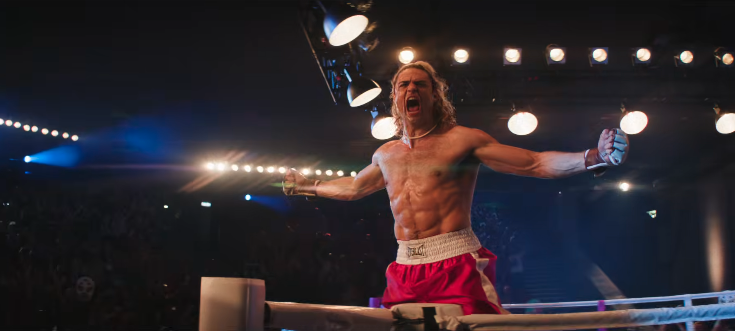
Street Fighter returns to cinemas with flying kicks, spectacular special moves, outrageous characters and enough 1990s nostalgia to make longtime arcade gamers smile. Directed by Kitao Sakurai, the latest adaptation of Capcom’s legendary fighting franchise doesn’t attempt to become a sophisticated action thriller. Instead, it embraces the absurdity of its source material, delivering a colourful, chaotic and frequently entertaining experience.
Released on October 16, 2026, the film stars Andrew Koji, Noah Centineo, Callina Liang, David Dastmalchian, Jason Momoa and Indian action star Vidyut Jammwal.
The early critical response has been divided, but the film’s strongest qualities are clear: energetic martial arts choreography, committed performances and an unapologetic celebration of video game culture. Unfortunately, a cluttered screenplay, inconsistent humour and uneven editing prevent the experience from becoming something truly memorable.
Street Fighter Story: Ryu and Ken Return to Battle
Set in 1993, Street Fighter follows estranged martial artists Ryu (Andrew Koji) and Ken Masters (Noah Centineo), former training partners whose friendship has deteriorated following events surrounding an earlier World Warrior Tournament.
Their lives take another unexpected turn when Interpol agent Chun-Li (Callina Liang) recruits them for a new tournament.
What initially appears to be a competition between the world’s strongest fighters soon reveals a dangerous conspiracy involving the ruthless M. Bison (David Dastmalchian).
As the tournament progresses, Ryu and Ken must confront both their unresolved differences and powerful opponents with extraordinary fighting abilities.
The premise remains deliberately straightforward. Rather than constructing a complicated mythology, the film uses the tournament to introduce familiar characters and recreate the exaggerated combat that made the games popular.
That simplicity works initially, but the narrative becomes increasingly difficult to follow as additional fighters and subplots compete for attention.
Andrew Koji and Noah Centineo Lead a Colourful Ensemble
One of the film’s biggest strengths is the contrast between its two leading characters.
Andrew Koji brings physical discipline and seriousness to Ryu, making him a convincing martial artist. His controlled movements and restrained personality provide an effective counterbalance to the surrounding madness.
Noah Centineo approaches Ken differently, embracing the character’s arrogance, humour and impulsive behaviour. Their contrasting personalities create an entertaining dynamic, even when the screenplay doesn’t give their relationship enough emotional depth.
Callina Liang also earns considerable praise as Chun-Li. Her athleticism and energetic fighting sequences establish her as one of the adaptation’s most compelling performers.
David Dastmalchian embraces the theatrical absurdity of M. Bison, although critics disagree about whether his exaggerated performance compensates for the villain’s limited development.
The supporting cast is equally unconventional.
Cody Rhodes appears as Guile, Roman Reigns plays Akuma, Curtis “50 Cent” Jackson portrays Balrog, and Jason Momoa transforms into Blanka.
For Indian audiences, Vidyut Jammwal’s Hollywood debut as Dhalsim is another attraction. His martial arts background makes him a natural fit, and his fighting sequences have received appreciation despite his relatively limited screen time.
However, the enormous ensemble creates an unavoidable problem: several recognisable characters receive little opportunity to become meaningful participants in the story.
Action, Visuals and Nostalgia Deliver the Entertainment
The strongest argument in favour of Street Fighter is its commitment to recreating the experience of playing the games.
Rather than grounding every confrontation in realistic physical combat, Sakurai embraces exaggerated attacks, signature finishing moves and the franchise’s distinctive visual style.
The result is a series of energetic fights combining traditional martial arts choreography with computer-generated spectacle.
The film also incorporates anime-inspired flashback sequences that explore Ryu and Ken’s shared history. These sequences have been among its most widely praised creative choices, offering a visually distinctive connection to the franchise’s animated influences.
Bright colours, stylised costumes and nostalgic music reinforce the 1990s setting.
However, the action isn’t consistently successful.
Some critics have praised the choreography and performers’ physical commitment, while others argue that rapid editing, restrictive camera angles and excessive visual effects occasionally make the fights difficult to appreciate.
The relentless succession of battles also becomes exhausting, particularly when the screenplay provides little emotional investment in their outcomes.
Where Street Fighter Falls Short
The film’s greatest weakness is its writing.
Although the central tournament offers a workable foundation, the screenplay struggles to balance character development, comedy and action.
The relationship between Ryu and Ken has genuine dramatic potential, but their history receives less attention than the increasingly elaborate confrontations surrounding them.
Similarly, M. Bison’s conspiracy supplies a familiar villainous objective without consistently establishing compelling stakes.
The humour is another divisive element.
Sakurai, known for Bad Trip, incorporates deliberately ridiculous situations, exaggerated dialogue and occasional crude jokes. While the approach suits the franchise’s cartoonish personality, some gags feel unnecessarily juvenile.
The tonal shifts between serious character conflicts and broad comedy can also become distracting.
At approximately 119 minutes, the film isn’t exceptionally long, yet its crowded narrative sometimes makes it feel overstuffed.
A tighter screenplay and more selective use of its supporting characters could have allowed the strongest relationships and action sequences to make a greater impact.
Street Fighter Verdict: Is It Worth Watching?
Street Fighter works best when judged as an energetic arcade-inspired action comedy rather than a conventional martial arts drama.
Andrew Koji and Noah Centineo provide an enjoyable central pairing, Callina Liang makes a strong impression, and Vidyut Jammwal delivers a promising Hollywood debut.
Its vibrant presentation, animated sequences and recognisable game references offer plenty of entertainment for franchise enthusiasts.
However, the thin storyline, uneven editing and inconsistent comedy prevent the film from fully capitalising on its talented cast.
Rating: ★★★☆☆ (3/5)
Based on the published critical response, this three-star assessment reflects an entertaining but uneven adaptation. Existing Street Fighter fans are likely to appreciate its commitment to the games, while newcomers may struggle with the crowded storytelling.
It doesn’t reinvent video game cinema, but it delivers enough memorable action and nostalgic enjoyment to make the experience worthwhile for its intended audience.