There’s something oddly comforting about watching a show that knows exactly what it wants to be and never pretends otherwise. Off Campus is not trying to reinvent television, become prestige drama, or emotionally destroy audiences the way some modern romance shows attempt to do. Instead, the series leans fully into familiar tropes, attractive people, emotional longing, and college romance chaos — and honestly, that commitment becomes its biggest strength.
With this new adaptation of The Deal from Elle Kennedy’s popular hockey romance universe, Prime Video is clearly targeting one of the hottest entertainment combinations right now: young-adult romance, book adaptations, and sports-driven relationship drama. And while comparisons to massively beloved romance stories are inevitable, Off Campus works better when audiences simply accept it for what it actually is — a fun, messy, addictive comfort-watch that feels like an updated version of classic CW-era television.
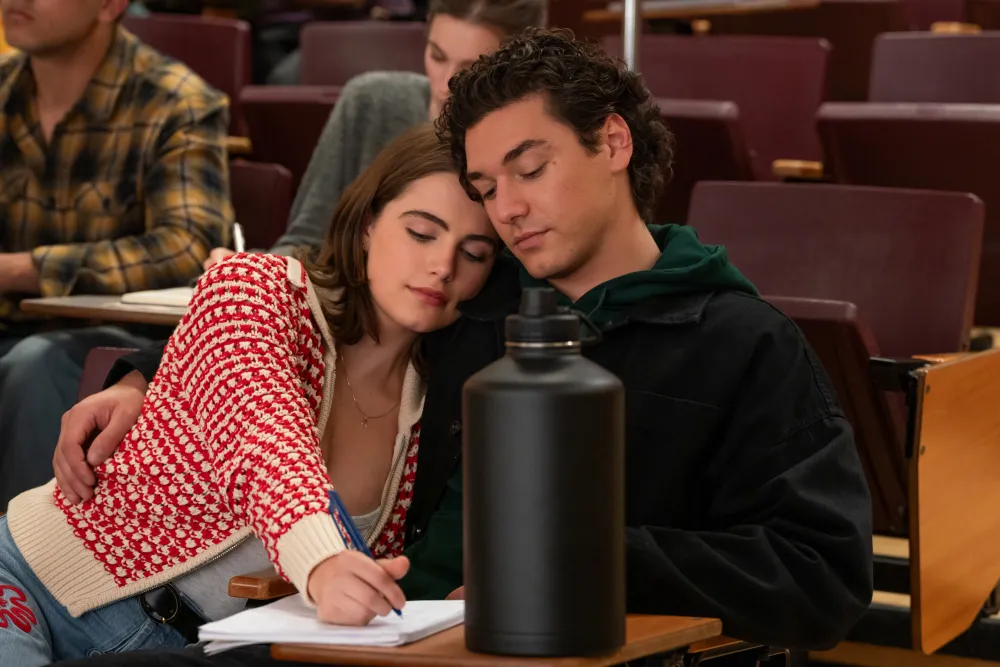
The series follows Hannah Wells, played by Ella Bright, a music student at Briar University struggling to hold onto her scholarship while dealing with emotional trauma connected to her past. Hannah needs to create an original song for an important showcase competition, but her inability to write lyrics becomes tied closely to unresolved emotional pain from high school. At the same time, hockey captain Garrett Graham, played by Belmont Cameli, is carrying his own problems, including the pressure of living under the shadow of his abusive father, a famous hockey legend.
The setup between them is probably one of the oldest romance formulas imaginable. The academically focused girl tutors the handsome athlete, while he agrees to help her attract another guy she secretly likes. But the reason these stories continue surviving generation after generation is because audiences enjoy the familiarity. Off Campus understands that perfectly. It does not waste time trying to become unpredictable because the emotional payoff depends entirely on viewers wanting these characters together from the start.
And thankfully, Ella Bright and Belmont Cameli actually make that emotional journey believable. Their chemistry works best during quieter scenes rather than dramatic speeches. Moments where Garrett awkwardly dances around Hannah or when the two begin opening up emotionally feel far more genuine than some of the louder romantic sequences. The karaoke scene featuring “Cherry Pie” especially captures the exact energy the series works best with — vulnerable, slightly chaotic, but emotionally warm.
The show also shamelessly embraces nearly every romance trope audiences love. Fake dating, forced proximity, emotional yearning, “one bed” tension, jealous misunderstandings — it’s all here. But instead of feeling exhausting, the series approaches those clichés with enough self-awareness and sincerity that they become entertaining again. The writing clearly understands the audience consuming this kind of content and knows exactly when to deliver emotional payoff moments.
What also helps the series stand out is that it treats its characters’ emotional struggles seriously without making the show unbearably heavy. Trauma, toxic masculinity, consent, friendship, and emotional vulnerability are all woven into the story naturally. There’s a slightly corny sincerity to the way the show handles emotional conversations, but honestly, that earnestness works in its favor. Watching young male characters openly discuss feelings, emotional damage, and consent without constant macho posturing feels refreshing for a sports-centered romance series.
The friendships inside the show are another major highlight. Much like Bridgerton built its emotional appeal around family dynamics, Off Campus thrives because of its “found family” atmosphere. The hockey team members, roommates, and supporting characters all feel emotionally connected rather than existing only to support the main romance.
Characters like Logan, Dean, Tucker, Jules, and Hannah’s roommate Allie all receive meaningful subplots and distinct personalities. That wider emotional ecosystem makes the campus feel alive instead of functioning only as a background for romance scenes. The “Drunk Shakespeare” episode especially captures this dynamic perfectly because it allows the entire group chemistry to shine naturally.
Mika Abdalla, Antonio Cipriano, and Jalen Thomas Brooks all contribute strongly to that group energy, helping the show maintain momentum even outside the main love story. The supporting cast genuinely feels important rather than disposable, which is often where many YA adaptations struggle badly.
The music choices also deserve credit because they help reinforce the nostalgic CW-style tone beautifully. Between throwback pop culture references, emotional party scenes, and familiar romantic montage energy, the show often feels intentionally designed to trigger comfort-watch nostalgia for audiences who grew up on early 2000s relationship dramas.
Of course, Off Campus is not flawless. Some emotional beats become repetitive, certain story turns are extremely predictable, and a few dramatic moments feel more manufactured than organic. The series also lacks the emotional intensity and polished depth that some viewers may expect from modern prestige romance dramas. But honestly, that may not matter much for its target audience. Off Campus succeeds because it understands the appeal of romantic escapism without becoming cynical about it. It’s warm, trope-heavy, attractive, emotionally earnest, and surprisingly easy to binge. Sometimes, that’s more than enough.