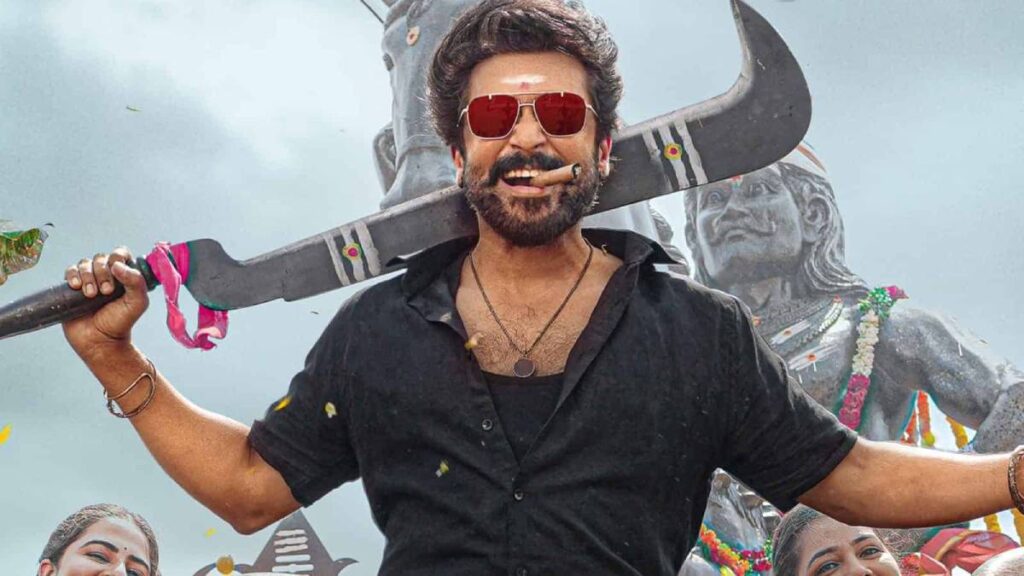
There was a phase in Indian cinema when audiences did not really need caped superheroes because mainstream stars themselves already carried that energy onscreen. Heroes fought entire systems alone, delivered justice where institutions failed, and performed near-impossible feats while crowds exploded inside theatres. Suriya’s Karuppu taps directly into that old-school mass spirit, but with a deeply Tamil cultural identity attached to it. Instead of borrowing from Western comic-book mythology, director RJ Balaji builds his hero around Karuppusamy, the fierce guardian deity worshipped across Tamil folk traditions.
And honestly, that idea alone makes Karuppu stand out instantly from the flood of routine commercial action films currently dominating theatres. The film revolves around Baby Kannan, played by RJ Balaji, a morally corrupt lawyer who has mastered the art of manipulating power, law, and people for personal gain. Nobody dares challenge him because he operates almost like a man above the system itself. Into his world enters Mattanchery, played beautifully by Indrans, a helpless man trying to recover gold seized unfairly by authorities. But instead of receiving justice, he and his daughter become victims of Baby Kannan’s greed and betrayal.
Broken emotionally, Mattanchery turns toward faith and begins praying to Karuppusamy, the guardian deity he repeatedly sees in dreams. What follows is where the film fully embraces its socio-fantasy identity. Karuppusamy appears, confronts Baby Kannan, and is eventually challenged by him to survive among corrupt humans without relying on divine powers. Soon after, the deity takes human form through Suriya, stepping into a world consumed by greed, corruption, and injustice.
What makes Karuppu interesting is that it does not treat its deity merely as a visual spectacle or fantasy gimmick. RJ Balaji and his co-writers clearly understand the emotional and cultural weight Karuppusamy carries within Tamil folk belief systems. Karuppan is traditionally seen as a fierce protector and enforcer of justice, and the movie uses that mythology to build a larger commentary about morality in modern society. The idea of a divine force struggling to understand human corruption becomes the emotional backbone of the film.
At the same time, the movie never forgets it is also a mass entertainer built around Suriya’s star power. The film constantly celebrates the actor’s larger-than-life image through callbacks, references, and fan-service moments. There are nods to iconic films like Ghajini and Singam, while several political references and dialogues clearly target Tamil audiences familiar with current cultural conversations surrounding Vijay and Tamil Nadu politics. Some humour even carries a nostalgic 90s fantasy-drama flavor that older viewers will instantly recognise.
The strongest part of the film is undoubtedly Suriya himself. He completely dominates the screen once Karuppusamy takes human form. Instead of playing the role with excessive loudness, Suriya uses silence, expressions, and controlled intensity to make the deity feel mysterious and intimidating. His eyes do most of the heavy lifting in several scenes, especially during the emotionally charged final portions where the character’s divine rage begins surfacing fully. Fans will also notice subtle shades of some of his earlier iconic performances hidden inside the role, which honestly adds extra excitement for long-time followers.
RJ Balaji deserves credit too because Baby Kannan could have easily become a cartoonish villain in another film. Instead, Balaji plays him with enough confidence and emotional arrogance to make the conflict believable. His character genuinely believes society itself is already too corrupt for justice to exist anymore, which creates a more interesting ideological clash with Karuppusamy beyond just standard hero-versus-villain storytelling.
Trisha Krishnan has a more restrained role compared to the larger fantasy elements around her, but she still fits naturally into the narrative. Some of her scenes with Suriya quietly remind audiences of their older pairings in films like Aaru and Mounam Pesiyadhe, which gives a nostalgic emotional touch to their interactions.
Still, the film does struggle in certain areas. The screenplay sometimes becomes overcrowded with references, messages, symbolism, and dramatic moments all fighting for attention simultaneously. The central concept is genuinely powerful, but the story occasionally feels thinner than the massive themes it tries to tackle. Some emotional scenes exist mainly to generate sympathy rather than fully developing supporting characters organically.
The film also repeats certain visual ideas too often. After a point, the constant slow-motion sequences and repeated divine confrontations start feeling predictable instead of impactful. A tighter screenplay with more grounded everyday emotional moments could have made the socio-fantasy elements hit even harder emotionally.
Musically, Sai Abhyankkar’s background score plays a major role in sustaining the film’s spiritual atmosphere. Since Karuppu relies heavily on emotion, elevation scenes, and divine energy, the music becomes crucial in making those moments feel larger-than-life inside theatres.
In the end, Karuppu works best when audiences simply surrender to its theatrical energy instead of overthinking its imperfections. It may not fully maximise the incredible concept sitting at its center, but it still delivers a culturally rooted fantasy entertainer with strong mass appeal and a commanding central performance from Suriya. For fans wanting to see the actor return in a powerful larger-than-life role, this film absolutely delivers that experience.