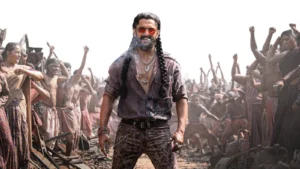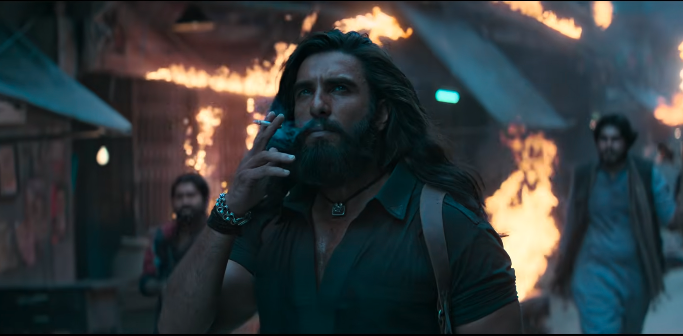
When a film dares to stretch close to four hours and still promises to hold your attention, it’s either a gamble—or a statement. With Dhurandhar 2, director Aditya Dhar makes it clear from the very first frame that this isn’t just a sequel built on success. It’s a continuation of a world that refuses to soften its edges. And at the center of that storm stands Ranveer Singh, delivering a performance that feels less like acting and more like complete immersion.
Releasing worldwide on March 19, Dhurandhar: The Revenge doesn’t follow the conventional rules of Indian spy thrillers. It breaks them, rewrites them, and then drenches them in grit, violence, and emotional chaos. This isn’t polished espionage—it’s messy, uncomfortable, and at times, deeply unsettling.
A Story That Picks Up Without Warning
Unlike many sequels that take their time to rebuild context, Dhurandhar 2 dives straight back into the narrative, almost as if there was never a pause. The film wastes no time addressing one of the biggest lingering questions—who exactly is Jaskirat Singh Rangi, the man we’ve come to know as Hamza Ali Mazari?
The answer isn’t handed over easily. Instead, the film peels back layers, showing fragments of a past that shaped a man capable of extreme violence in the name of duty. Hamza isn’t your typical patriotic hero. He’s calculated, ruthless, and often morally ambiguous. And that’s exactly what makes him compelling.
As the story unfolds, it becomes clear that the enemy from the first film was only a small piece of a much larger puzzle. What follows is a chain of manipulation, revenge, and strategic destruction, where alliances blur and morality becomes secondary. Hamza doesn’t hesitate—he plans, executes, and eliminates with chilling precision.
Despite its long runtime, the film rarely feels stretched. Instead, it builds a slow-burning tension that keeps you engaged, even when the narrative takes darker, more introspective turns.
Aditya Dhar’s Vision: Controlled Chaos
There’s a certain confidence in how Aditya Dhar approaches this sequel. Much like what Anurag Kashyap achieved with Gangs of Wasseypur, Dhar ensures that the second installment doesn’t just ride on the success of the first—it matches it, and in some ways, even elevates it.
The film’s pacing mirrors its predecessor, maintaining a consistent tone through its visual language, color grading, and storytelling rhythm. Every scene feels intentional. Nothing exists just for the sake of spectacle, even though the film is filled with moments that are visually striking and emotionally heavy.
However, the film isn’t without its flaws. The second half sees a slight dip in momentum. There are moments where the narrative leans more towards telling than showing, and a slightly preachy undertone creeps in. Certain developments feel a bit too convenient, especially for a character who has otherwise been portrayed with such complexity.
But just when you begin to notice the cracks, the film pulls you back in with a climax that is nothing short of explosive. The final stretch is where Dhar reminds you why this story demanded such a long runtime in the first place.
Music And Atmosphere: Building The World
One of the standout elements of Dhurandhar 2 is how it uses music and background score not just as additions, but as storytelling tools. Tracks like Aari Aari and Jaiye Sajana don’t interrupt the narrative—they enhance it.
The background score, in particular, deserves special mention. It carries the emotional weight of the film, amplifying tension and giving key moments a larger-than-life feel. There’s a sequence where Hamza sits at the top of his empire, having eliminated his enemies, and the haunting chant of “Dhu-Ran-Dhar” plays in the background. It’s the kind of moment that lingers long after the scene ends.
Ranveer Singh Owns The Film Completely
If there were ever doubts about Ranveer Singh being overshadowed in the first installment, Dhurandhar 2 shuts them down completely. This is his film, through and through.
Ranveer doesn’t just play Hamza—he becomes him. You see the anger in his eyes, the weight of his choices in his silence, and the internal conflict in the smallest of gestures. It’s a performance layered with pain, ego, vulnerability, and raw intensity.
This isn’t just another strong performance in his filmography—it’s the kind that redefines how audiences see him as an actor.
Supporting him is a solid ensemble cast. Sanjay Dutt and Arjun Rampal get more substantial roles this time, adding depth to the narrative. The film also explores more of Major Iqbal’s backstory, making his presence more meaningful.
Actors like Rakesh Bedi bring a certain energy to their roles, while Sara Arjun and Danish Pandor make the most of their limited screen time. Even the smaller characters feel well-cast, contributing to the overall authenticity of the world Dhar has built.
Where The Film Hits And Where It Slips
What truly works in Dhurandhar 2 is its commitment to its tone. It doesn’t try to dilute its violence or simplify its characters to appeal to a wider audience. It stays true to its identity, even if that means making some viewers uncomfortable.
The first half is gripping, filled with tension and narrative momentum. The climax is powerful, emotionally charged, and visually impactful. These two segments alone make the film worth experiencing on the big screen.
On the flip side, the middle portion occasionally loses its grip. The storytelling becomes slightly predictable, and the intensity dips just enough for you to notice. But it never derails completely, thanks to the strong foundation laid by the performances and direction.
The Bigger Picture
Dhurandhar: The Revenge doesn’t just aim to entertain—it aims to leave an impact. It challenges the idea of what a mainstream Indian spy film can be. There’s no glamour here, no easy heroism. Just a man navigating a world where every decision comes with consequences.
And in doing so, the film manages to carve out its own space in the genre. It’s bold, unapologetic, and at times, exhausting—but never boring.
By the time the credits roll, you’re not just thinking about the story—you’re thinking about the choices, the violence, and the cost of everything that unfolded.
And that’s exactly what makes Dhurandhar 2 stand out.