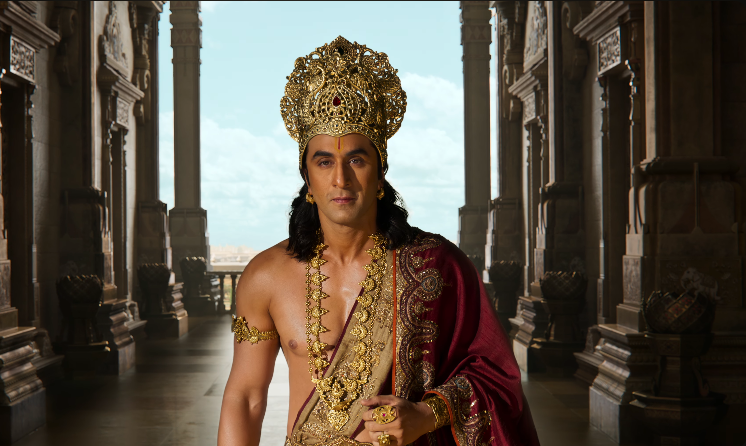
The wait for Nitesh Tiwari’s Ramayana is finally getting a firm shape, with Sony Pictures Entertainment setting November 6, 2026, for the film’s international theatrical release. Starring Ranbir Kapoor as Rama, Sai Pallavi as Sita and Yash as Ravana, the ambitious adaptation is being mounted as a two-part cinematic event designed to take one of India’s most enduring epics to audiences around the world. The international release will arrive two days before the planned India premiere, which is being targeted for November 8 during the Diwali holiday period.
That release strategy makes particular sense for a story centered on Rama’s return to Ayodhya after exile and his victory over Ravana. In India, the festival of Diwali carries a direct cultural connection to that part of the Ramayana, making the holiday window far more than a conventional commercial release period. For international audiences, meanwhile, the November 6 date gives Sony a Friday launch while allowing the film to reach overseas markets before the Indian holiday release. Producer Namit Malhotra has explained that the different dates are tied to the way international theatrical distribution works, while India remains targeted for Diwali.
The scale of the project is equally important. Ramayana has been designed as a two-part spectacle and filmed for IMAX, with DNEG handling its visual effects and an international creative team working alongside some of India’s biggest film personalities. The first installment will introduce the central conflict between Rama and Ravana, while Part 2 is planned for the Diwali period in 2027.
Ranbir Kapoor, Yash and Sai Pallavi Lead the Epic
At the heart of Ramayana is a story that needs little introduction, but the new film is giving it an unusually large cinematic treatment. Ranbir Kapoor plays Rama, the prince whose exile takes him away from Ayodhya and eventually places him on a path toward war, while Sai Pallavi portrays Sita. Yash takes on Ravana, creating a casting combination that brings together three major stars from different corners of Indian cinema.
The story follows Rama and Sita through exile before Ravana’s abduction of Sita transforms their journey into a much larger conflict. Lakshmana, played by Ravie Dubey, accompanies Rama and Sita during their exile, while Sunny Deol portrays Hanuman, another central figure in the larger battle. The official project material also identifies the film as a two-part adaptation directed by Tiwari and produced by Namit Malhotra’s Prime Focus Studios in association with Yash’s Monster Mind Creations.
The decision to divide the story across two films reflects the sheer amount of material involved. Ranbir Kapoor has previously acknowledged the difficulty of compressing the Ramayana into just two movies, saying that telling the complete epic could require far more screen time. That challenge is particularly relevant for a production that wants to balance the central love story of Rama and Sita with exile, the abduction, the search for Sita, the alliances formed along the way and the eventual confrontation with Ravana.
The film is also being positioned for viewers who may not already know every detail of the epic. The production has planned releases in multiple languages, including English, with Sony Pictures handling the worldwide distribution outside India. The English-language trailer released in August was specifically aimed at international audiences and gave overseas viewers a clearer introduction to the characters and central conflict.
A Technical Spectacle Built for IMAX
If the casting has created excitement, the filmmaking ambitions are another major part of the story. DNEG, the visual-effects company behind films including Dune, Interstellar and Inception, is handling the visual effects, while the production has been filmed for IMAX. The filmmakers have assembled an international technical team that includes action choreographers Terry Notary and Guy Norris, while Ramsey Avery and Ravi Bansal are credited with production design.
Music is another unusually prominent element of the production. Hans Zimmer and A.R. Rahman are collaborating on the project, marking a major meeting of two composers with very different musical backgrounds and enormous international recognition. The official project material describes the film as an effort to present the Indian epic on a global scale while retaining its roots in Indian mythology.
The visual-effects ambition is evident in the footage released so far. The trailer moves through Rama’s journey, the world of Ayodhya, the period of exile and the growing conflict with Ravana, while showcasing large-scale environments, mythological weapons and battle sequences. Rather than presenting the Ramayana as a small-scale historical or devotional drama, Tiwari and Malhotra are clearly aiming for the kind of giant-screen spectacle associated with major international fantasy productions.
That approach is also reflected in the decision to shoot the film for IMAX. Large-format presentation can make a significant difference for a movie built around expansive landscapes, enormous armies and elaborate visual effects, especially when the filmmakers are attempting to make the world feel larger than the frame. For Ramayana, the premium format is therefore part of the film’s identity rather than simply an additional exhibition option.
Why the Diwali Release Matters
The India release window carries an obvious cultural connection because Diwali is traditionally associated with Rama’s return to Ayodhya after his exile and his victory over Ravana. The festival’s symbolism of light overcoming darkness fits directly with one of the central ideas of the epic. Releasing the film around that period allows the story and the calendar to reinforce one another in a way few other movies can naturally achieve.
There is also a practical commercial reason for the timing. Ramayana is being positioned as one of the biggest theatrical events in Indian cinema, and the Diwali period is traditionally one of the strongest windows for major releases. With Ranbir Kapoor, Yash and Sai Pallavi leading the cast and the film targeting a global audience, the production has the ingredients for a substantial theatrical run in both India and overseas markets.
The staggered release gives international audiences an earlier opportunity to see the film. Sony Pictures is scheduled to release it outside India on Friday, November 6, while the Indian theatrical launch is being targeted for Sunday, November 8. Namit Malhotra has clarified that the two-day difference is not a change to the India Diwali plan but a consequence of the international distribution calendar.
There is another interesting factor for premium-format audiences. Ramayana is expected to compete for IMAX and other large-format screens with other major international releases around the same period, putting additional attention on how widely the film can secure premium screens outside India. The global strategy therefore matters not just for the film’s reach but also for how it will compete in an increasingly crowded theatrical market.
What Happens After Ramayana Part 1?
The November release will only tell half of the story. Ramayana has been conceived from the beginning as a two-part project, with Part 2 planned for Diwali 2027, allowing the filmmakers to spread the larger epic across two theatrical chapters rather than rushing everything into a single movie. The production’s official material has consistently described the project as a two-part saga filmed for IMAX.
That structure could be particularly useful because the first installment has to establish an entire world before reaching the larger conflict that defines the epic. Audiences need to understand Rama and Sita’s relationship, the circumstances of the exile, the characters surrounding them and the forces that eventually bring Rama and Ravana into direct conflict. Ending one chapter before the final resolution also gives the filmmakers room to make the second film feel like a genuine continuation rather than simply the second half of an unusually long movie.
For now, Part 1 has the bigger immediate challenge: convincing audiences that a story told for thousands of years can feel enormous and cinematic without losing the qualities that made it endure. Tiwari is directing from a screenplay by Shridhar Raghavan, with Namit Malhotra producing through Prime Focus Studios and Yash’s Monster Mind Creations. With Sony Pictures taking the film to international markets and Dharma Productions handling its Indian distribution, the project is being built as a major cross-market theatrical event rather than a release aimed at one audience alone.
The November 6 international launch will be the first real test of that ambition. Indian audiences are expected to follow on November 8 for the Diwali release, and Part 2 is waiting in 2027. With Kapoor as Rama, Pallavi as Sita, Yash as Ravana, Sunny Deol as Hanuman and a technical team that includes DNEG, Zimmer and Rahman, Ramayana is entering its final stretch as one of the most closely watched Indian film projects on the global calendar.
Ramayana: Questions Answered
When will Ramayana release internationally?
Ramayana Part 1 is scheduled to release internationally on November 6, 2026. Sony Pictures Entertainment is handling the worldwide theatrical release outside India. The film will arrive in international markets two days before its planned Indian Diwali release.
When will Ramayana release in India?
The film is currently targeting an India theatrical release on November 8, 2026, coinciding with Diwali. Producer Namit Malhotra has explained that the November 6 international date was chosen around the Friday international distribution calendar, while the India release remains planned for Diwali.
Who plays Rama, Sita and Ravana in Ramayana?
Ranbir Kapoor plays Rama, Sai Pallavi plays Sita and Yash portrays Ravana. Ravie Dubey plays Lakshmana, while Sunny Deol takes on the role of Hanuman. The film is directed by Nitesh Tiwari.
Is Ramayana being made in two parts?
Yes. The project has been planned as a two-part cinematic adaptation, with Part 1 releasing in 2026 and Part 2 scheduled for the Diwali period in 2027. Both films are being made for IMAX.
Who is composing the music for Ramayana?
Hans Zimmer and A.R. Rahman are collaborating on the film’s music. Their involvement is one of the project’s major international creative attractions, bringing together two highly recognized composers for the epic adaptation.
Who is handling the VFX for Ramayana?
DNEG is handling the visual effects. The company is known for its work on major productions including the Dune films, Interstellar and Inception, and its involvement reflects the large-scale visual ambitions of Ramayana.