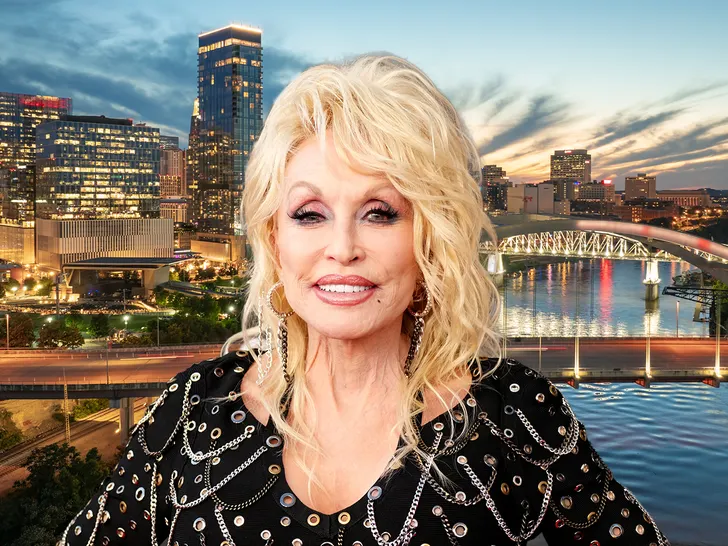
Dolly Parton, the country music legend whose voice, songwriting and unmistakable personality made her one of the most recognisable entertainers in the world, has died at 80. The singer-songwriter, actress and philanthropist died Tuesday, August 25, in Nashville, Tennessee, after a brief battle with cancer, according to her representatives. Her nephew Bryan Seaver announced the news in a video shared through Parton’s official social media accounts, bringing an end to a seven-decade career that stretched from country music to Hollywood, television, business and philanthropy.
Parton leaves behind a catalogue that includes “Jolene,” “9 to 5,” “Coat of Many Colors” and “I Will Always Love You,” along with a cultural legacy that goes far beyond record sales and awards. She became a movie star, built Dollywood into one of the best-known theme parks in the United States and created charitable initiatives that put books into the hands of millions of children. Her death comes after a period in which she had been dealing with health problems while continuing to remain involved in creative projects.
From A Tennessee Childhood To Country Stardom
Parton was born on January 19, 1946, as the fourth of 12 children in a poor farming family in Sevierville, Tennessee. Her childhood circumstances would later become part of the songwriting language that defined her career, most famously through “Coat of Many Colors,” which drew from the experience of her mother making clothes for the children from scraps of fabric. Music was part of the family environment, and Parton began performing in church before moving into local radio and television appearances as a child.
At just 13, she recorded “Puppy Love” for Louisiana-based Goldband Records and appeared on the Grand Ole Opry. After graduating from high school in 1964, she moved to Nashville, initially building a reputation as a songwriter before becoming a recording artist in her own right. Her early work included songs written for performers such as Skeeter Davis and Kitty Wells, establishing the songwriting ability that would eventually become one of the defining features of her career.
Her breakthrough as a performer came through her partnership with Porter Wagoner. Parton joined Wagoner’s television show in 1967 after replacing Norma Jean, and despite initial resistance from some of his audience, she quickly became a popular part of the act. Their partnership produced 11 top-10 country singles, but Parton eventually realised that stepping away from Wagoner was necessary for her solo career to fully develop.
That decision produced one of the most important songs in her career. Parton wrote “I Will Always Love You” as a farewell to Wagoner, and the song became a No. 1 country hit in 1974 and again in a later version. She retained the publishing rights rather than giving them up when Elvis Presley was offered the song, a decision that became enormously significant when Whitney Houston recorded it for The Bodyguard in 1992. Houston’s version became a worldwide phenomenon and transformed Parton’s composition into one of the most famous songs in modern popular music.
Music Made Her A Star, But Hollywood Expanded Her Reach
Parton’s success was never confined to Nashville. During the late 1970s and early 1980s, her country career increasingly crossed into mainstream pop, with “Here You Come Again” becoming a major crossover hit and earning her first Grammy. She followed that success with “9 to 5,” the title song from the 1980 comedy starring Parton alongside Jane Fonda and Lily Tomlin. The song became both a country and pop success, earned Grammy recognition and brought Parton an Academy Award nomination for Best Original Song.
Her acting career continued with films including The Best Little Whorehouse in Texas and Steel Magnolias. Parton’s screen presence was different from that of many traditional movie stars because she carried the same humour, warmth and larger-than-life personality that defined her music career. She also became involved behind the scenes, working with former manager Sandy Gallin through Sandollar Productions, which was connected to projects including Buffy the Vampire Slayer and the Father of the Bride films.
Her music remained equally important even when mainstream country radio began moving toward a younger generation of stars. Parton returned to rootsier material through collaborations with Emmylou Harris and Linda Ronstadt, with the Trio albums becoming critical and commercial successes. She later explored bluegrass through albums including The Grass Is Blue, Little Sparrow and Halos & Horns, earning further Grammy recognition and proving that her artistic identity was never dependent on one particular phase of country music.
Her final studio album was Rockstar, released in 2023 after Parton embraced her long-delayed induction into the Rock & Roll Hall of Fame in 2022. She had initially resisted the nomination because she did not consider herself a rock artist, but eventually accepted the honour and used the project to record collaborations with major names from rock and pop. The album became a fitting late-career statement from an artist who had spent decades refusing to remain inside one musical category.
Dollywood And A Legacy Beyond Music
Perhaps the most important part of Parton’s legacy outside entertainment is the way she turned her success into large-scale philanthropy. Her Dollywood Foundation launched the Imagination Library in 1995, initially providing books to children in her home county before the programme expanded across the United States and internationally. The initiative eventually grew into a global literacy programme distributing millions of books each year, reflecting Parton’s own understanding of how limited access to education had affected her family while growing up.
Parton also used her wealth and influence to support medical research and community projects. In 2020, she donated $1 million to Vanderbilt University Medical Center for Covid-19 research, funding that became associated with work contributing to the development of the Moderna vaccine. Her charitable work also extended to disaster relief, healthcare, literacy and other causes, making philanthropy a central part of her public identity rather than an occasional celebrity initiative.
Dollywood became another major part of that legacy. Located in Pigeon Forge, Tennessee, near Parton’s childhood home, the theme park grew into a major attraction and a business empire built around her Appalachian roots. Parton’s involvement showed another side of her career: she was not simply a performer who licensed her name, but an entertainer who understood how music, storytelling, tourism and personal identity could be combined into a lasting brand.
In recent years, Parton remained involved in projects connected to her life and music. A musical inspired by her career premiered in Nashville in 2025, while Dolly Parton’s Threads: My Songs in Symphony brought her catalogue to orchestral audiences. She also remained involved in television and film projects and continued appearing in public despite mounting health concerns.
Those concerns became increasingly visible in 2025 and 2026. Parton postponed a planned six-show Las Vegas residency after revealing that she was dealing with health challenges and needed medical procedures, and she later missed other appearances because of illness. In August 2026, shortly before her death, she said she had been advised by her Nashville doctor not to travel because she was experiencing dehydration and dizziness. Her representatives have now confirmed that she died after a brief battle with cancer.
Parton was preceded in death by her husband, Carl Dean, whose death was announced in March 2025 after nearly six decades of marriage. She leaves behind a career that crossed generations precisely because it was never only about one thing. She could write a devastating country ballad, make audiences laugh in a Hollywood comedy, build a major entertainment business and then use that success to put books into the hands of children who might otherwise have gone without them.
That combination is what makes Dolly Parton’s passing feel larger than the loss of a music star. She turned a childhood marked by poverty into songs about dignity, heartbreak and hope, then carried those ideas into film, business and philanthropy. Her rhinestones, wigs and self-deprecating humour became part of the image, but the lasting substance was always the work behind them.
Dolly Parton: Key Questions Answered
How old was Dolly Parton when she died?
Dolly Parton was 80 years old. She was born on January 19, 1946, and died in Nashville on August 25, 2026.
What was Dolly Parton’s cause of death?
Parton’s representatives said she died after a “brief battle” with cancer. Her representatives did not publicly specify the type of cancer.
What are Dolly Parton’s most famous songs?
Her best-known songs include “Jolene,” “I Will Always Love You,” “9 to 5,” “Coat of Many Colors” and “Here You Come Again.” “I Will Always Love You” became an international phenomenon after Whitney Houston recorded it for The Bodyguard.
Was Dolly Parton also an actress?
Yes. Parton had a substantial film and television career, with major movie roles including 9 to 5, The Best Little Whorehouse in Texas and Steel Magnolias. She also remained involved in television productions throughout her career.
What is Dolly Parton’s Imagination Library?
The Imagination Library is a literacy initiative founded by Parton that provides free, age-appropriate books to young children. It began in her native Tennessee and later expanded internationally, becoming one of her most significant philanthropic legacies.
What was Dolly Parton’s final album?
Her final album was Rockstar, released in 2023. The project followed her 2022 induction into the Rock & Roll Hall of Fame and featured collaborations with major artists from rock, pop and country.