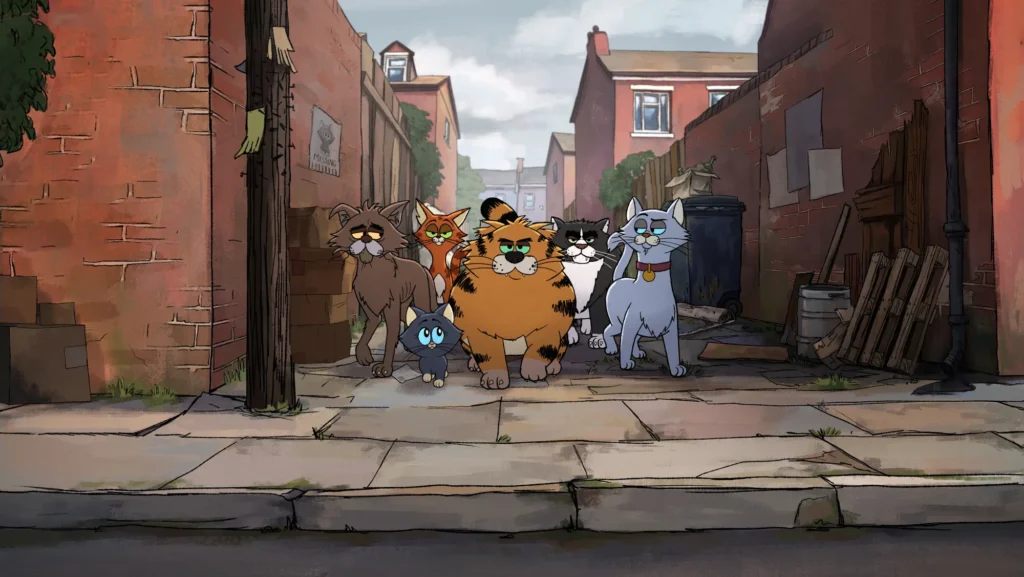
Netflix has added another adult animated comedy to its growing lineup, but Alley Cats isn’t interested in chasing loud punchlines or fast-paced chaos. Created by and starring Ricky Gervais, the six-episode series follows a group of stray cats surviving on London’s streets, mixing crude humour with surprisingly thoughtful moments about loneliness, friendship and everyday survival. While the premise may sound familiar, the show’s distinctly British tone gives it an identity of its own, offering viewers something quieter and more reflective than many recent animated comedies.
At the centre of the story is Gus, an overweight orange tabby voiced by Gervais himself. Living inside an abandoned London house with fellow strays Puke, Fang and Olive, Gus spends his days avoiding responsibility, scavenging for food, watching television and engaging in endless conversations about the most ridiculous subjects imaginable. The series embraces these seemingly pointless moments, using them to build the personalities of its feline cast instead of relying on elaborate storylines.
British Humour Meets Unexpected Emotional Depth
The opening episode immediately establishes the show’s personality when Gus casually outlines his typical day, setting the tone for a comedy built around laziness, distraction and absurd observations. Rather than packing every minute with jokes, Alley Cats allows conversations to unfold naturally, finding humour in awkward pauses, bizarre debates and the strange logic of street animals trying to make sense of the world around them.
The supporting characters each bring their own flavour to the group. Puke is scruffy and unpredictable, Fang often joins in the gang’s offbeat discussions, while Olive quietly carries an unspoken affection that adds emotional texture beneath the comedy. There’s also Ponce, a pampered house cat whose comfortable lifestyle stands in sharp contrast to the rough existence of the stray crew. Through these relationships, the series quietly explores class differences, privilege and belonging without turning those themes into heavy-handed social commentary.
The dialogue leans heavily into Ricky Gervais’ trademark style, filled with dry sarcasm, uncomfortable observations and adult humour. Much of the comedy comes from the group’s random conversations rather than traditional joke setups, giving the series an almost improvised feel that suits its laid-back pacing.
More Than Just a Comedy About Talking Cats
Although the humour can be crude and intentionally provocative, Alley Cats frequently shifts into surprisingly emotional territory. Life on the streets is portrayed without romanticising it, and the series doesn’t shy away from showing how unpredictable and fragile that existence can be. Characters come and go suddenly, loss becomes part of everyday life, and beneath the jokes lies a recurring reminder that survival itself is never guaranteed.
One of the season’s main storylines revolves around a lost kitten whom Gus and his friends decide to help. The journey gradually reveals a softer side to Gus without abandoning the cynical personality that defines him. Rather than forcing sentimental moments, the show allows emotional connections to develop naturally, making the quieter scenes more effective when they arrive.
The balance between comedy and melancholy is where Alley Cats stands apart from many adult animated series. It never fully commits to becoming an emotional drama, nor does it remain a nonstop comedy. Instead, it exists comfortably somewhere in between, using humour to make its emotional moments feel more genuine.
At just six episodes, however, the series occasionally feels rushed. Some storylines—particularly those involving Gus’ family—arrive and disappear before they receive enough development. With slightly longer episodes or a larger episode count, the emotional arcs could have carried greater impact.
Final Verdict
Alley Cats won’t appeal to everyone. Viewers expecting rapid-fire jokes or outrageous animated adventures may find its slower pace unusual. However, those who appreciate Ricky Gervais’ dry humour and character-driven storytelling will likely enjoy its understated approach. Beneath the foul language and cynical outlook is a surprisingly heartfelt series about companionship, resilience and finding small moments of happiness even in difficult circumstances.
It isn’t Netflix’s funniest animated comedy, but it may be one of its most quietly human. By blending dark comedy with emotional honesty, Alley Cats delivers an experience that lingers long after its short runtime comes to an end.
PopcornRealm Rating: 3.5/5
Q&A
What is Alley Cats about?
Alley Cats follows a group of stray cats living in London as they navigate daily survival while forming unlikely friendships.
Who created Alley Cats?
The Netflix animated comedy was created by Ricky Gervais, who also voices the lead character, Gus.
How many episodes are in Alley Cats?
The first season consists of six episodes, each running for under 20 minutes.
Is Alley Cats suitable for children?
No. The series is aimed at adults and contains strong language, mature humour and dark themes.
What makes Alley Cats different from other adult animated comedies?
Instead of relying on constant jokes, the show combines British dry humour with emotional storytelling and character-driven conversations.
Where can you watch Alley Cats?
All six episodes of Alley Cats are currently streaming on Netflix.