The wait for Ramayana is getting more intense, and the film has now given audiences their first real taste of its musical world. On Ganesh Chaturthi, the makers unveiled “Jai Jai Ram”, the first song from Nitesh Tiwari’s ambitious adaptation starring Ranbir Kapoor and Sai Pallavi. With A.R. Rahman composing the music and Arijit Singh and Shreya Ghoshal lending their voices, the track takes a devotional route rather than trying to make a conventional promotional splash.
The song arrives at a particularly significant point in the film’s campaign, with the grand release approaching during the Diwali season of 2026. Its launch also coincided with the unveiling of the “Siya Ram” poster featuring Ranbir and Sai Pallavi as Lord Rama and Sita. Together, the poster and song have offered audiences a glimpse at the emotional and spiritual side of the much-awaited epic. Rather than revealing another major action sequence, the makers have chosen devotion as the first musical statement from the film.
Arijit Singh And Shreya Ghoshal Lead Jai Jai Ram
“Jai Jai Ram” is built around a simple devotional refrain that gives the song its identity almost immediately. The central hook, “Jai Jai Ram, Meri Pooja Mere Ram. Jai Jai Ram, Chaaro Dham Mere Ram”, keeps the focus firmly on faith and devotion to Lord Rama. Kumar Vishwas has written the lyrics, giving the composition a prayer-like quality that sits naturally within the larger world of Ramayana. The song is less about spectacle and more about creating an emotional connection with the character at the heart of the story.
Shreya Ghoshal leads the opening section with a gentle, melodic vocal performance that establishes a peaceful mood. Her portion centres on Lord Rama’s love, blessings and the comfort associated with keeping his name close to the heart. The arrangement then gains another emotional layer when Arijit Singh enters, bringing the kind of soulful intensity that has become a familiar part of his musical identity. His vocals reinforce the song’s message of finding hope and strength through Lord Rama’s name during moments of fear or uncertainty.
That contrast between Shreya’s serene opening and Arijit’s more emotionally charged presence gives the track a gradual sense of movement. Instead of rushing toward a large cinematic payoff, the composition appears designed to let the devotional sentiment build naturally. It also reflects the challenge of creating music for a story that is deeply familiar to generations of Indian audiences. The first song therefore has to feel cinematic while still retaining the intimacy of a prayer.
A.R. Rahman has described that balance as central to the composition. He said, “At the heart of ‘Jai Jai Ram’ is the simple and powerful repetition of Shri Ram’s name. Musically, the intention was to preserve the purity and intimacy of a prayer while allowing the composition to grow into a cinematic song. Arijit Singh and Shreya Ghoshal bring their own distinct emotional expression to Dr. Kumar Vishwas’s words, while always remaining true to the devotion at the centre of the song. I hope audiences find both a sense of peace and a personal connection in it.”
Why Jai Jai Ram Matters For Ramayana
For a film as closely associated with mythology, faith and cultural memory as Ramayana, the first song carries significance beyond its musical appeal. The makers are introducing the world of the film through a devotional perspective, placing Lord Rama’s values and spiritual presence ahead of the spectacle surrounding the epic. That approach could help establish the emotional foundation of the film before audiences see more of its larger-scale storytelling. It also gives the soundtrack a clear identity from the beginning.
Namit Malhotra, Filmmaker and Producer, said, “Shri Ram is at the heart of Ramayana and, for generations, has been the guide we turn to through every phase of life. In moments of darkness, we seek his strength. In moments of uncertainty, we look to his path. And in moments of joy, we remember him with gratitude. ‘Jai Jai Ram’ comes from that deeply personal and timeless relationship we share with Shri Ram. “While Ramayana is being created on a great scale, its true foundation lies in its emotion, its values and its devotion. With ‘Jai Jai Ram’, we wanted our first song to reflect that soul , to celebrate Shri Ram not only as someone we worship, but as the protector, guide and source of strength we carry within us. Beginning this musical journey on Ganesh Chaturthi felt especially meaningful because, in our culture, every auspicious beginning starts by seeking the blessings of Lord Ganesha.”
The timing of the launch adds another layer to the presentation. Ganesh Chaturthi is traditionally associated with auspicious beginnings, making it a fitting occasion for the makers to introduce the first major musical piece from the film. The simultaneous “Siya Ram” poster reveal also connected the song directly with Ranbir Kapoor and Sai Pallavi’s portrayal of Rama and Sita. It gives the campaign a more devotional tone at a stage when curiosity around the film is already high.
The choice of Rahman, Arijit Singh, Shreya Ghoshal and Kumar Vishwas also gives the song considerable musical weight. Each brings a distinct creative identity to the track, while the composition itself is expected to serve the larger emotional world of the film. For audiences who have grown up hearing different musical interpretations of the Ramayana, this new version has the difficult task of sounding familiar in spirit while still belonging to a contemporary cinematic production. “Jai Jai Ram” is the first indication of how the team intends to approach that challenge.
Ramayana’s Ensemble Cast And Diwali Release
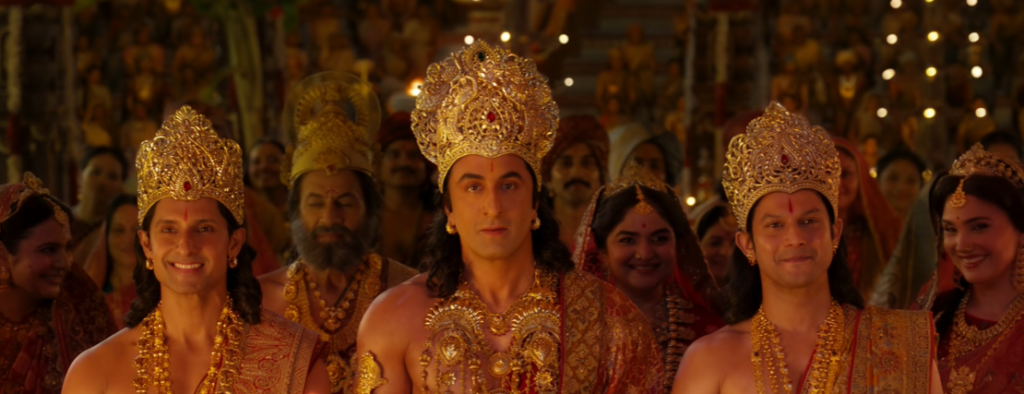
The film’s scale extends well beyond its central pairing. Ranbir Kapoor plays Lord Rama opposite Sai Pallavi as Sita, while Sunny Deol takes on the role of Lord Hanuman and Yash portrays Ravana. Ravie Dubey plays Lakshman, Rakul Preet Singh appears as Shurpanakha and Kunal Kapoor has been cast as Lord Indra. Adinath Kothare, Lara Dutta, Sheeba Chaddha and Arun Govil are also part of the ensemble in pivotal roles.
That casting has been one of the major talking points around Ramayana, particularly because the film is attempting to bring one of India’s most recognised epics to the big screen on a large scale. The first song now adds another piece to the picture, showing that the makers are not relying solely on visual grandeur. The emotional and devotional dimensions are being placed alongside the film’s larger cinematic ambitions. For viewers, that could make the eventual experience feel broader than a straightforward mythological spectacle.
With the countdown to Diwali 2026 underway, “Jai Jai Ram” gives the film’s promotional campaign a distinctly spiritual beginning. The track’s focus on faith, protection and inner strength complements the “Siya Ram” poster and establishes the emotional space surrounding Ranbir and Sai Pallavi’s characters. As more songs, footage and promotional material arrive, audiences will get a clearer sense of how the film balances its mythology with its cinematic scale. For now, Ramayana has chosen devotion as its opening musical note, and that feels like a deliberate statement about what lies at the heart of the epic.
Ramayana Jai Jai Ram: Q&A
What is the first song from Ramayana?
The first song released from Ramayana is titled “Jai Jai Ram”. The devotional track has music by A.R. Rahman and lyrics by Kumar Vishwas. Arijit Singh and Shreya Ghoshal provide the vocals. The song focuses on devotion to Lord Rama and his role as a source of strength and guidance.
Who sang Jai Jai Ram from Ramayana?
“Jai Jai Ram” features Arijit Singh and Shreya Ghoshal as its lead vocalists. Shreya opens the track with a melodic and peaceful section before Arijit adds a more soulful emotional layer. Their contrasting vocal styles shape the song’s gradual progression. The composition is designed to retain the intimacy of a prayer while working within a cinematic setting.
Who composed Jai Jai Ram?
A.R. Rahman composed “Jai Jai Ram” for Ramayana. Rahman said the musical intention was to preserve the purity and intimacy of a prayer while allowing the composition to develop into a cinematic song. Kumar Vishwas has written the lyrics. The song uses the repeated name of Shri Ram as its central musical idea.
Who wrote the lyrics of Jai Jai Ram?
The lyrics of “Jai Jai Ram” were written by Kumar Vishwas. The song revolves around a devotional refrain dedicated to Lord Rama. Its lyrics focus on faith, protection, guidance and the emotional strength associated with remembering Rama. The devotional approach forms the foundation of the track.
Who plays Rama and Sita in Ramayana?
Ranbir Kapoor plays Lord Rama, while Sai Pallavi portrays Sita in Ramayana. The film also features Sunny Deol as Lord Hanuman and Yash as Ravana. Ravie Dubey plays Lakshman, while Rakul Preet Singh portrays Shurpanakha. Kunal Kapoor is part of the cast as Lord Indra.
When is Ramayana releasing?
The supplied source places Ramayana among the major releases being lined up for Diwali 2026. The film is directed by Nitesh Tiwari and stars Ranbir Kapoor and Sai Pallavi in the central roles. Its promotional campaign has already begun with the “Jai Jai Ram” song and the “Siya Ram” poster. More details about the film’s release campaign are expected as the Diwali window approaches.