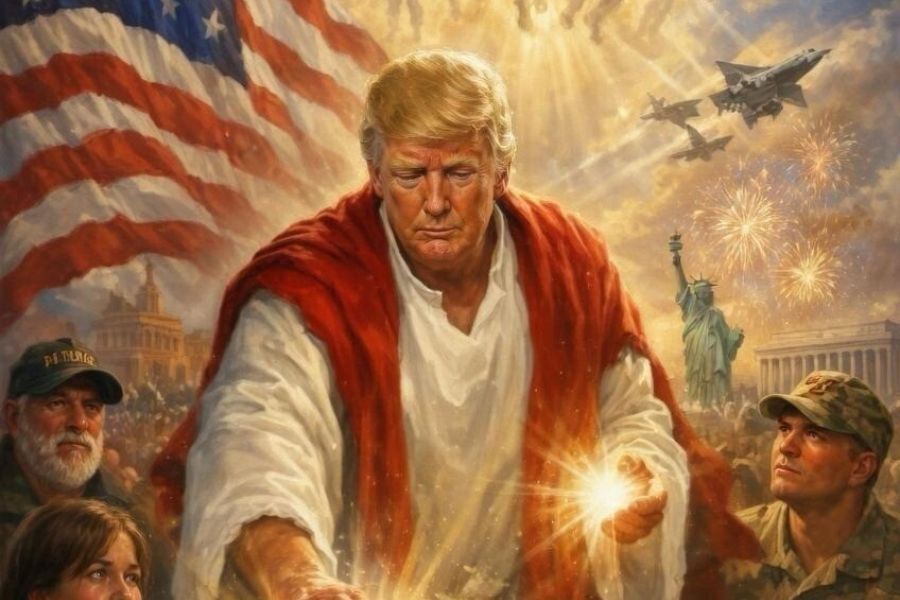
Donald Trump found himself at the center of a fresh controversy after sharing — and then quickly removing — an AI-generated image that portrayed him in a Christ-like role.
The post, uploaded to his Truth Social account late Sunday, sparked immediate backlash across political lines, including from some of his own supporters.
The Post That Triggered The Storm
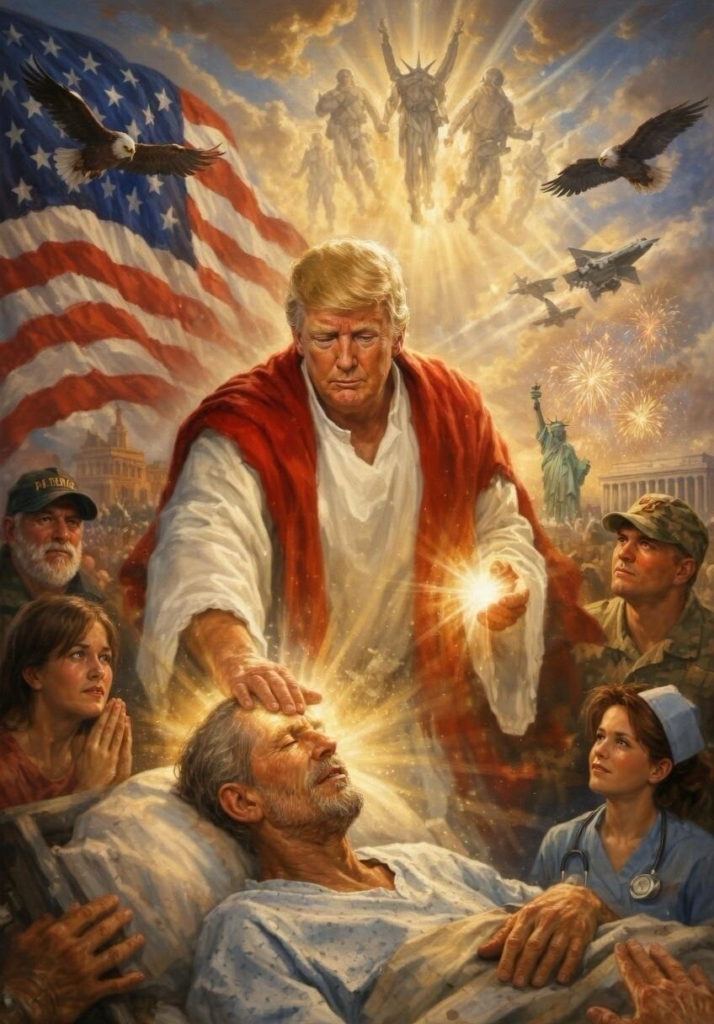
The image showed Trump dressed as a depiction of Jesus Christ, appearing to heal a man while being watched by doctors, military personnel, and symbolic American imagery like bald eagles and fighter jets.
The reaction was almost instant — and overwhelmingly negative.
Critics called it inappropriate and offensive, but what stood out was the pushback from conservative voices, many of whom described the image as blasphemous rather than political.
Backlash From Within His Own Camp
Several well-known conservative commentators publicly urged Trump to take the post down.
Some questioned the intent behind sharing such imagery, while others warned that it crossed a line by mixing religious symbolism with political identity. The criticism wasn’t subtle — words like “blasphemy,” “disrespectful,” and “unnecessary” dominated reactions online.
Even voices typically aligned with Trump suggested the move was avoidable and damaging, both politically and personally.
Timing Made It More Sensitive
The controversy didn’t happen in isolation.
The post came shortly after Trump criticized Pope Leo over his stance on the Iran conflict, calling him “weak.” That added another layer to the situation, making the image feel more provocative in context.
With religious sentiment already in focus, the AI-generated portrayal only intensified reactions.
Quiet Removal, No Explanation
The image was eventually deleted from Truth Social, but there has been no official explanation or statement from the White House.
That silence has left room for interpretation — whether it was removed due to backlash, internal advice, or simply damage control.
Bigger Picture: When AI Meets Politics
This incident highlights a growing issue — how AI-generated content is blurring lines in political communication.
What might be intended as symbolism or messaging can quickly be interpreted as offensive, especially when it involves religious imagery.
And in a hyper-connected environment, reactions move faster than clarifications.
Where This Leaves The Situation
For now, the post is gone — but the conversation isn’t.
The incident adds to ongoing debates around political messaging, the use of AI visuals, and the boundaries of religious representation in public life.
Because in moments like this, it’s not just about what was posted.
It’s about how quickly it resonates — and how hard it is to take back once it does.