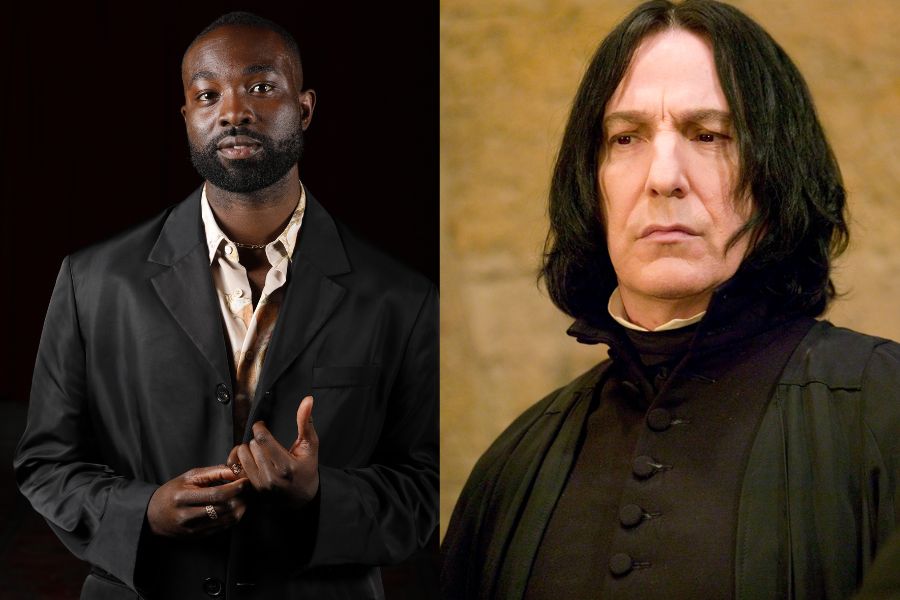
The upcoming Harry Potter series from HBO Max has been generating massive buzz ever since its casting announcements began rolling out. But what should have been a moment of excitement for fans has now taken a troubling turn. Actor Paapa Essiedu, who is set to play the iconic Professor Snape, has revealed that he has been receiving racist abuse and even death threats following his casting.
The revelation has sparked a larger conversation around fandom culture, representation, and the darker side of online reactions — especially when beloved characters are reimagined for a new generation.
A Dream Role Overshadowed by Hate
For many actors, stepping into the world of Harry Potter would be a career-defining opportunity. For Paapa Essiedu, it still is — but the journey has come with unexpected emotional challenges.
In a recent interview, Essiedu opened up about the kind of messages he has been receiving on social media. Some of them, he revealed, have gone far beyond criticism, crossing into outright threats.
He shared that he has been told to step down from the role or face violence — including messages that explicitly threatened his life. While he believes most of these threats are unlikely to be carried out, he admitted that dealing with such hostility has not been easy.
More importantly, he made it clear that no one should have to face this level of hate simply for accepting a role.
The Backlash Around Snape’s Casting
The character of Severus Snape remains one of the most complex and beloved figures in the Harry Potter universe. Originally portrayed by Alan Rickman in the film series, Snape has a deeply established image in the minds of fans.
Any reinterpretation of such a character is bound to spark debate — but in this case, the reaction has gone beyond disagreement into something far more serious.
Essiedu’s casting has become a focal point of that backlash, with a section of fans expressing resistance to the new interpretation. However, the intensity of the response highlights a growing issue within fandom spaces, where criticism can sometimes turn into targeted abuse.
Essiedu’s Response: Turning Negativity Into Motivation
Despite the wave of backlash, Paapa Essiedu has made it clear that he is not backing down. In fact, he says the experience has strengthened his determination to bring something unique to the character.
Rather than trying to replicate what came before, Essiedu appears focused on creating his own version of Snape — one that fits the tone and vision of the new series.
He also spoke about the importance of representation, especially in a universe as widely loved as Harry Potter. For younger audiences, seeing diverse faces in iconic roles can be a powerful experience — something Essiedu himself understands from his own childhood.
It’s this perspective that seems to be driving his commitment to the role, even in the face of criticism.
A Long-Term Commitment to the Wizarding World
Unlike a single film project, the upcoming Harry Potter series is designed as a long-term adaptation. Each of the seven books will reportedly be turned into a separate season, meaning the cast will be part of the franchise for years.
Essiedu has already acknowledged the scale of that commitment, noting that the project will likely span a decade of his life. By the time the series concludes, he expects to be in his mid-40s — a reflection of just how significant this role is for his career.
This long-term vision also raises the stakes for the series, as both creators and actors will have to sustain audience engagement over multiple seasons.
Meet the New Generation of Hogwarts
Alongside Essiedu, the series has introduced a fresh cast to bring Hogwarts back to life.
Dominic McLaughlin will take on the role of Harry Potter, while Arabella Stanton and Alastair Stout will portray Hermione Granger and Ron Weasley respectively.
The supporting cast also includes notable names like John Lithgow as Albus Dumbledore, Janet McTeer as Minerva McGonagall, Nick Frost as Rubeus Hagrid, and Luke Thallon as Quirinus Quirrell.
With such a mix of fresh faces and established performers, the series is clearly aiming to strike a balance between nostalgia and reinvention.
The Weight of Legacy vs The Need for Reinvention
Revisiting a franchise as iconic as Harry Potter comes with its own set of challenges. On one hand, there’s a deeply loyal fanbase with strong emotional connections to the original films. On the other, there’s the need to reimagine the story for a new era.
The casting of Paapa Essiedu as Snape sits right at the centre of this tension.
While some fans are resistant to change, others see it as an opportunity to expand the universe and bring in new perspectives. The success of the series will likely depend on how well it balances these expectations.
A Broader Conversation About Fandom Culture
What makes this situation particularly important is the larger conversation it has sparked.
The line between passionate fandom and harmful behaviour has been increasingly blurred in recent years. Social media has given fans a direct voice — but it has also amplified negativity when things don’t align with expectations.
Essiedu’s experience is a reminder that behind every casting decision is a real person. Disagreement is natural, but personal attacks and threats are not.
Looking Ahead to 2027
The Harry Potter series is expected to premiere in 2027, giving creators ample time to build a world that both honours the original material and introduces something new.
For now, the focus remains on casting, development, and shaping the tone of the show. But as this controversy shows, the conversation around the series has already begun — and it’s far from quiet.
More Than Just a Casting Controversy
At its core, this story isn’t just about one actor facing backlash. It’s about how audiences respond to change, how the industry navigates legacy franchises, and how important it is to maintain respect in creative spaces.
Paapa Essiedu stepping into the role of Snape marks a new chapter for Harry Potter. And while the road ahead may come with challenges, it also carries the potential to redefine how this beloved story is told for the next generation.
Because in the end, magic isn’t just about spells and potions — it’s about how stories evolve with time.