If Dhurandhar: The Revenge already felt raw, violent, and unfiltered on screen, here’s something that might surprise you — what audiences saw was only a toned-down version of what was actually shot. The film, which has been dominating conversations for both its scale and intensity, was originally designed to be far more brutal before creative decisions shaped its final cut.
In a recent interaction, action director Aejaz Gulab opened up about the making of the film’s high-impact sequences and revealed how director Aditya Dhar pushed the team to explore extreme levels of action — both physically and visually. The result? A film that still feels intense, but could have been even more hard-hitting if everything that was shot had made it to theatres.
Only 60% of the Brutality Made It to the Screen
From the very beginning, Dhurandhar: The Revenge was envisioned as a gritty, no-holds-barred action spectacle. According to Aejaz, the team went all out while designing the sequences, shooting them in full graphic detail without holding back.
However, the final version that audiences are watching today is only about 60% of what was originally planned and filmed.
The reason behind this decision reflects the changing nature of film consumption. With OTT platforms becoming a major second window for theatrical releases, filmmakers are increasingly aware that their content will eventually reach a wider, younger audience.
Aejaz explained that while the team had captured extremely graphic visuals, they chose to scale things back to ensure the film remains accessible when it arrives on digital platforms. It’s a balancing act between creative ambition and audience sensitivity — something many modern filmmakers are navigating today.
Aditya Dhar’s Vision: Raw, “Manly” and Uncompromising
What stands out in Aejaz Gulab’s revelations is the kind of creative freedom the team was given. Aditya Dhar didn’t just want standard action — he wanted something that felt visceral, aggressive, and emotionally charged.
According to Aejaz, the director encouraged the team to think beyond conventional fight choreography. Instead of simple punches or stylised moves, Dhar pushed for sequences that felt grounded yet brutally impactful.
His instruction was clear — imagine the most intense ways possible to execute action and bring that vision to life.
This approach explains why the action in Dhurandhar: The Revenge feels different from typical commercial cinema. It isn’t just about spectacle; it’s about creating a sense of danger and unpredictability that keeps the audience on edge.
Improvisation Played a Key Role in the Film’s Most Powerful Moments
Interestingly, not all of the film’s standout action moments were meticulously pre-planned. Some of the most impactful scenes came together organically during filming.
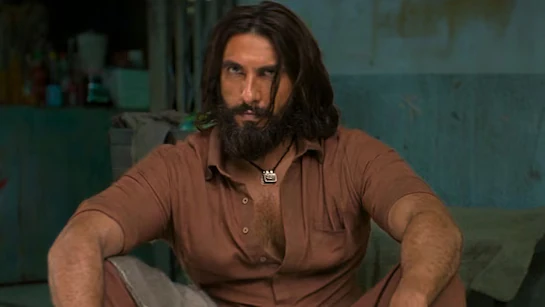
Aejaz revealed that certain sequences — including a crucial moment involving Ranveer’s character using debris during a confrontation — were improvised on set. These spontaneous additions brought an extra layer of authenticity to the film.
This kind of on-the-spot creativity often adds unpredictability, making scenes feel less choreographed and more real. It also reflects the trust between the director and the action team, allowing them to experiment within the larger vision of the film.
The Climax: A 30-Minute Test of Endurance
One of the most talked-about aspects of the film is its extended climax, which runs for over 30 minutes and serves as a culmination of its emotional and action-driven arcs.
But behind the scenes, this sequence was anything but easy.
The masjid-based climax alone required six days of rehearsals and nearly two weeks of shooting. Maintaining continuity across such a long and detailed sequence proved to be one of the biggest challenges for the crew.
Every department — from costumes to hair and makeup — had to work with extreme precision. Reference images were taken after each shot to ensure consistency, as even the smallest mismatch could disrupt the visual flow of the sequence.
This level of coordination highlights the scale of the production and the effort that goes into crafting such large, uninterrupted action set-pieces.
Ranveer Singh and Arjun Rampal Pushed Their Limits
At the centre of these intense sequences were Ranveer Singh and Arjun Rampal, both of whom reportedly went all-in to bring authenticity to their performances.
One particularly demanding sequence involved a chain fight, where the actors used rubber chains for safety. While these props are designed to reduce risk, they still carry weight and impact — meaning the actors weren’t entirely shielded from physical strain.
According to Aejaz, both Ranveer and Arjun sustained multiple minor injuries during rehearsals and shoots. What’s remarkable, however, is that neither actor chose to stop or slow down.
This level of commitment adds a layer of realism that audiences can often feel, even if they don’t consciously notice it.
Crafting Brutality: A Mix of Practical Effects and Cinematic Techniques
Despite the talk of extreme violence, the film’s action isn’t purely about raw force. It’s a carefully constructed blend of practical effects, camera work, and visual enhancements.
Aejaz explained that the team relied on a combination of dummy props, smart framing, and VFX to create the illusion of brutality without compromising safety.
This hybrid approach ensures that the action feels grounded while still delivering the cinematic punch expected from a large-scale production.
It also reflects how modern action filmmaking has evolved — moving away from purely physical stunts to a more layered, technical process.
The Bigger Picture: Action Cinema in the OTT Era
What makes this revelation particularly interesting is how it reflects a broader shift in the industry.
Filmmakers today are no longer creating content solely for theatres. With OTT platforms playing a major role in a film’s lifecycle, there’s a growing awareness of how content will be perceived across different audiences.
In the case of Dhurandhar: The Revenge, this meant dialing down the intensity without completely losing the film’s core identity.
It’s a delicate balance — maintaining the director’s vision while ensuring the film remains accessible and widely acceptable.
Why the Final Cut Still Works
Even after reducing the original level of brutality, Dhurandhar: The Revenge continues to stand out for its action design. The sequences still feel impactful, immersive, and emotionally driven.
In fact, one could argue that the restraint might have worked in the film’s favour. By not going overboard, the action remains engaging without becoming overwhelming.
It also allows the performances and storytelling to take centre stage, rather than being overshadowed by excessive violence.
A Film Built on Vision, Effort, and Control
The story behind the making of Dhurandhar: The Revenge offers a fascinating glimpse into how large-scale action films are crafted today. It’s not just about bigger explosions or louder fights — it’s about intention, precision, and knowing where to draw the line.
Aditya Dhar’s vision pushed the team to explore extremes, while the final edit ensured that the film remained balanced and accessible.
And perhaps that’s what defines the film best — not just how intense it is, but how carefully that intensity has been shaped.
Because sometimes, what you don’t show can be just as powerful as what you do.