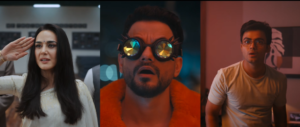
The buzz around Dhurandhar: The Revenge refuses to slow down — but this time, it’s not just about performances or storytelling. The sequel, which has already become a talking point across social media for its intense narrative and powerful characters, has now landed in the middle of a controversy involving AI-generated visuals and questions around cultural sensitivity.
What started as fan excitement has quickly turned into a mix of viral misinformation, public clarification, and ongoing debate — showing how easily a film’s narrative can shift beyond the screen in today’s digital age.
From Box Office Buzz to Online Frenzy
Ever since Dhurandhar first hit theatres, audiences have remained hooked to its world. The original film sparked conversations around Akshaye Khanna’s stylish and menacing portrayal of Rehman Dakait, along with Ranveer Singh’s high-energy performance as Hamza, also known as Jaskirat.
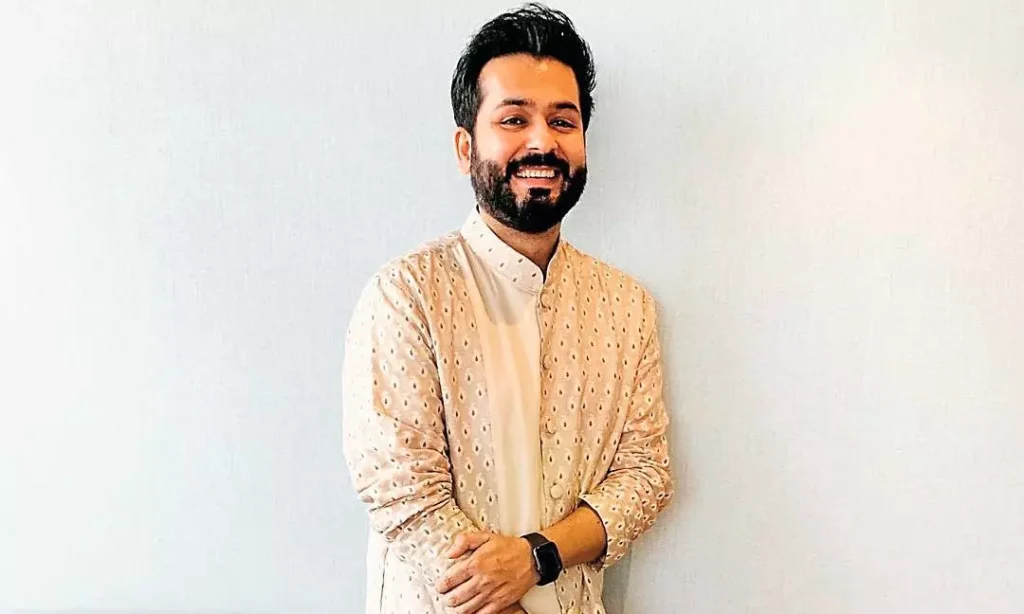
Director Aditya Dhar, known for his meticulous storytelling, built a reputation for attention to detail — something fans have continued to praise in the sequel.
With Dhurandhar: The Revenge now out, social media has been flooded with emotional reactions, breakdowns of key scenes, and — as expected — spoilers making the rounds. But amid all this excitement, a different kind of content began circulating.
The Fake Poster That Sparked the Storm
A poster allegedly from Dhurandhar 2 started going viral online. It showed Ranveer Singh’s character wearing a turban while smoking a cigarette — an image that quickly caught attention and raised concerns among viewers.
The problem? It wasn’t real.
As the image spread, discussions began to intensify, with many questioning the portrayal and its implications. Given the sensitivity around religious representation, the poster quickly became a flashpoint.
But before speculation could spiral further, Aditya Dhar stepped in.
Aditya Dhar Calls Out AI Manipulation
Taking to social media, Aditya Dhar issued a clear and firm statement addressing the situation.
He acknowledged the overwhelming love the film has received but also pointed out that certain manipulated visuals were being circulated using artificial intelligence. According to him, the viral poster was a fabricated image created by morphing official promotional material.
Dhar clarified that the depiction of Ranveer’s character smoking while wearing a turban does not exist in the film or any official content.
He described the image as a deliberate attempt to mislead audiences and create unnecessary controversy. More importantly, he emphasized that the film treats all cultural representations — particularly those related to the Sikh community — with respect and responsibility.
His statement also carried a warning, urging viewers not to fall for AI-generated misinformation and assuring that such acts would be dealt with seriously.
A Separate Controversy Adds Fuel to the Fire
Even as the AI poster issue was being addressed, another controversy added to the conversation.
Gurjyot Singh Keer, president of Sikhs in Maharashtra, raised concerns about a scene in the film involving R. Madhavan. According to him, the scene showed the actor reciting a sacred verse from the Dasam Granth while smoking — something he claimed was disrespectful and hurtful to Sikh sentiments.
The allegation quickly gained traction, adding another layer of scrutiny to the film.
Madhavan Responds With Clarification
R. Madhavan soon addressed the criticism, offering a detailed clarification.
He stated that before reciting the sacred verse, he was explicitly instructed by Aditya Dhar to extinguish the cigarette. According to Madhavan, the scene was carefully handled to ensure there was no disrespect.
He also pointed out that viewers who watch the scene closely would notice the absence of smoke, reinforcing his claim that the sequence was performed with sensitivity.
This response helped ease some concerns, but the conversation around representation and perception continued online.
When AI Meets Cinema: A Growing Concern
The fake poster controversy highlights a larger issue that the film industry is increasingly facing — the misuse of AI in shaping narratives.
With advanced tools making it easier to create realistic yet false visuals, misinformation can spread faster than ever. For films, especially those dealing with sensitive themes, this can lead to unintended backlash.
In the case of Dhurandhar: The Revenge, the AI-generated image didn’t just confuse audiences — it risked misrepresenting the film’s intent entirely.
This raises important questions about how filmmakers and studios can protect their work in an era where digital manipulation is becoming more sophisticated.
Audience Love vs Online Noise
Despite the controversies, one thing remains unchanged — the audience response.
The film continues to receive strong reactions for its performances, storytelling, and emotional depth. Fans are still discussing key moments, character arcs, and the intensity that defines the Dhurandhar universe.
In many ways, the controversies exist parallel to the film’s success — not necessarily overshadowing it, but adding a layer of noise around it.
A Film Caught Between Applause and Controversy
Dhurandhar: The Revenge now finds itself in a familiar position — celebrated on one hand, questioned on the other.
The AI poster incident shows how easily misinformation can shape perception, while the debate around certain scenes reflects the ongoing sensitivity around cultural representation in cinema.
Aditya Dhar’s quick response and Madhavan’s clarification have helped bring some clarity, but the situation also serves as a reminder of how complex the relationship between films and audiences has become.
What This Means Going Forward
For filmmakers, the takeaway is clear — storytelling no longer ends at release.
In today’s digital landscape, narratives continue to evolve through social media, user-generated content, and public interpretation. Managing that narrative has become just as important as creating it.
For audiences, it’s a moment to pause and question what they see online — especially when it comes from unofficial sources.
As Dhurandhar: The Revenge continues its run, it remains both a cinematic success and a case study in modern-day controversies — where real storytelling and artificial narratives can collide in unexpected ways.