A fresh controversy has gripped the entertainment industry, and this time it’s not about a film release or box office numbers. Instead, it’s music videos that have landed in serious legal trouble. The National Commission for Women (NCW) has stepped in, issuing summons to the makers and key faces behind two widely discussed songs — Tateeree and Sarke Chunar — after allegations of obscenity and objectionable content began circulating across media platforms.
The development has quickly snowballed into a major talking point, pulling in some of the biggest names from the industry, including Badshah, Nora Fatehi, and Sanjay Dutt, among others.
What Triggered The NCW Action
According to an official statement shared by the NCW on social media, the commission took note of reports claiming that both songs contained content that could be considered “obscene and vulgar.” After reviewing the material, the commission stated that the content appeared, at first glance, to violate provisions under the Bharatiya Nyaya Sanhita.
This initial observation was enough to prompt immediate action. The NCW moved swiftly, issuing formal summons to those involved and asking them to appear before the commission with all relevant documents.
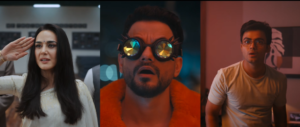
In the case of Tateeree, the notice has been sent to Badshah, who not only performed the track but was also involved in writing its lyrics. Director Mahi Sandhu and producer Hiten have also been asked to appear. The hearing has been scheduled for March 25, and the commission has made it clear that failure to comply could lead to legal consequences.
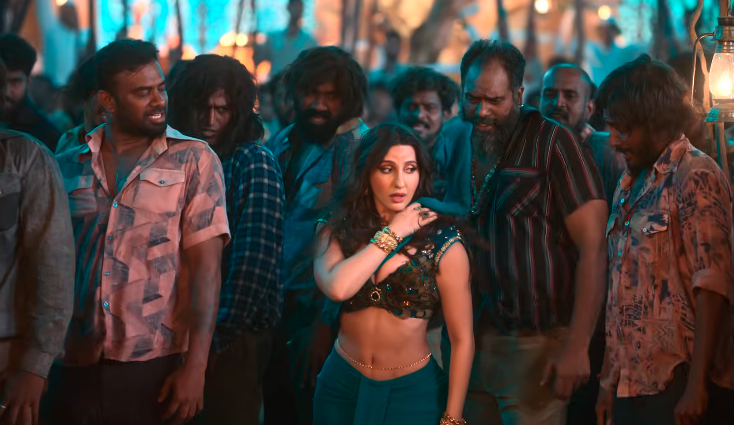
For Sarke Chunar, the situation appears even more sensitive. Actors Nora Fatehi and Sanjay Dutt, along with producer Venkat K Narayana and director Kiran Kumar, have been summoned to appear a day earlier, on March 24. The commission has described the content of the song as “sexually suggestive” and potentially in violation of multiple legal provisions, including the IT Act and the POCSO Act.
Nora Fatehi Distances Herself From The Controversy
As the backlash intensified, Nora Fatehi addressed the issue publicly, offering her side of the story. In a statement shared on Instagram, she clarified that her involvement with the song dates back several years and was limited to a Kannada version.
She explained that she had no knowledge of the Hindi version that has now sparked controversy. According to her, the updated version — including the lyrics and dubbing — was created without her consent or approval.
Nora further revealed that when she eventually came across the Hindi version, she immediately raised concerns with the team. She warned that the lyrics could attract backlash and urged the makers to reconsider. Her statement has added another layer to the controversy, shifting part of the focus toward the production process and decision-making behind the scenes.
CBFC Clarifies Its Position
Amid growing confusion, the Central Board of Film Certification (CBFC) also stepped in to clarify its role — or rather, its lack of involvement. In a statement to ANI, the board emphasized that it had not received any application for certification of the song in question.
The CBFC reiterated a key point that often gets overlooked in such debates — content released on digital platforms does not fall under its certification process. This clarification is significant, especially in an era where music videos and promotional content are increasingly released online without traditional censorship checks.
Government Response And Industry Impact
The controversy has even reached the political sphere. Union Minister for Information and Broadcasting Ashwini Vaishnaw addressed the matter in Parliament, confirming that action had already been taken against the song. Reports indicate that a ban was imposed, reflecting the seriousness with which authorities are treating the issue.
Meanwhile, lyricist Raqueeb Alam, who was credited with the Hindi version of Sarke Chunar, has also spoken out. He clarified that he was not the original writer of the lyrics and had merely been asked to translate the Kannada version. He claimed that he initially refused, anticipating that the content could face censorship issues, but was later persuaded to proceed with a direct adaptation.
His statement highlights the complexities involved in adapting regional content for a wider audience, especially when cultural nuances and sensitivities come into play.
The ‘Tateeree’ Controversy Deepens
While the NCW summons has brought fresh attention to the issue, the controversy surrounding Tateeree had already been escalating over the past few weeks. The song faced backlash soon after its release on YouTube, with critics pointing out problematic lyrics and visuals.
One of the major concerns raised was the portrayal of women in school uniforms, which led to accusations that the video could be interpreted as inappropriate or suggestive involving minors.
The situation took a more serious turn when the Haryana State Commission for Women got involved earlier this month. After Badshah failed to appear before the commission on March 13, authorities reportedly issued directions for his arrest and called for the seizure of his passport.
Renu Bhatia, chairperson of the commission, stated that multiple FIRs had been registered against the singer in different districts, signaling the scale of the legal pressure building around the case.
Badshah’s Apology And Public Reaction
Facing mounting criticism, Badshah issued a public apology, expressing regret if the song had hurt sentiments. He emphasized his roots in Haryana and stated that his intention was never to offend or portray women or children in a disrespectful manner.
He explained that as a hip-hop artist, his work often includes sharp, competitive lyrics, but insisted that Tateeree was not meant to target any specific group. His statement, while conciliatory, has done little to calm the broader debate.
The controversy has sparked wider conversations about creative freedom, accountability, and the evolving boundaries of acceptable content in Indian entertainment. As music videos continue to push stylistic and thematic limits, the line between bold expression and objectionable material remains a subject of intense scrutiny.
A Bigger Debate Beyond Two Songs
What began as backlash against two songs has now grown into a much larger discussion about regulation in the digital age. With platforms bypassing traditional certification systems, questions are being raised about who holds responsibility when content crosses perceived boundaries.
For now, all eyes are on the upcoming hearings. The appearances of high-profile names before the NCW are expected to shape the next phase of this controversy, possibly setting a precedent for how similar cases are handled in the future.
And as the industry watches closely, one thing is clear — this isn’t just about Tateeree or Sarke Chunar anymore. It’s about where the line is drawn, and who gets to draw it.