Nicolas Cage is not looking at the end of Spider-Noir as a disappointment. Just days after Prime Video decided not to continue the Nicolas Cage-led Marvel series beyond its first season, the actor has made it clear that he feels the eight-episode run accomplished what he wanted. For Cage, the show was never simply another superhero project, but a chance to create a strange, stylish and deliberately unconventional version of Spider-Man. His response to the cancellation is therefore less about what could have happened next and more about being satisfied with what already made it to the screen.
Speaking to Deadline, Cage said, “For me, one season is perfect, having said what I wanted to say with this dangerous, innovative, pop-art Spider-Man.” He followed that with the brief sign-off, “Onwards, upwards, inwards.” The statement is striking because Spider-Noir had enough critical recognition and awards attention to make a second season seem like a reasonable possibility, but Cage appears comfortable leaving his version of the character after one complete story.
Why Nicolas Cage Is Fine With The Ending
Cage’s reaction is consistent with what he was saying around the show’s launch earlier this year. Before viewers knew whether Prime Video would order more episodes, the actor had already suggested that he was comfortable with the first season standing by itself. Speaking to Variety at the time, Cage said, “Whether it happens or not, all of us achieved what we set out to do, and it works on its own.” That earlier comment now feels particularly relevant because the series has officially reached its endpoint after only eight episodes.
The decision does not appear to have been driven by a lack of critical interest. Spider-Noir earned an impressive 92% critics score and 90% audience score on Rotten Tomatoes, while its 11 Emmy nominations made it the most-nominated Prime Video program of the 2026 awards season. The show also picked up five Creative Arts Emmy wins over the weekend, meaning its cancellation arrived just as it was receiving significant recognition from the television industry.
The economics of the series appear to have been more complicated. Deadline reported that the show’s viewership was respectable but not at blockbuster levels when weighed against its substantial production costs, a factor that may have influenced Prime Video’s decision. Nielsen figures cited by TheWrap show that Spider-Noir generated 2.6 billion viewing minutes in the United States during its first six weeks, which is meaningful streaming activity but apparently did not provide enough value against the expense of the production.
Spider-Noir Was Never A Conventional Marvel Show
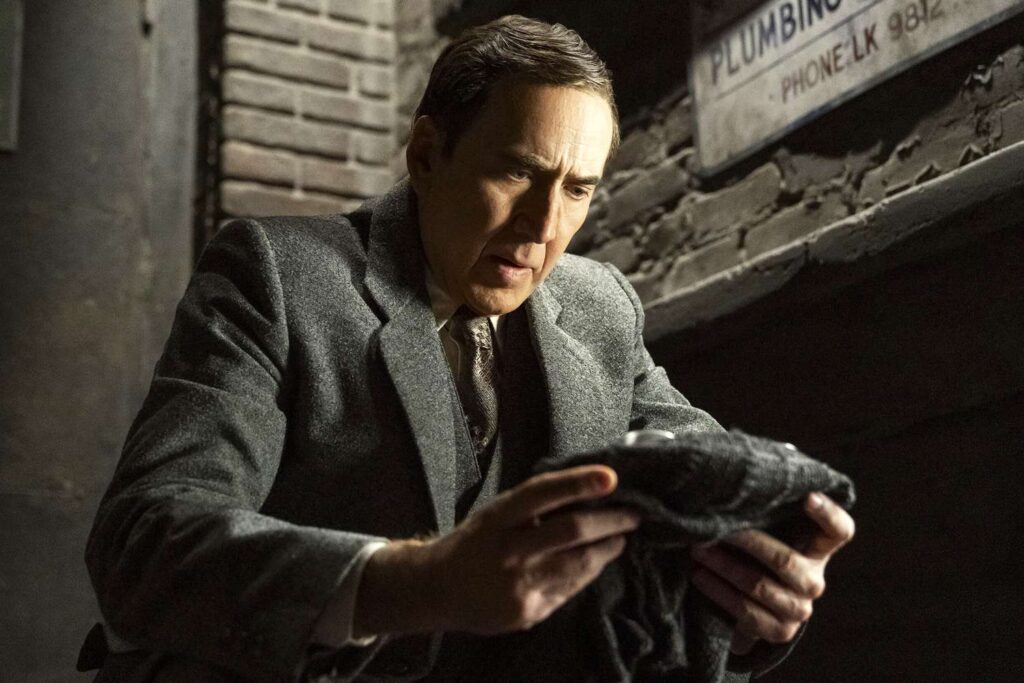
Part of what made Spider-Noir stand out was its willingness to move away from the familiar visual language of modern superhero television. Cage played Ben Reilly as a down-on-his-luck private investigator in 1930s New York, a man forced to confront his previous life as the city’s mysterious superhero after suffering a personal tragedy. Instead of building the story around a conventional superhero origin or a large connected universe, the series leaned heavily into classic film noir, crime drama and period storytelling.
The presentation itself was also unusual. Viewers could watch the eight episodes in either colour or black and white, allowing the same story to take on two distinctly different visual identities. That choice was closely tied to the creative team’s attempt to make the series feel like a piece of old Hollywood cinema rather than another effects-heavy comic-book adaptation. The approach also helped explain why Cage described the project as a “dangerous, innovative, pop-art Spider-Man” rather than simply another interpretation of the character.
Cage had previously spoken about studying films from the 1930s and 1940s while preparing for the role. His inspirations included filmmakers such as Howard Hawks and the visual and performance style of classic film noir, with Double Indemnity among the films he referenced during his preparation. He also looked to performances by Fred MacMurray and Barbara Stanwyck, blending that old-school influence with the Spider-Man mythology originally developed by Stan Lee and Marvel.
That creative mixture was particularly personal for Cage because he was returning to a character he had already played in a very different medium. He first voiced Spider-Man Noir in Spider-Man: Into the Spider-Verse in 2018, turning the character into one of the animated film’s most memorable supporting figures. Spider-Noir gave him the opportunity to build an entire live-action performance around that same eccentric interpretation, while placing the character at the centre of a much darker period crime story.
The Cancellation Comes Despite Strong Recognition
The timing of the cancellation has made the decision more surprising. Spider-Noir premiered on MGM+ on May 25 before arriving on Prime Video two days later, and its eight episodes were made available in both colour and black-and-white versions. Prime Video and MGM+ ultimately chose not to move forward with another season in early September, a little more than three months after the series debuted.
The awards response makes the situation even more unusual. The series entered the 2026 Emmy race with 11 nominations, including recognition for areas such as production design, prosthetic makeup, visual effects and stunt work. It then won five awards at the Creative Arts Emmys, giving the show a substantial awards footprint even as its future had already been decided.
Still, awards recognition and streaming economics do not always point in the same direction. A show can be highly praised while remaining difficult to justify financially if its production costs are too high relative to the number of people watching it. Spider-Noir was particularly demanding because the production created both colour and black-and-white versions, adding to the show’s already ambitious visual requirements. That makes the cancellation less a judgment on Cage’s performance or the show’s artistic ambitions and more reflective of the calculations behind modern streaming renewals.
The ending also does not necessarily mean Sony and Amazon MGM are abandoning their plans for Marvel-related television. Spider-Noir was the first series produced under the companies’ collaboration to develop stories based on Sony’s Marvel properties, and reports indicate that their broader partnership remains active. The cancellation therefore closes one creative experiment rather than ending the larger relationship between the two companies.
What Comes Next For Nicolas Cage?
Cage is already moving toward another major streaming project. His next Prime Video film is Madden, in which he portrays legendary NFL coach and broadcaster John Madden, with the movie scheduled to premiere on November 18. The project gives Cage another opportunity to work with the streamer despite Spider-Noir coming to an end, suggesting that the actor’s relationship with streaming platforms remains very much intact.
For Cage, that may be the most fitting way to look at the Spider-Noir ending. He got the opportunity to make a version of Spider-Man that was deliberately strange, visually distinctive and rooted in the cinema that inspired him, and he now appears ready to leave that experiment behind. The series may have lasted only one season, but its Emmy recognition, unusual presentation and Cage’s performance have given it an identity that goes beyond its relatively short run. And judging from Cage’s own words, that may have been enough.
Spider-Noir Q&A
Why was Spider-Noir cancelled after one season?
Prime Video decided not to renew Spider-Noir for a second season despite strong reviews and 11 Emmy nominations. Reports have pointed to the show’s substantial production costs compared with its respectable but not blockbuster-level viewership. Nielsen data cited by TheWrap recorded 2.6 billion U.S. viewing minutes during the first six weeks, but the streaming performance apparently did not justify continuing such an expensive production.
What did Nicolas Cage say about Spider-Noir being cancelled?
Cage said, “For me, one season is perfect, having said what I wanted to say with this dangerous, innovative, pop-art Spider-Man.” He then added, “Onwards, upwards, inwards.” His comments indicate that he views the first season as a complete creative statement rather than an unfinished project.
How many episodes does Spider-Noir have?
The first and only season consists of eight episodes. The series premiered on MGM+ on May 25 before becoming available on Prime Video two days later. It was released in both colour and black-and-white versions.
Who does Nicolas Cage play in Spider-Noir?
Cage plays Ben Reilly, a down-on-his-luck private investigator living in 1930s New York who must confront his past as the city’s superhero. The role expands on Cage’s earlier voice performance as Spider-Man Noir in Spider-Man: Into the Spider-Verse.
How many Emmy nominations did Spider-Noir receive?
Spider-Noir received 11 nominations at the 2026 Emmys, the most nominations for a Prime Video series that year. It subsequently won five awards at the Creative Arts Emmys, giving the cancelled series an unusually strong awards run.
Where can you watch Spider-Noir?
All eight episodes of Spider-Noir remain available to stream on Prime Video. The series is also associated with MGM+, where it initially premiered before its Prime Video release.