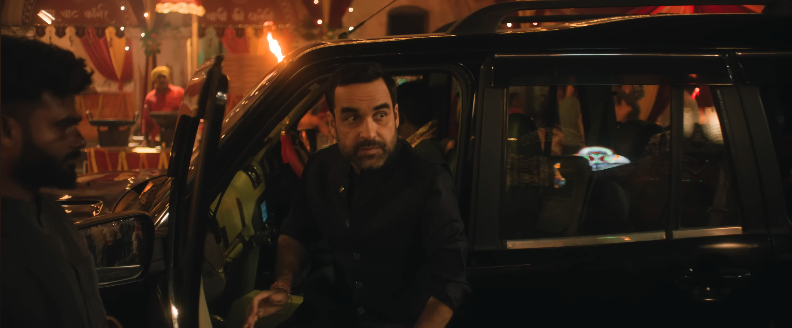
A familiar world can be comforting, but familiarity can also become a limitation when a story has already spent three seasons establishing its characters. That tension sits at the heart of Mirzapur: The Movie, a 197-minute crime drama that expands the Prime Video series onto the big screen without completely escaping its television roots. The film knows exactly what its existing audience wants, and it delivers plenty of violence, swagger, power games and callbacks along the way. The bigger question is whether that approach is enough to make the theatrical outing work as a film rather than simply another chapter of the series.
The answer is complicated, although largely favorable for anyone already invested in the Mirzapur universe. The movie spends a substantial portion of its first half bringing viewers back up to speed, revisiting familiar rivalries while introducing new players who want their share of the throne. For longtime viewers, some of this material feels like an extended recap, but newcomers get a clearer route into the world before the story becomes more expansive in its second half. By the time the characters leave familiar territory, the film finally starts feeling like a cinematic adventure rather than an oversized season episode.
A Familiar Battle for the Mirzapur Throne
The movie makes an intriguing choice by opening with Kaleen Bhaiyya in a battered and vulnerable state. Pankaj Tripathi’s Akhandanand Tripathi is shown beaten and barely conscious while facing an unidentified threat, immediately creating a mystery around what happened to one of the franchise’s most powerful figures. Instead of explaining everything upfront, the narrative jumps back to 2018 and gradually fills in the circumstances. This structure also places the events around the timeline of the first season, giving the film room to revisit the foundations of the larger conflict.
That return to the past brings Guddu and Bablu Pandit back into the action, with Ali Fazal and Jitendra Kumar playing the brothers as they take on another strongman who challenges Kaleen’s control. The familiar power struggle remains central to the story, particularly the rivalry surrounding Kaleen, Rati Shankar Shukla and the Pandit family. Munna’s presence continues to add another layer to the Tripathi-Pandit conflict, with Divyenndu once again bringing the character’s insecurity and volatility into focus. The movie understands that these relationships are the engine of the franchise, so it spends considerable time reinforcing them before pushing the story forward.
New antagonistic forces give the familiar setup some additional movement. Ravi Kishan’s Babban Yadav enters the picture with an ambition that is straightforward but backed by enough cunning to make him dangerous. Rather than constantly picking direct fights, Yadav watches, calculates and waits for the right opportunity to move closer to the Mirzapur throne. Sushant Singh’s Bhairav Singh Karnawat adds another piece to this shifting alliance system, with both men prepared to work alongside their rivals’ enemies when it serves their larger ambitions.
The result is a story where almost everyone wants something from everyone else. Alliances are temporary, loyalty has a price and the idea of controlling Mirzapur remains more important than any individual relationship. This is precisely the territory where the franchise has always been most comfortable, and the movie rarely struggles to recreate that atmosphere. What it sometimes struggles with is deciding how much of this groundwork the audience actually needs before the story can properly take off.
The Performances Keep the Film Moving
If the film’s lengthy setup occasionally slows things down, its cast repeatedly pulls the story back into shape. Pankaj Tripathi slips comfortably into Kaleen Bhaiyya’s imposing presence, making even relatively quiet moments carry the weight of the character’s authority. Divyenndu continues to understand Munna’s strange combination of entitlement, insecurity and aggression, giving the character enough personality to remain memorable. Ravi Kishan is particularly enjoyable as Babban, moving between criminal menace, charisma and vulnerability without making those shifts feel forced.
Jitendra Thakur also makes a strong impression as Bablu Pandit, taking over a role previously associated with Vikrant Massey. His performance is one of the pleasant surprises of the movie because he does not feel like someone simply filling an established character slot. Instead, he brings his own energy to Bablu and makes the part feel naturally integrated into this version of the story. That helps the Pandit brothers remain one of the film’s strongest emotional and dramatic anchors.
The female characters, however, do not receive the same attention. This becomes one of the film’s biggest missed opportunities because the original series was often at its strongest when women such as Beena Tripathi operated behind the scenes while the men believed they were running everything. Rasika Dugal’s Beena remains the better-served female character here, but the film does not give the women enough space to develop with the same complexity. Sonal Chauhan’s Mumtaz Bibi, in particular, is introduced with potential but receives relatively little material that allows the character to leave a lasting impression.
That imbalance matters because the franchise has previously demonstrated how effective its women can be when they are given meaningful agency. The movie has enough familiar male rivalries to sustain its plot, but another layer of female-driven intrigue could have made the theatrical story feel more distinct from what viewers have already experienced. Instead, several of those possibilities remain underdeveloped.
The Road Trip Finally Gives It Scale
The second half is where Mirzapur: The Movie finds a stronger cinematic identity. After spending considerable time establishing characters and motivations, the story turns into a dangerous journey involving the Pandit brothers and, eventually, the Tripathis. Moving the action beyond the familiar surroundings also gives the film an opportunity to breathe visually. Sanjay Kapoor’s cinematography becomes more noticeable once the characters enter another state, adding a sense of scale that the earlier sections do not always achieve.
John Stewart Eduri’s background score is another major strength. The music understands the heightened world of Mirzapur without constantly competing with the performances, helping major confrontations and transitions carry the required punch. The soundtrack also mixes established and newer material, although the placement of Dhanda Nyoliwala’s “Do Numbari” during the brothers’ Rajasthan passage is an unexpected choice. Interestingly, despite being somewhat puzzling in context, it remains one of the more memorable tracks in the album.
The editing is less consistent. Wilson Birampuria’s work occasionally allows the film to feel longer than its already substantial runtime, particularly when the narrative is busy revisiting information that established fans already know. A tighter first half could have given the movie more momentum and made the transition into the road-trip section arrive sooner. Once the film reaches that stage, however, its combination of action, humor and shifting loyalties becomes considerably more entertaining.
Gurmmeet Singh remains in the director’s chair, while Puneet Krishna is credited as the creator and writer. Their biggest success is understanding the tone that audiences associate with Mirzapur. The film does not attempt to reinvent the franchise, and that may disappoint viewers looking for something radically different, but it also means the familiar mix of crime, dark humor and larger-than-life personalities remains intact.
The Fan Service Is Impossible to Miss
There is no pretending that Mirzapur: The Movie is trying to distance itself from its fan base. The callbacks are deliberate, the character reunions are designed to generate reactions and the climactic stretch clearly wants viewers who have followed the series to feel rewarded. The climax, epilogue and mid-end-credits sequence are particularly geared toward that audience, with the screening experience itself becoming part of the fun as viewers react to recognizable moments and developments.
That makes the movie easier to recommend to existing fans than to someone coming in completely cold. The first half does provide enough background to establish the major players, but much of the emotional weight naturally belongs to people who already know these characters and their history. A viewer who has spent three seasons watching the Tripathis, Pandits and their rivals fight for power will get considerably more from the callbacks and character dynamics.
The 197-minute runtime is still the film’s most obvious hurdle. There is enough material here to justify a large-scale continuation of the story, but the movie could have benefited from sharper pacing and more confidence in what the audience already knows. Its strongest sequences arrive when it stops explaining and simply allows the characters to clash, scheme, travel and react. Those moments show how naturally the Mirzapur world can work on a larger screen.
Ultimately, Mirzapur: The Movie works best as a companion piece to the three-season series rather than as a completely separate entry point. Its performances are consistently strong, its second half has greater cinematic energy and its fan-service moments understand exactly when to push the right buttons. The uneven treatment of female characters and the overextended opening keep it from reaching the level of the franchise at its best, but the film still has enough personality to carry its enormous runtime. For fans willing to spend nearly three hours back in this world, the theatrical experience offers enough chaos, humor and familiar faces to make the trip worthwhile ahead of Season 4.
Frequently Asked Questions
Is Mirzapur: The Movie worth watching?
For existing Mirzapur fans, the film is worth watching primarily because it expands the franchise into a theatrical setting while retaining its familiar characters and tone. The performances and second-half momentum are among its biggest strengths. Viewers unfamiliar with the series may understand the basic conflict, but they are unlikely to experience the same emotional impact from the fan-service moments.
How long is Mirzapur: The Movie?
The film has a runtime of 197 minutes, making it a notably long theatrical experience. Its first half spends considerable time establishing or revisiting characters and motivations before the story becomes more expansive. The second half has a stronger sense of cinematic movement and benefits from the change in location.
Who stands out in Mirzapur: The Movie?
The ensemble remains one of the film’s biggest strengths, with Pankaj Tripathi, Divyenndu and Ravi Kishan bringing considerable personality to their respective characters. Jitendra Thakur is also a notable addition as Bablu Pandit. His performance helps the recast role feel like a natural part of the film rather than a simple replacement.
Does the movie work for people who have not watched Mirzapur?
The film makes an effort to provide background information, particularly during its first half. However, the amount of fan service and the history between the principal characters mean longtime viewers are likely to get more from the story. Watching the series first would provide substantially more context for the rivalries and relationships.
What is the biggest weakness of the movie?
Pacing is one of the clearest problems because the 197-minute runtime is made even longer in feel by the extensive setup. The female characters are another weak point, particularly when compared with the stronger agency women had in the series. The movie would have benefited from giving those characters more meaningful material.
Does Mirzapur: The Movie set up Season 4?
The film contains an epilogue and a mid-end-credits sequence that clearly cater to fans looking ahead. While the supplied source does not detail every future storyline, these sequences add to the sense that the movie is designed to sit alongside the existing series rather than replace it. For viewers following the franchise, staying through the credits is therefore worthwhile.