Hollywood and politics are colliding in a way nobody really expected. Director Brett Ratner is reportedly set to join Donald Trump during an upcoming high-profile trip to China, where the former president is expected to meet Chinese leader Xi Jinping alongside several major American business and tech executives. But unlike the CEOs attending for trade and economic discussions, Ratner’s reported reason for joining the delegation is tied directly to Hollywood — and specifically to Rush Hour 4.
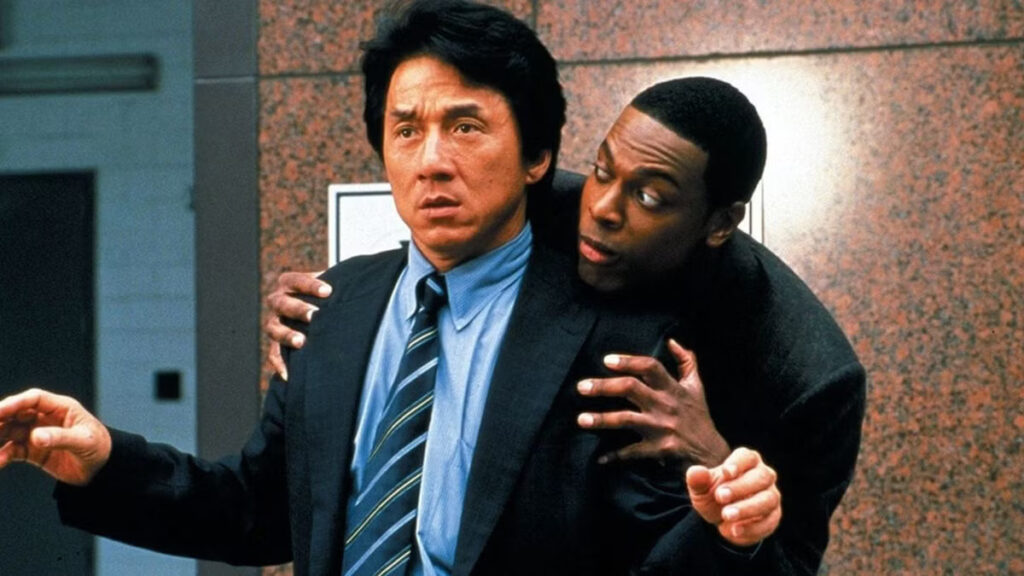
According to reports from the South China Morning Post, Ratner plans to scout filming locations in China while preparing for the long-rumoured fourth installment of the Rush Hour franchise. The filmmaker reportedly intends to shoot major portions of the movie inside the country, reviving the globally successful buddy-cop series starring Jackie Chan and Chris Tucker. The report even claims Trump himself is personally fond of the Rush Hour films and allegedly pushed for Paramount Pictures to revisit the franchise.
Honestly, the idea sounds almost surreal on paper. A Hollywood director tied to a controversial comeback, travelling alongside some of America’s most powerful technology leaders during tense geopolitical negotiations, all while planning a major studio action-comedy sequel. But it also reflects how entertainment, business, and politics increasingly overlap in modern global influence battles.
The delegation reportedly includes several massive names from the corporate world. Alongside Trump, executives expected to attend include Elon Musk of Tesla, Tim Cook of Apple, BlackRock CEO Larry Fink, Blackstone chief Stephen Schwarzman, Mastercard president Michael Miebach, and Boeing CEO Kelly Ortberg. Their presence highlights how economically important U.S.-China relations remain despite years of political tension, trade disputes, and growing competition over technology and manufacturing.
Ratner’s involvement, however, has naturally become the most unexpected entertainment angle emerging from the trip. The director was once considered one of Hollywood’s most commercially successful filmmakers thanks to movies like Rush Hour, Red Dragon, Tower Heist and X-Men: The Last Stand. His career dramatically collapsed in 2017 after multiple women accused him of sexual harassment and misconduct during the height of the #MeToo movement. Ratner denied the allegations, but the controversy effectively pushed him out of mainstream Hollywood filmmaking for years.
Now, Rush Hour 4 appears positioned as his biggest attempted comeback project. Reports suggest a lot is riding on the film because it would mark Ratner’s first major feature production since the scandal severely damaged his career and industry relationships. The franchise itself still carries strong nostalgic popularity globally, especially due to the chemistry between Chan and Tucker, but there has also been skepticism about whether a fourth installment can still capture the same energy decades later.
Ratner recently returned to headlines through Melania, a documentary centered around Melania Trump during the period leading into Trump’s second inauguration. Amazon reportedly paid around $40 million for distribution rights to the documentary, a figure that sparked criticism from some observers who questioned whether the deal reflected political favour rather than normal market value.
Financially, the documentary reportedly struggled in theatres despite the large acquisition cost, though Amazon later defended the project by pointing toward streaming performance on Prime Video rather than box office totals alone. Still, the mixed response around Melania only increased curiosity about whether Ratner could genuinely rebuild his reputation through a larger commercial movie like Rush Hour 4.
At the same time, the China angle itself is significant. Hollywood’s relationship with China has changed heavily over the last decade. Once viewed as a critical market for blockbuster growth, China has recently become far less predictable for American studios due to censorship rules, political tensions, and changing audience preferences. If Ratner successfully secures major filming access there, it could signal a broader attempt to reconnect Hollywood productions with Chinese audiences again.
Right now, though, much of the discussion online is less about diplomacy and more about the strange image of Brett Ratner sitting among presidents, billionaires, and tech moguls while trying to revive one of the most iconic action-comedy franchises of the late ’90s. In typical Hollywood fashion, somehow even global politics has turned into part of a movie comeback story.