Family entertainers in Bollywood usually survive on two things — emotional connection and memorable humour. If one of them feels weak, the whole film starts wobbling very quickly. Daadi Ki Shaadi enters theatres with a pretty interesting setup, a strong ensemble cast, and the promise of mixing old-school family drama with modern social awkwardness. And honestly, there are moments where the film genuinely feels charming. But there are also long stretches where the story becomes so noisy and scattered that it struggles to hold itself together properly.
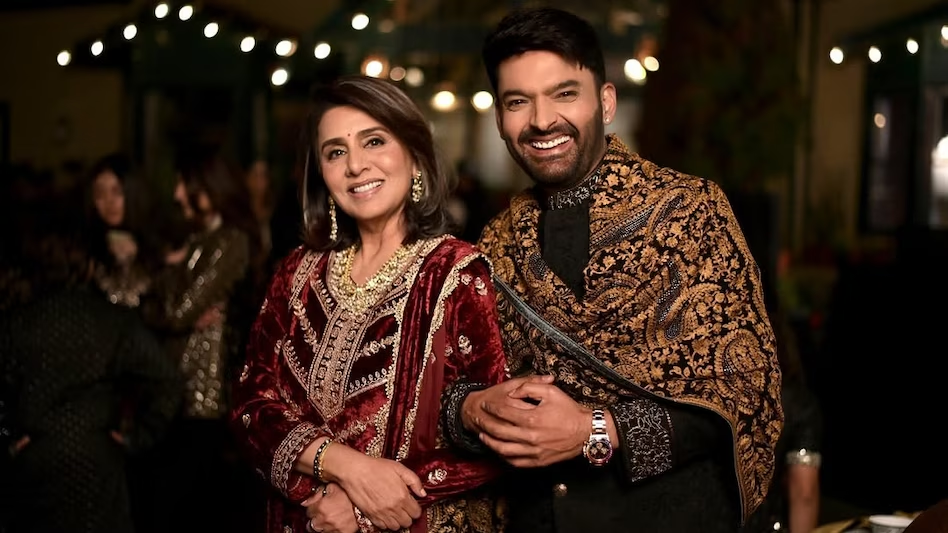
Directed by Ashish R Mohan, the movie places veteran actress Neetu Kapoor at the center of the madness, and thankfully she ends up becoming the biggest reason to stay invested. Every time she appears on screen, the film suddenly feels warmer and more emotionally alive. Her performance carries an effortless grace that the rest of the movie honestly keeps depending on. There’s something naturally comforting about her presence here, even when the screenplay itself keeps jumping between emotional drama and exaggerated comedy.
The story revolves around Tony Kalra, played by Kapil Sharma, a Delhi-based halwai business heir who has been desperately searching for love for years. Things finally seem perfect after he finds a potential match in Kannu Ahuja, played by Sadia Khateeb. But before their relationship can properly move forward, a completely unexpected family scandal flips everything upside down. Kannu’s grandmother Vimala, lovingly called Vims, suddenly announces that she wants to remarry in her late seventies, shocking both families and sending the wedding plans into complete chaos.
That setup actually gives the film a surprisingly strong emotional foundation because Bollywood rarely explores loneliness and companionship among older characters in a meaningful way. The idea of an elderly woman wanting a second chance at happiness could have turned into something deeply emotional and refreshing. At times, the movie does touch those emotions nicely too. There are scenes where Vims quietly expresses her fear of being left alone, and those moments feel much more real than the louder comedy happening around her.
Unfortunately, the screenplay keeps undercutting its own emotional strengths. Instead of letting relationships breathe naturally, the film constantly pushes itself into over-the-top confusion, forced misunderstandings, and repetitive comic situations. The writing especially struggles with Kapil Sharma’s character. Tony spends most of the movie loudly inserting himself into situations that honestly do not concern him, and after a point, it becomes tiring rather than funny. The character is written as charmingly obsessive, but the execution sometimes makes him look immature and exhausting.
Kapil Sharma clearly puts genuine effort into the role though. You can see him trying to carry the energy of a loud Punjabi romantic hero with a mix of arrogance and innocence. But the problem is that many of the jokes simply are not strong enough. A comedian with Kapil’s natural timing should have easily dominated a film like this, yet the screenplay rarely gives him punchlines that truly land. Several scenes awkwardly pause waiting for laughs that never fully arrive. Deepak Dutta and Jitender Hooda support his comic track well, but the humour needed much sharper writing overall.
Sadia Khateeb, meanwhile, quietly emerges as one of the more grounded performances in the film. She plays Kannu with confidence and enough emotional clarity to make the character believable. Even when the screenplay suddenly changes her decisions without proper buildup, Sadia manages keeping the character emotionally stable. Her chemistry with Kapil surprisingly works better than expected too, especially considering the visible age difference between them.
Another major talking point around the film was the acting debut of Riddhima Kapoor Sahni. While her performance does not feel extraordinary, she handles herself confidently for a first film. She doesn’t try overacting or chasing attention aggressively, which actually helps her scenes feel more natural. There’s definitely room for growth, but she leaves a decent impression.
The real surprise, though, is R. Sarathkumar. Playing Dhiren Dev Ranjan, he brings a mix of authority, warmth, and humour that instantly lifts the film whenever he appears. His scenes opposite Neetu Kapoor are honestly some of the movie’s strongest moments because both actors bring emotional maturity missing elsewhere in the script. The film almost feels more interested in their emotional equation than the younger romance at times.
One of the movie’s biggest issues is tonal confusion. It desperately wants to become a modern family classic in the space of Baghban, but it lacks the emotional discipline needed to reach that level. Instead of trusting emotional storytelling, the film repeatedly falls back on chaotic comedy and exaggerated misunderstandings. Even important twists feel underdeveloped, including the social media controversy that triggers the central conflict. Some emotional turns arrive so suddenly that they feel disconnected from the rest of the story.
Still, the film is not completely without heart. Beneath all the clutter, Daadi Ki Shaadi does carry a sincere message about ageing parents, emotional neglect, and the importance of staying connected with family before loneliness quietly takes over. Whenever the film slows down and focuses on those emotions, it becomes surprisingly watchable and even touching in places.
Visually, the Shimla backdrop adds warmth to the movie, and the family atmosphere occasionally captures the messy charm of Indian households nicely. The soundtrack and background score keep things light, though nothing particularly memorable stands out musically. The pacing also feels uneven, especially in the second half where several scenes drag longer than needed.
In the end, Daadi Ki Shaadi feels like a film caught between wanting to become a heartfelt family drama and a loud mainstream comedy entertainer. It never fully succeeds at either, but Neetu Kapoor’s emotional presence and a handful of genuinely warm moments stop it from completely falling apart. It’s not the emotional family classic it clearly wants to be, but for audiences looking for a messy one-time family watch with occasional heart, the film still offers enough moments to keep things mildly engaging.