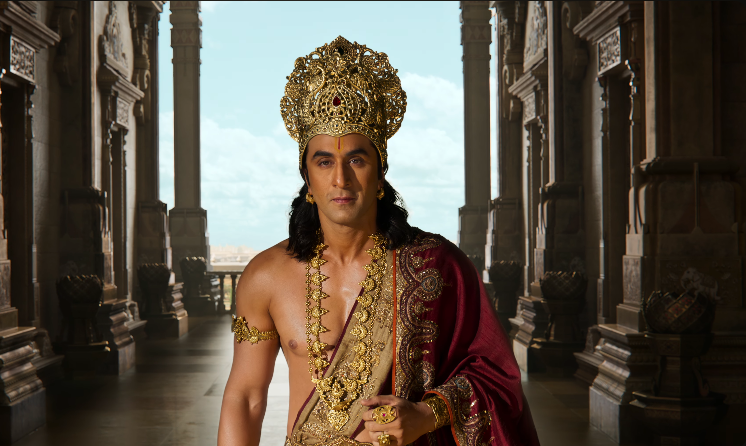
Ramayana is taking a slightly different route to the big screen than many fans expected. The much-awaited Nitesh Tiwari epic starring Ranbir Kapoor, Sai Pallavi and Yash will open internationally on November 6, 2026, while audiences in India are currently being targeted for a November 8 release. Producer Namit Malhotra has now explained that the two-day difference is linked to the way international theatrical distribution works around the Friday release calendar.
The clarification puts an end to some of the confusion surrounding the film’s release date. Malhotra said the movie will arrive internationally on Friday, November 6, while the Indian release is being planned specifically around Diwali. “It (Ramayana) will release in India on Diwali,” he said, explaining that international distribution operates from a Friday standpoint. “So we are releasing internationally on November 6. The international distribution works from a Friday standpoint, so that’s why it’s releasing on the 6th of November. But in India, we are currently targeting the Diwali release.”
That means Indian audiences are expected to see Ramayana two days after the international release. The arrangement is unusual for a film of this scale, particularly because the movie is being positioned as a global theatrical event rather than simply a major Hindi-language release. Sony Pictures is handling international distribution, while the film is being prepared for a worldwide audience with multiple language versions and premium-format ambitions.
Why Ramayana Is Releasing Earlier Overseas
The decision essentially reflects two different theatrical calendars. In international markets, Friday remains the standard starting point for major releases, giving Ramayana November 6 as the natural launch date for its overseas run. India, meanwhile, is being treated differently because the filmmakers want the movie to arrive during the Diwali period rather than simply following the international Friday schedule.
For a film built around Indian mythology, that strategy has an obvious commercial logic. Diwali is one of the most valuable periods of the Indian theatrical calendar, when families have more opportunities to visit cinemas and major Hindi films traditionally compete for the festive audience. By targeting the festival itself, the makers appear to be prioritising the cultural and commercial significance of Diwali over synchronising the Indian release with overseas markets.
The two-day difference could also allow Ramayana to begin its international run before the Indian Diwali opening. That gives overseas audiences the first theatrical experience while the domestic market waits for the festival release, although it also means Indian viewers may encounter international reactions online before seeing the film themselves.
That last point is likely to become increasingly important as the film gets closer to release. A project as heavily anticipated as Ramayana will generate reviews, reactions, clips and social media discussions almost immediately after the first international screenings. The makers will therefore have to manage the gap carefully if they want to preserve major story moments and surprises for Indian audiences.
Ranbir Kapoor And Sai Pallavi Lead A Massive Epic
Directed by Nitesh Tiwari, Ramayana is being mounted as a two-part cinematic saga rather than a single film. Ranbir Kapoor plays Lord Rama, Sai Pallavi portrays Sita and Yash takes on the role of Ravana, with Ravi Dubey as Lakshman and Sunny Deol as Hanuman.
The first part follows the central journey of Rama, including his relationship with Sita, the exile and the conflict that eventually leads to the confrontation with Ravana. The first trailer introduced audiences to the scale of the world being created, including Yash’s Ravana and Ranbir’s transformation into Rama.
The movie is also being positioned as a major international production rather than a conventional Indian mythological film. Sony Pictures has signed on to distribute the project outside India, a move that gives the film access to a much wider international theatrical network. The studio has described Tiwari’s adaptation as an Indian blockbuster epic and highlighted its preparation for IMAX screens.
That international strategy is particularly important because Ramayana is attempting to make an ancient Indian epic accessible to audiences beyond India. The story itself is already known across several Asian cultures, while the film’s global presentation is intended to bring the production to viewers who may be encountering this particular cinematic interpretation for the first time.
The ambition is also reflected in the technical team. Prime Focus Studios and DNEG are involved in the production and visual effects, while Hans Zimmer and A.R. Rahman are working on the music. That combination gives the film a distinctly international technical profile while keeping major Indian creative talent at its centre.
The Film’s Scale Is Already Creating Buzz
Interest in Ramayana has been building well before its theatrical release. The first trailer has reportedly crossed one billion views across platforms and languages, an unusually large pre-release number that shows how much attention the project is attracting. The multilingual rollout has allowed the makers to reach audiences beyond the Hindi-speaking market, further supporting the film’s attempt to function as a pan-Indian and international event.
The project has also generated considerable discussion because of its scale. Producer Namit Malhotra has repeatedly positioned Ramayana as a film capable of taking Indian storytelling to a global audience, while the involvement of DNEG and the film’s premium-format presentation are central to that ambition.
Ranbir’s casting as Rama has been another major talking point. Malhotra and Tiwari recently reiterated that Kapoor was always their first choice for the role, putting to rest speculation that other major actors had initially been considered.
Yash’s Ravana, meanwhile, has become one of the most anticipated elements of the project. The trailer gives the character a commanding introduction and establishes him as a major force in the story rather than treating him as a conventional antagonist. That dynamic between Ranbir’s Rama and Yash’s Ravana will likely become one of the film’s biggest theatrical attractions.
The two-part structure also means the November release is only the beginning. The first film is expected to establish the world, characters and central conflict, while the second installment is planned for Diwali 2027. That gives the filmmakers an unusually large canvas to tell the epic rather than compressing the entire story into one theatrical runtime.
What The November 8 India Release Means
The Indian release date could become one of the most closely watched aspects of Ramayana once advance bookings begin. November 8 falls during the Diwali period, giving the film access to one of the strongest moviegoing windows of the year. The makers are therefore betting that the festive audience will outweigh the benefits of a conventional Friday opening.
For international audiences, November 6 provides the standard Friday launch. For India, November 8 offers the cultural advantage of releasing on Diwali itself. Namit Malhotra’s explanation suggests this is not an accidental delay but a distribution decision based on the different theatrical calendars in the two markets.
There is still an important distinction between the current target and a formally announced final release schedule. Malhotra specifically described the Indian date as the current target for Diwali, while international distribution has been set around the November 6 Friday. Recent reporting has likewise described November 8 as the Indian date following his comments.
That two-day gap could make Ramayana one of the most unusual global releases of 2026. The film will effectively begin its international journey on November 6 before reaching Indian theatres on November 8, allowing the same movie to operate around two different definitions of its opening day.
For now, the larger picture remains unchanged: Ramayana is preparing for one of the biggest theatrical launches in Indian cinema, with Ranbir Kapoor as Rama, Sai Pallavi as Sita and Yash as Ravana. The international rollout on November 6 and India’s Diwali target of November 8 show just how seriously the makers are treating the film as a global event.
Ramayana Release Date Q&A
When will Ramayana release internationally?
Ramayana is scheduled to begin its international theatrical release on November 6, 2026, which falls on a Friday.
When will Ramayana release in India?
Producer Namit Malhotra said the film is currently targeting a November 8, 2026 release in India, coinciding with Diwali.
Why are the India and international release dates different?
Malhotra explained that international distribution works around the Friday theatrical calendar, leading to the November 6 overseas release, while the Indian release is being targeted for Diwali.
Who plays Rama, Sita and Ravana in Ramayana?
Ranbir Kapoor plays Rama, Sai Pallavi plays Sita and Yash portrays Ravana in Nitesh Tiwari’s two-part epic.
Who is distributing Ramayana internationally?
Sony Pictures is handling the international theatrical distribution of the film outside India.
Is Ramayana being made in two parts?
Yes. The story is planned as a two-part cinematic saga, with the first installment arriving in 2026 and the second part planned for Diwali 2027.