The VFX debate around Ramayana has become almost as big as the film itself. After Nitesh Tiwari’s ambitious mythological epic unveiled its trailer on July 30, viewers quickly began dissecting its CGI, visual effects and overall presentation, with reactions ranging from excitement over the scale to criticism of individual shots. Now Ranbir Kapoor has addressed that conversation, arguing that audiences have become increasingly focused on computer-generated imagery and are increasingly quick to judge it.
Speaking to Collider, Ranbir described the rise of what he called “CG critics” and said the growing familiarity with AI has made viewers more interested in how visual effects are created. The actor also pointed to the enormous amount of work happening behind the scenes, saying he has personally seen director Nitesh Tiwari and producer Namit Malhotra involved in VFX discussions throughout the making of the film.
The response is particularly relevant for Ramayana because this is not being positioned as a conventional Bollywood mythological film. The project is being mounted as a large-scale global spectacle, filmed for IMAX and built with DNEG, the VFX company behind numerous major Hollywood productions. That ambition means the visual effects are naturally going to face a much higher level of scrutiny before the first part reaches theatres during Diwali 2026.
Ranbir Kapoor Says CGI Takes Years
Ranbir believes part of the problem is that audiences can now see visual effects everywhere, from major Hollywood blockbusters to streaming shows and even AI-generated content circulating online. That exposure has made viewers more knowledgeable about CGI, but according to the actor, it has also created a tendency to immediately judge whether a shot looks convincing from a short trailer. He suggested that some people may underestimate how much work goes into creating a single finished visual.
The actor specifically recalled watching Tiwari and Malhotra spend long periods on VFX calls while Ramayana was being developed. He said the team could spend enormous amounts of time working on details as specific as the colour of the sky, illustrating how much of the filmmaking process happens after the cameras have stopped rolling. His point was not simply that viewers should stop criticising the film, but that the final theatrical version needs to be judged after the visual-effects work is complete.
That distinction matters because a trailer is not necessarily a finished representation of every VFX shot that will appear in the final movie. Visual effects can continue to be refined after promotional footage has been assembled, particularly on a project of this scale. Recent comments from the filmmaking team have also indicated that work on the visuals was still continuing, giving the production additional time to polish the presentation before release.
Ranbir’s comments also arrive at an interesting moment for Indian cinema. Viewers are no longer judging CGI only against older Indian films; they are comparing large-scale Indian productions with Hollywood fantasy, superhero and science-fiction movies that have spent years developing sophisticated digital workflows. At the same time, audiences are increasingly exposed to AI-generated imagery, making it easier for viewers to recognise visual effects even when they may not understand the production process behind them.
That creates a difficult challenge for filmmakers. A mythological film such as Ramayana needs to look spectacular while also maintaining a sense of authenticity and emotional weight, especially because the characters and story are deeply familiar to Indian audiences. A digital environment can look technically impressive and still feel artificial if the lighting, textures, movement or integration between actors and CGI do not work together. That is why the final theatrical presentation will matter considerably more than individual frames circulating online.
Namit Malhotra Wants IMAX to Be the Test
Producer Namit Malhotra has approached the criticism from another angle. He argued that much of the online discussion is based on people watching the trailer on smartphones rather than seeing the material in the format for which the film was designed. According to Malhotra, that can distort the way audiences judge both the visual and audio experience.
Malhotra has repeatedly positioned Ramayana as a large-format cinematic experience. The project is being filmed for IMAX, and its production involves DNEG, the VFX studio associated with eight Academy Award wins. The filmmakers therefore want the scale, image quality and sound design to be experienced in a cinema rather than reduced to a small screen on a mobile device.
He compared the situation with Christopher Nolan’s The Odyssey, another major production designed around large-format presentation. His argument is fairly straightforward: judging a film engineered for an enormous screen by watching a compressed trailer on a phone may not provide the same impression as watching the finished work in a properly equipped theatre. That does not automatically make every criticism of the trailer invalid, but it does explain why the filmmakers believe some of the online reaction is missing part of the intended experience.
There is another reason the conversation around Ramayana has become unusually intense. This is a story that audiences already know extremely well, which means the visual interpretation carries an additional burden. Viewers are not only asking whether the CGI looks realistic; they are also asking whether the characters, costumes, locations and imagery feel appropriate for a story with such a long cultural history.
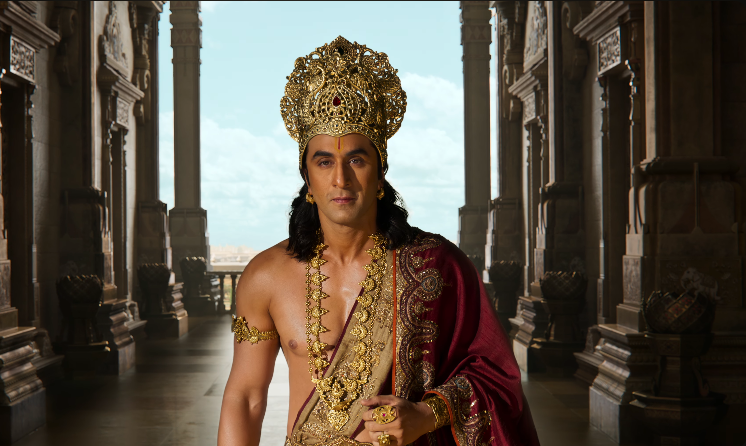
The trailer has therefore generated discussion about much more than technical polish. People have been examining Ranbir Kapoor’s appearance as Lord Rama, Yash’s portrayal of Ravana, Sai Pallavi’s Sita and the overall visual language of the film. Earlier reactions to the project had already shown how closely audiences were scrutinising small visual choices, meaning the VFX debate was unlikely to disappear after the trailer release.
Why Ramayana Has So Much Riding on VFX
The scale of Ramayana makes the VFX conversation impossible to separate from the film’s commercial ambitions. The project has been reported as having a budget of around ₹4,000 crore and is planned as a two-part theatrical event, with Part 1 arriving during Diwali 2026 and Part 2 following during Diwali 2027. The production brings together Ranbir Kapoor as Rama, Sai Pallavi as Sita, Yash as Ravana, Ravie Dubey as Lakshman and Sunny Deol as Hanuman.
The film also has an unusually international-facing production setup. Namit Malhotra’s Prime Focus Studios is behind the project, with DNEG handling the visual effects, while Hans Zimmer and A.R. Rahman are attached to the music. Sony Pictures is involved in the worldwide distribution plan, further underlining the intention to take this version of the epic beyond the Indian market.
That international ambition raises the standard the film has to meet. Indian audiences will naturally compare Ramayana with their own visual and cultural expectations, while international viewers may approach it as a large-scale fantasy epic. The filmmakers therefore need the digital work to function on two levels: it has to respect the world audiences recognise while also looking cinematic enough to compete in a global theatrical market.
The trailer’s release itself was carefully positioned as a major event. After an earlier postponement, the makers announced that the trailer would arrive worldwide on July 30 at 4:15 a.m. IST during Brahma Muhurat. That unusual launch strategy reflected the scale of the campaign and the expectation surrounding the film.
For now, the most sensible conclusion is that the VFX debate is not settled by either side. Viewers are entitled to react to what they see in a trailer, while the filmmakers are equally entitled to point out that the finished movie involves years of work that cannot be judged from a few seconds of footage on a phone. The real test will come when Ramayana: Part 1 reaches theatres and audiences can experience the completed images, sound, performances and large-format presentation together.
Ranbir Kapoor’s defence does, however, reveal how seriously the team is taking the criticism. Rather than ignoring the conversation, the actor has explained what he has witnessed behind the scenes, while Malhotra has challenged audiences to experience the film in the environment for which it was created. With Diwali 2026 approaching, Ramayana now has another challenge beyond simply telling one of India’s best-known stories: it has to prove that its enormous visual ambition works when the entire picture finally comes together.
Ramayana VFX and Trailer Q&A
Why has Ramayana’s VFX received criticism?
The trailer prompted mixed reactions, with some viewers impressed by its scale and others questioning the quality of particular CGI and VFX shots. The discussion became especially intense because Ramayana is being positioned as one of India’s biggest visual spectacles.
What did Ranbir Kapoor say about the VFX criticism?
Ranbir Kapoor said there has been a rise in what he called “CG critics,” with audiences paying closer attention to CGI as AI and digital imagery become more common. He also stressed the extensive work done by the artists and filmmakers behind the visuals.
What did Namit Malhotra say about watching the trailer on phones?
Malhotra argued that viewing footage designed for a large-format cinematic experience on a smartphone can affect how people perceive its visual and sound quality. He has encouraged audiences to experience the film in the format for which it was created.
Who is handling the VFX for Ramayana?
DNEG is handling the visual effects for the film. The studio has an extensive history in large-scale visual-effects productions and has received multiple Academy Awards for its work.
When will Ramayana Part 1 release?
Ramayana: Part 1 is scheduled to reach theatres during Diwali 2026, with the second part planned for Diwali 2027. The project is being filmed for IMAX.
Who stars in Ramayana?
The main cast includes Ranbir Kapoor as Rama, Sai Pallavi as Sita, Yash as Ravana, Ravie Dubey as Lakshman and Sunny Deol as Hanuman. The film is directed by Nitesh Tiwari and produced by Namit Malhotra.