Hollywood’s standoff with generative AI just escalated.
Paramount Skydance has formally accused ByteDance of infringing on some of its most valuable intellectual property through the company’s Seedance video and Seedream image-generation platforms. The studio claims the AI tools are producing content that closely mirrors — and in some cases appears indistinguishable from — iconic franchises like South Park, Star Trek, and The Godfather.
A cease-and-desist letter was sent Saturday to ByteDance CEO Liang Rubo.
🎬 What Paramount Is Alleging
According to the letter, obtained by Variety, Paramount claims the AI-generated images and videos produced by Seedance and Seedream contain vivid depictions of characters and story elements protected under copyright and trademark law.
Franchises reportedly cited include:
- South Park
- SpongeBob SquarePants
- Star Trek
- Teenage Mutant Ninja Turtles
- The Godfather
- Dora the Explorer
- Avatar: The Last Airbender
Paramount alleges that some AI outputs are visually and audibly “indistinguishable” from its copyrighted content.
The letter demands ByteDance immediately prevent further use of its intellectual property and remove all allegedly infringing material from its systems.
Paramount Skydance has not publicly commented beyond the legal correspondence, and ByteDance has not yet responded.
🎥 Viral AI Videos Spark Backlash
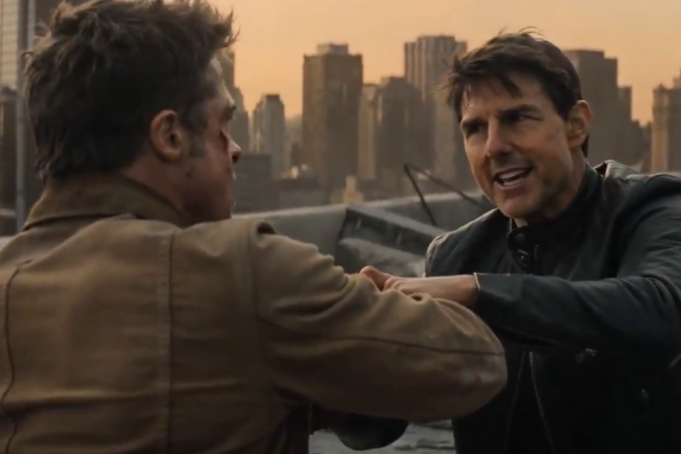
The dispute intensified after videos generated by Seedance 2.0 went viral online — including a clip depicting lookalikes of Tom Cruise and Brad Pitt fighting on a rooftop.
That viral spread triggered sharp criticism from the Motion Picture Association, which called on ByteDance to halt what it described as infringing activity.
Actors’ union SAG-AFTRA and the Human Artistry Campaign — a coalition of artists’ rights groups — also raised concerns about unauthorized use of intellectual property and performer likeness.
🏰 Disney Has Also Taken Action
Paramount’s legal move follows a similar cease-and-desist letter sent by The Walt Disney Company, which accused ByteDance of making available what it described as a “pirated library” of characters from Star Wars, Marvel, and other Disney properties.
Disney’s legal counsel reportedly characterized the AI platform’s actions as a “virtual smash-and-grab” of copyrighted material.
⚖️ The Bigger Legal Question
At the heart of the conflict is a growing tension between AI innovation and intellectual property law.
Studios argue that generative AI models trained on copyrighted material — and capable of producing near-identical outputs — amount to infringement. Tech companies often counter that outputs are transformative or derivative rather than direct copies.
But as AI-generated video quality improves, the line between inspiration and imitation appears increasingly blurred.
🌐 Hollywood vs. AI: A Defining Moment
This confrontation could become a landmark test for how U.S. copyright law applies to generative AI at scale.
Studios are no longer just raising philosophical objections — they are sending legal notices. And with major players like Disney and Paramount involved, the stakes are enormous.
If courts side with studios, AI developers may face stricter guardrails and filtering requirements. If they side with tech firms, Hollywood’s traditional control over character and franchise usage could face unprecedented disruption.
Final Words
The AI boom has already reshaped music, art, and writing. Now it’s colliding head-on with some of the most powerful entertainment brands in the world.
For ByteDance and its Seedance platform, this is no longer just about viral tech demos — it’s about whether AI can create freely without crossing legal lines.
And for Hollywood, it’s about protecting decades of storytelling from becoming open-source content.