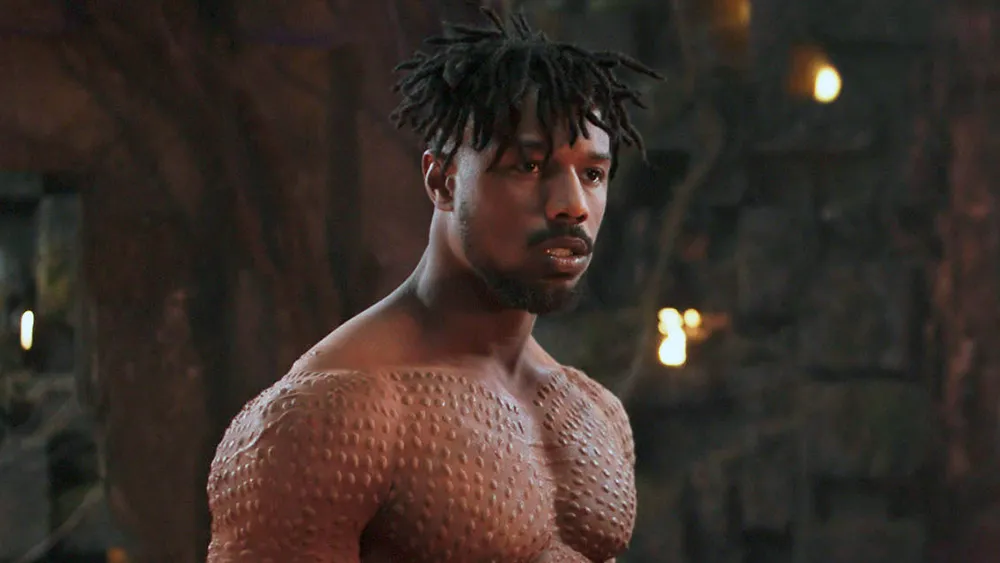
Michael B. Jordan has opened up about the emotional weight he carried long after Black Panther wrapped — and how therapy became an unexpected but necessary part of his journey as an actor. Reflecting on his portrayal of Erik Killmonger, Jordan revealed that the intensity of the role didn’t fade when the cameras stopped rolling.
When a Character Lingers
In a recent interview, the actor admitted that fully immersing himself in Killmonger’s mindset left a lasting impact. The anger, pain, and emotional isolation that defined the character stayed with him even after filming ended. That realization pushed Jordan to seek professional help — not because something went wrong, but because he needed a way to mentally let go.
At the time, he says, he hadn’t yet learned how to properly “decompress” after demanding roles. Acting, for him, had always been a solitary process — auditioning alone, preparing alone, carrying the emotional load quietly.
Learning There’s No Rulebook
Jordan acknowledged that there’s no manual for separating yourself from characters that require such deep emotional investment. It was only through talking things out that he recognized how much of the role he was still holding onto. Therapy helped him unpack those feelings and understand that speaking openly about emotional residue isn’t weakness — it’s necessary maintenance.
That experience became a turning point in how he approaches intense performances going forward.
Becoming Killmonger
To stay true to Killmonger’s psychology, Jordan said he deliberately isolated himself during preparation, limiting contact with family and focusing inward. The character’s emotional core — shaped by betrayal, abandonment, and broken systems — demanded a kind of internal solitude that bled into Jordan’s real life.
Killmonger, after all, wasn’t driven by love or belonging. He was driven by rage, loss, and unresolved pain — and Jordan carried that with him while building the character.
The Legacy of Black Panther
Released in 2018 and directed by Ryan Coogler, Black Panther became a cultural landmark. Led by the late Chadwick Boseman as T’Challa, the film redefined superhero storytelling, earned three Academy Awards, and grossed over $1.3 billion worldwide. Its success paved the way for Black Panther: Wakanda Forever in 2022, further cementing its legacy.
Final Words
Michael B. Jordan’s honesty shines a light on a side of acting audiences rarely see — the emotional aftermath. His experience is a reminder that powerful performances often come at a personal cost, and learning how to release that weight is just as important as carrying it in the first place.