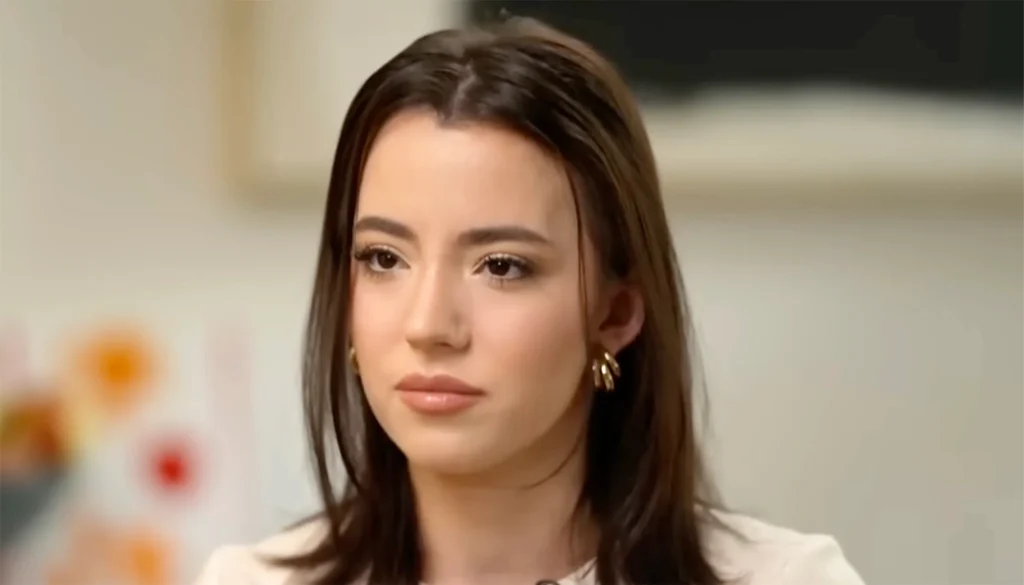
Ashley St. Clair has explained why she chose to speak publicly about her relationship with Elon Musk despite an alleged $40 million non-disclosure agreement being on the table. St. Clair, who gave birth to Musk’s 13th child last year, appears in Alex Gibney’s new documentary Musk, which examines the billionaire’s extraordinary influence across technology, business and politics. Speaking at a Venice Film Festival press conference ahead of the documentary’s premiere, St. Clair said the decision ultimately came down to the value she placed on being able to speak openly.
“When you are offered something like that, it creates a debate about what your speech means and how valuable that is,” St. Claire said at a Venice Film Festival press conference for “Musk,” which premieres on Tuesday. “Why do they want to offer me this amount of money to not speak?”
The documentary arrives after Gibney spent years examining Musk and the growing influence surrounding him. The Oscar-winning filmmaker began working on the project in 2023, initially planning a shorter film before Musk’s involvement in the political sphere expanded the scope of the story. The finished documentary is now nearly four hours long, reflecting how much the subject’s public role changed during the making of the film.
Why Ashley St. Clair Chose to Speak
For St. Clair, appearing in the documentary was not simply about discussing Musk. She said the decision was also connected to the example she wanted to set for her children, particularly when it came to choosing between financial comfort and speaking honestly about her experiences.
St. Claire participated in the doc to “set the example for my kids that we should never take being materially comfortable that we’re speaking the truth,” she said. Her decision came despite the substantial amount allegedly associated with the NDA, making her participation one of the more notable personal perspectives in Gibney’s film.
St. Clair has also spoken about her own political evolution. She became known as a right-wing political commentator and previously advocated for conservative and anti-trans positions, but she now says she regrets promoting those beliefs. She connected that earlier period of her life to her age and the people around her at the time, while also acknowledging that those circumstances do not remove her responsibility for what she said.
“I got involved with Republican politics when I was 18 after I met Charlie Kirk, and there was an air of ignorance,” said St. Clair, who is now 28. “But that ignorance does not excuse any role in that. I hope the risk that I’m taking now in speaking out and trying to fight back at least helps a little bit.”
Her comments give the documentary a perspective that goes beyond Musk’s business empire. St. Clair’s story places questions about money, personal decisions, political identity and public speech alongside the larger examination of Musk’s career. That combination appears to be part of what makes Musk considerably broader than a conventional technology documentary.
What Alex Gibney Says About Elon Musk
Gibney’s interest in Musk developed over several years, but he said one of the biggest obstacles was finding people willing to talk. During the Venice press conference, the filmmaker described a widespread fear among people who had worked with, criticized or befriended Musk, with many potential interviewees ultimately choosing not to participate.
“The thing that struck me most, particularly early on, there was a tremendous sense of fear of talking — both among people who were his critics, colleagues and friends,” Gibney said. “I talked to many, many, many people. Many declined to speak.”
Gibney was joined at the Venice press conference by St. Clair and technology journalist Zoë Schiffer, another interview subject featured in the documentary. The filmmaker’s earlier work has examined controversial subjects ranging from corporate scandals and institutional abuse to Scientology and alleged Russian interference in the 2016 US presidential election.
The scope of Musk expanded considerably as Musk became increasingly involved in US politics and became associated with Donald Trump’s administration. Gibney said the original intention had been to make a shorter film, but the billionaire’s expanding role in American public life made that increasingly difficult.
“We intended to make a shorter film before Musk became wrapped in the career of Donald Trump and the United States,” Gibney said, adding the first thing he did was reach out to Musk, who declined to be interviewed.
Musk’s absence from the documentary is significant because the film attempts to examine both his public achievements and the controversies surrounding his influence without an interview with its central subject. Musk has previously dismissed the project as a “hit piece,” while Gibney’s documentary takes a sharply critical view of the billionaire.
The film’s official synopsis promises to challenge the popular image of Musk as a visionary innovator. It argues that the billionaire’s reputation contains elements of illusion and misdirection and examines his various business ventures through that critical lens. Among the projects covered by Musk’s recent career are his acquisition of Twitter, its subsequent transformation into X, and the creation of xAI and its Grok chatbot.
Why Is Gibney Calling Musk “Very Dangerous”?
Gibney did not limit his criticism to Musk’s business decisions. At the Venice press conference, the filmmaker described him as a “very dangerous” man and focused particularly on what he sees as Musk’s relationship with empathy.
“I would say he has a very difficult time with empathy, especially cognitive empathy, which is putting himself in the shoes of others,” Gibney said. “He seems incapable of doing that.”
St. Clair offered an even stronger assessment of Musk’s behaviour, arguing that his lack of empathy is not accidental.
“He makes a conscious choice to not put himself on other people’s shoes. It is a deliberate rejection of empathy.”
Those comments form part of the documentary’s broader attempt to examine Musk not simply as a technology entrepreneur but as an individual whose decisions can have consequences far beyond his companies. SpaceX, Tesla, X and xAI have placed Musk at the centre of several major industries, while his political involvement has expanded his influence into another sphere altogether.
That combination is also why Gibney’s film grew substantially during production. A documentary that might once have focused primarily on Musk’s rise in Silicon Valley and the automotive and space industries now has to account for his expanding role in public debate and politics.
What to Know About the Musk Documentary
Musk is directed by Oscar-winning documentarian Alex Gibney and runs for nearly four hours. The documentary premieres at the Venice Film Festival on Tuesday and brings together interviews with people connected to Musk’s professional and personal worlds, including St. Clair and technology journalist Zoë Schiffer.
The film was developed over several years, beginning in 2023, and its extended runtime reflects the breadth of the subject. Musk himself declined Gibney’s request for an interview, meaning the documentary relies on interviews with other people as it constructs its portrait of the billionaire.
For St. Clair, however, the most personal element may remain the choice to speak despite the alleged financial offer. Her decision to participate puts questions about confidentiality, money and personal freedom directly into a documentary already focused on Musk’s enormous influence.
Musk Documentary: Frequently Asked Questions
Why did Ashley St. Clair reject the alleged $40 million NDA?
St. Clair explained that being offered such a large amount of money made her question why someone would want her not to speak. She ultimately chose to participate in Alex Gibney’s documentary and said she wanted to set an example for her children about speaking the truth.
What is Alex Gibney’s Musk documentary about?
Musk examines Elon Musk’s career, influence, business ventures and expanding role in technology and politics. The documentary takes a critical look at the image of Musk as a visionary entrepreneur.
Did Elon Musk appear in the documentary?
According to Gibney, Musk declined his request for an interview. Musk has previously described the documentary as a “hit piece.”
Who is Ashley St. Clair?
Ashley St. Clair is an influencer and former right-wing political commentator who became a prominent figure in coverage surrounding Musk after giving birth to one of his children.
How long is the Musk documentary?
The documentary is nearly four hours long. Gibney said he originally intended to make a shorter film before Musk’s involvement in US politics expanded the scope of the project.
When does Musk premiere?
Alex Gibney’s Musk premieres at the Venice Film Festival on Tuesday, according to the supplied source material.
St. Clair’s decision gives Musk one of its most personal stories, but the documentary itself is attempting to tackle a much larger question: how much influence should one individual have across technology, business, media and politics? Gibney’s long production process suggests that Musk’s public role changed so dramatically that the original film could no longer contain the story within its initial boundaries. The result is a nearly four-hour documentary that brings together critics, former associates and other people who have experienced Musk’s influence from different positions.
Whether viewers agree with Gibney’s conclusions or Musk’s critics, St. Clair’s appearance adds another dimension to the discussion. Her choice to reject an alleged $40 million NDA and speak publicly about her experiences becomes part of a film built around questions of power, influence and the ability to speak freely.