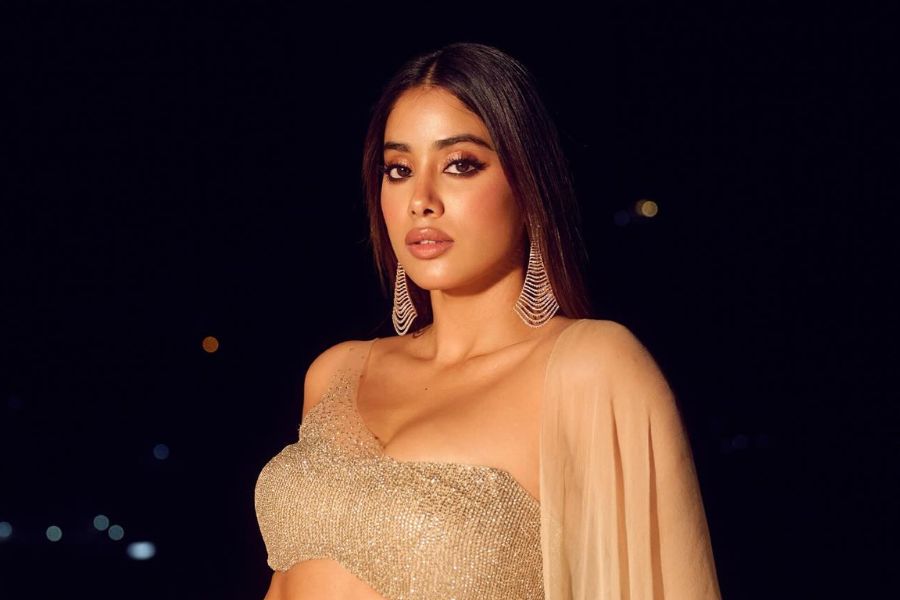
Janhvi Kapoor has secured an important legal intervention against obscene and pornographic material using her identity online, but the Delhi High Court has made it clear that personality rights cannot become a tool for controlling everything people say or publish about a celebrity. Justice Anup Jairam Bhambhani, while hearing Kapoor’s plea, supported targeted action against clearly offensive material but questioned a much broader request covering thousands of webpages, social media posts and fan pages. The hearing has therefore become about more than one actor’s digital privacy, with the court examining where protection of a public figure ends and freedom of expression begins. The case will be heard again on August 17.
Kapoor had approached the court seeking protection against unauthorised commercial use of her name, image and personality, with her plea covering more than 5,000 webpages and posts across online platforms. The material included content that the court considered obviously obscene, vulgar or otherwise offensive, giving Kapoor a basis for seeking immediate relief against those specific examples. At the same time, the court did not accept the idea that every unofficial page carrying her name or photograph should automatically be removed. That distinction has become the central point of the proceedings.
Delhi HC Draws a Line Around Obscene Content
The court’s approach effectively separates clearly harmful material from ordinary online expression. Lawyers representing Kapoor have been asked to prepare a precise tabular list identifying webpages containing pornographic, obscene or lascivious material so that the court can consider targeted relief rather than treating thousands of different links as one category. This means the immediate focus is on content that crosses a clear line, rather than giving the actor an unrestricted order covering anything connected to her identity. The Delhi High Court has previously dealt with personality-rights disputes involving celebrities, but this hearing highlights how difficult it can be to define the limits of those rights in the internet era.
The distinction matters because personality rights are not simply a right to control every use of a celebrity’s name or photograph. In India, protection of personality has developed largely through privacy, publicity and intellectual-property principles rather than through one dedicated personality-rights statute. Earlier Delhi High Court cases have protected celebrities against commercial exploitation and misuse of their identities, including through technologies such as AI and face manipulation. But the Janhvi Kapoor proceedings are testing how far those protections should extend when the material is commentary, criticism, parody or fan expression rather than straightforward commercial exploitation.
Justice Bhambhani questioned the consequences of treating every unofficial page as something that should be taken down. The judge pointed out that fan pages can praise a celebrity, criticise their work or lampoon them, and that such expression falls within the broader freedom people exercise online. His comments made clear that the court does not want personality rights to become a mechanism through which public figures can remove criticism simply because they dislike it. “We are not the conscience keepers of the nation. Solution may be worse than the problem,” the judge observed during the hearing.
The court went even further in questioning the practical consequences of such a broad order. Justice Bhambhani asked how a public personality could realistically seek to shut down every fan club or unofficial page using their name, particularly when the content could range from admiration to criticism. He also noted that people who live in the public domain inevitably face a wide range of reactions and opinions. The underlying message was that being a celebrity does not eliminate the public’s right to discuss, praise, criticise or parody that person.
Meta Pushes Back on Thousands of Links
Meta also raised concerns about the scale of Kapoor’s request. Representing the technology company, advocate Varun Pathak argued that expecting a platform to manually examine and verify thousands of disputed links would create an extremely difficult operational burden. Meta also argued that the creation of AI-generated images is not automatically unlawful and that creators can have legitimate rights in material they produce. The company therefore resisted what it viewed as an attempt to create an ongoing legal mechanism for removing broad categories of content from the internet.
Justice Bhambhani, however, cautioned Meta against taking a position that could appear inconsistent with its role as an intermediary. The court questioned whether a platform could simultaneously describe itself as a neutral facilitator while taking an overly active defensive position about the legality of disputed material. That exchange adds another layer to the case because the dispute is not only about Janhvi Kapoor’s personality rights. It also touches on how social-media companies should respond when celebrities seek large-scale takedowns of content hosted on their platforms.
The copyright question raised during the hearing is equally significant. The court considered a hypothetical example involving artwork created from a photograph of Kapoor and asked whether selling such a work would automatically amount to exploitation of the celebrity’s personality. The judge’s reasoning points toward a distinction between the identity of the person shown in an image and the rights that may belong to the photographer or artist who actually created the work. In other words, using a celebrity’s likeness does not automatically mean every commercial transaction involving that likeness violates the celebrity’s personality rights.
That distinction could become important as celebrity images increasingly move across different forms of digital and physical media. A photograph, illustration, parody, fan artwork, merchandise item or AI-generated image can involve different legal interests depending on how it was created and how it is being used. The court therefore appears reluctant to treat all unauthorised uses as legally identical. Instead, it is asking for a more precise framework that identifies what is genuinely exploitative or harmful and what remains protected expression.
The case also arrives at a time when Indian courts are receiving an increasing number of personality-rights cases involving actors, sports personalities and other public figures. Recent Delhi High Court proceedings involving celebrities have included disputes over AI-generated and sexually explicit material, demonstrating how quickly digital tools have complicated older concepts of image and identity protection. Courts have granted strong protection in cases involving clearly objectionable or commercially exploitative material, but the Janhvi Kapoor hearing shows that those protections may still have boundaries when free speech is involved.
For Kapoor, the immediate outcome is still significant because the court has recognised the need to act against material that is plainly obscene or pornographic. At the same time, the actor has not received the sweeping blanket injunction sought against every fan page or unauthorised online reference. That balance is likely to remain the most important part of the case when the matter returns to court. The next hearing on August 17 could provide further clarity on how specifically the disputed links should be identified and what form of relief can ultimately be granted.
More broadly, the proceedings could influence how celebrities approach personality-rights cases in the future. A broad demand to remove thousands of pages may be much harder to sustain when those pages contain fundamentally different types of expression. A targeted complaint identifying genuinely obscene, defamatory or commercially exploitative material gives a court a much clearer basis for intervention. The Janhvi Kapoor case is therefore becoming an important example of the growing tension between protecting a celebrity’s identity and preserving the messy, unpredictable freedom of the internet.
Janhvi Kapoor Personality Rights Q&A
What did Janhvi Kapoor ask the Delhi High Court to do?
Janhvi Kapoor sought protection against unauthorised use of her name, image and personality online, including material appearing across thousands of webpages and social-media posts. Her plea sought action against content that she argued violated her personality rights and included offensive material.
What has the Delhi High Court ordered regarding obscene content?
The court has supported targeted removal of clearly obscene, pornographic or lascivious material involving Kapoor. It has also asked her legal team to identify such links precisely so that relief can be considered against the specific material rather than against broad categories of webpages.
Did the court ban Janhvi Kapoor fan pages?
No. The court did not agree to a blanket shutdown of fan pages because such pages can contain praise, criticism, parody and other forms of expression that may fall within freedom of speech.
Why did the judge question personality rights?
Justice Anup Jairam Bhambhani questioned whether personality rights were being interpreted so broadly that they could interfere with legitimate expression. He also expressed concern that the concept, which began as a limited form of protection, was increasingly being applied in ways that could require clearer boundaries.
What did Meta argue in the case?
Meta raised concerns about the practical difficulty of reviewing thousands of disputed links individually and pushed back against the breadth of the requested relief. Its representative also argued that creating AI-generated images is not automatically illegal, while the court questioned the platform’s position as an intermediary.
When will the Janhvi Kapoor case be heard again?
The matter is scheduled to come up again on August 17, when the court is expected to continue examining the scope of the requested protection and the specific material for which takedown relief is being sought.