In an industry where every public statement can quickly turn into a national conversation, actor Arjun Rampal has found himself at the centre of a fresh debate — one that blends cinema, patriotism, and public perception. The actor, currently receiving strong appreciation for his role in Dhurandhar: The Revenge, made a statement at a recent awards event that has now snowballed into a wider discussion across media and social platforms.
What began as a heartfelt expression during an acceptance speech has now drawn both support and criticism, with voices from within the industry stepping in — including Rampal’s partner, Gabriella Demetriades, who has publicly defended him.
A Powerful Performance Meets a Charged Moment
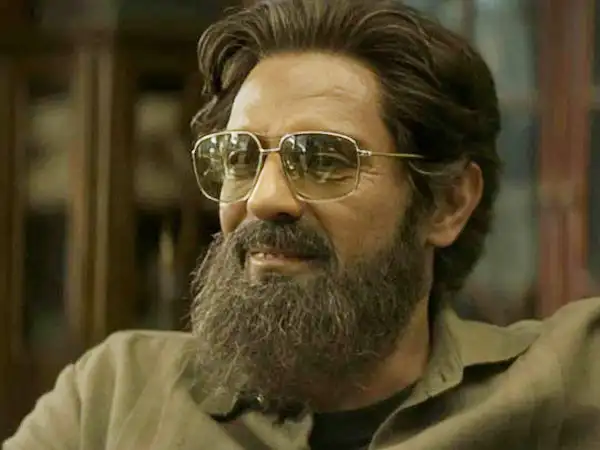
Arjun Rampal’s portrayal of Major Iqbal — a cold, strategic ISI officer — in Dhurandhar: The Revenge has been widely talked about since the film’s release. Directed by Aditya Dhar, known for bringing a grounded intensity to war and espionage dramas, the film taps into themes of national security, personal trauma, and retaliation.
Rampal’s performance, in particular, stands out for its layered intensity. Unlike typical antagonists, Major Iqbal is portrayed with calculated restraint — a character driven not just by ideology, but by psychological complexity. Early audience reactions and industry chatter suggest that this could be one of Rampal’s most memorable roles in recent years.
But it wasn’t just his on-screen work that caught attention.
At the HELLO! Hall of Fame Awards, while accepting recognition, Rampal chose to end his speech with the phrase “Bharat Mata Ki Jai.” What might have otherwise passed as a patriotic sign-off quickly became the focal point of a larger conversation.
The Backstory: A Personal Connection to 26/11
During the same speech, Rampal opened up about a deeply personal memory — witnessing the aftermath of the 26/11 Mumbai terror attacks. The actor revealed that the incident left a lasting emotional impact on him.
He recalled how, on his birthday, he saw the horrifying visuals unfold in real time, describing the experience as physically overwhelming. According to him, revisiting that trauma through Dhurandhar felt like confronting unresolved emotions.
When director Aditya Dhar narrated the sequence inspired by 26/11, Rampal said he immediately felt a sense of purpose — almost like channeling something personal into his performance. For him, the film wasn’t just another project; it became a form of emotional release.
His closing line at the awards — “All I want to say is, Bharat Mata Ki Jai” — came from that place of intensity, at least as he described it.
The Criticism: A Column That Sparked Debate
The moment may have resonated with many, but it didn’t land the same way for everyone.
Writer Shobhaa De, in her column for The Print, raised concerns about Rampal’s statement. The piece questioned whether such expressions, especially in a film-related setting, blur the lines between storytelling and political messaging.
Her criticism suggested that invoking patriotic slogans in promotional or celebratory contexts might influence audience perception in ways that go beyond cinema. The column quickly gained traction online, sparking divided reactions.
Some agreed with her perspective, arguing that Bollywood should remain cautious about mixing entertainment with overt nationalist messaging. Others strongly disagreed, calling the criticism unnecessary and overly sensitive.
Gabriella Demetriades Steps In
Amid the growing debate, Gabriella Demetriades — Rampal’s partner — chose not to stay silent.
Responding directly in the comments section of the post featuring the column, she wrote a brief but firm reaction: “This is outrageous.”
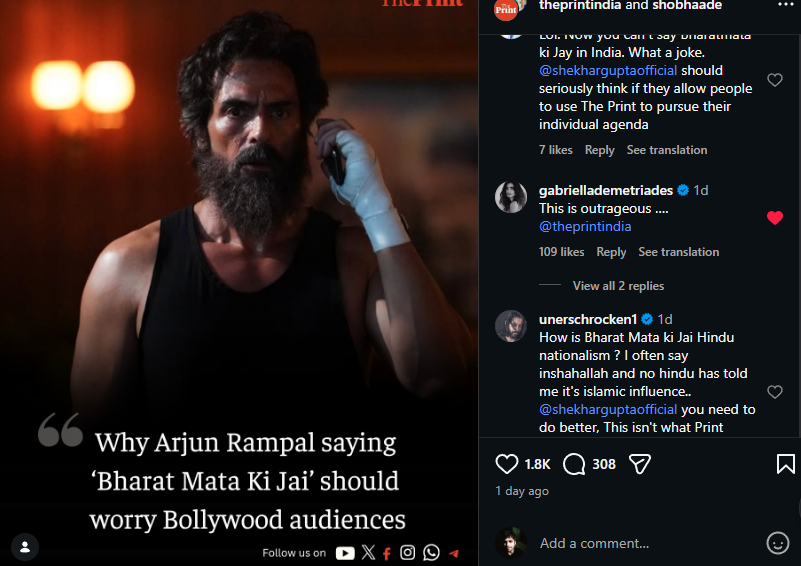
While her statement was short, it reflected a clear stance — defending Rampal against what she seemed to view as unfair criticism. Her response quickly caught attention, with fans and followers backing her comment and expressing support for the actor.
In many ways, her reaction also shifted the tone of the conversation. What started as a critique of a statement turned into a broader discussion about personal expression, intent, and public scrutiny.
Cinema, Patriotism, and Public Perception
The controversy also highlights a recurring pattern in Indian cinema — the intersection of patriotism and storytelling.
Films dealing with national security, war, or terrorism often walk a thin line. On one hand, they aim to reflect real-world events and emotions. On the other, they risk being interpreted through a political lens, especially when actors speak about them publicly.
In recent years, audiences have become more vocal and divided on such matters. Social media amplifies every statement, often removing context and reducing complex emotions into quick headlines.
Rampal’s case sits right in that space.
Was his statement a personal expression tied to his experience and role? Or does it carry broader implications when spoken on a public platform? That’s the question fueling the debate.
Industry Context: A Familiar Pattern
This isn’t the first time a Bollywood figure has faced scrutiny over patriotic expressions.
From film dialogues to promotional speeches, actors have often been questioned about their intent, especially when their words resonate strongly with current socio-political narratives. In some cases, these moments boost a film’s visibility. In others, they create unnecessary distractions.
For Dhurandhar: The Revenge, the timing is particularly interesting. The film is already being discussed for its intense narrative and performances. The controversy, whether intentional or not, has added another layer of visibility.
Historically, films rooted in real incidents — especially those connected to terrorism or national trauma — tend to evoke strong reactions. Audiences don’t just watch them; they emotionally invest in them.
And when actors speak from that emotional space, reactions can be equally intense.
What This Means for Arjun Rampal
For Rampal, the situation is a mix of appreciation and controversy.
On one side, he’s being praised for delivering a compelling performance in a demanding role. On the other, he’s navigating criticism that has little to do with his acting and more with his words off-screen.
But if anything, the discussion reinforces one thing — his performance and presence have made an impact.
Actors often aim to create conversations around their work. In this case, the conversation has extended beyond the film itself.
The Bigger Picture
At its core, this entire episode reflects how deeply intertwined cinema and public sentiment have become.
A single line in an acceptance speech can trigger national debates. A film role can reopen emotional wounds tied to real events. And a simple social media comment can shift the narrative entirely.
For audiences, it becomes less about choosing sides and more about understanding context.
Rampal’s statement came from a personal place, shaped by real memories and a role that demanded emotional depth. The criticism, meanwhile, reflects concerns about how such expressions are perceived in a larger cultural space.
Both perspectives exist — and that’s what makes the conversation complex.
Where Things Stand Now
As of now, Dhurandhar: The Revenge continues to receive attention for its storytelling and performances, with Rampal’s portrayal of Major Iqbal remaining a highlight.
The debate around his statement is still ongoing, but like most such controversies, it may eventually fade as the focus returns to the film itself.
For now, what remains clear is this — in today’s media landscape, even a few words can carry weight far beyond the moment they were spoken.
And sometimes, that’s exactly what keeps the spotlight firmly in place.