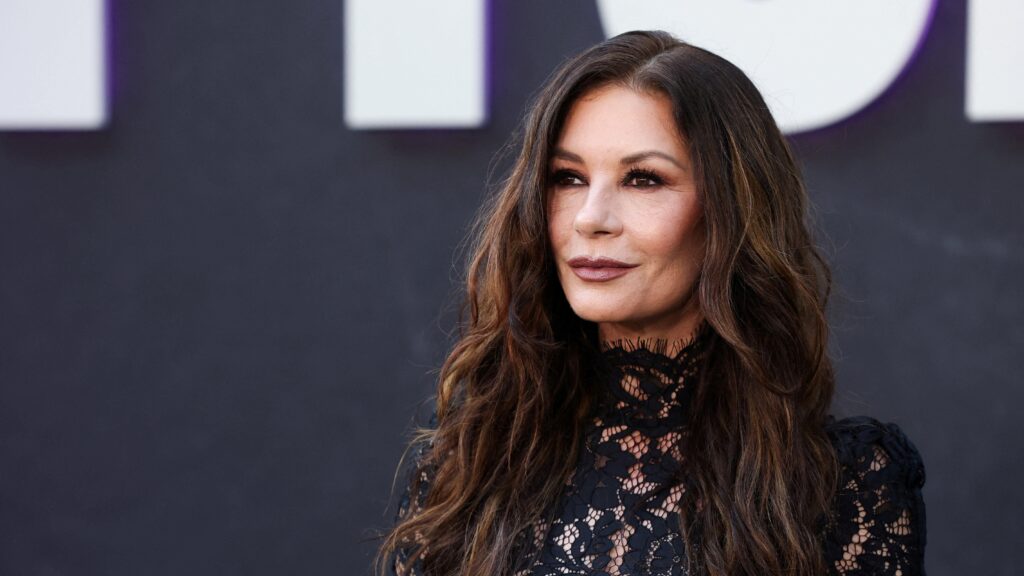
Catherine Zeta-Jones has weighed in on Hollywood’s growing use of artificial intelligence, making it clear that she would rather watch real actors than AI-generated performers. The Oscar-winning actress, currently promoting her crime thriller series Kill Jackie, also questioned the increasing number of performers working with AI companies, although she acknowledged that such decisions ultimately belong to individual artists.
Speaking to the Associated Press in an interview reported by Deadline on October 10, 2026, Zeta-Jones said, “There’s so many actors already, who have given themselves over to an AI company, and that’s everyone’s choice.”
However, she emphasised that her personal preference remains firmly with human performances, particularly those delivered by actors audiences may not already recognise.
Catherine Zeta-Jones Wants Audiences to Discover Real Talent
Zeta-Jones explained that part of her enjoyment of cinema comes from watching performers disappear into their characters rather than focusing on their celebrity status.
She said she prefers entering a theatre without knowing every detail about an actor’s personal life, including their relationships, appearance or daily routines. For her, the experience should be about becoming absorbed in the character rather than the person portraying them.
The distinction makes her comments more interesting than a straightforward rejection of technology. Zeta-Jones is also questioning how celebrity culture has changed the way audiences experience acting.
Her preference for discovering unfamiliar performers suggests a broader concern about opportunities for emerging talent. If studios increasingly rely on digitally created characters or licensed artificial performances, newcomers could face additional competition for roles.
Hollywood’s AI Debate Goes Beyond Digital Actors
Zeta-Jones’s remarks arrive as Hollywood continues negotiating how artificial intelligence should be used in film and television.
The debate involves two different practices: digital replicas that reproduce an identifiable performer’s appearance or voice, and fully synthetic characters generated without a specific human actor.
In June 2026, performers’ union SAG-AFTRA ratified new television and theatrical agreements strengthening protections around both technologies. The contracts established additional safeguards for digital replicas and required producers to negotiate with the union before using synthetic performers.
Importantly, the agreements also reinforced a preference for human performances, reflecting concerns that technological advances could reduce opportunities for working actors.
Zeta-Jones has not called for a complete ban on AI or criticised any particular performer for licensing their likeness. Her comments instead reflect a personal belief that human talent remains central to the appeal of cinema.
For an actress whose career spans The Mask of Zorro, Chicago, Wednesday and the recently released Kill Jackie, that perspective carries weight. As Hollywood explores increasingly sophisticated digital performances, her message highlights an important question: whether technological possibilities should come at the expense of discovering the next generation of actors.