Returning to Dhadakpur should have been easy. The fictional Bihar village already had a personality, a terrific ensemble and the kind of low-stakes absurdity that made the first season of Dupahiya such an easy show to settle into. Season 2 understands all of that. Its biggest problem is that it also wants to do considerably more.
Now streaming on Prime Video, the second season reunites Gajraj Rao, Renuka Shahane, Sparsh Shrivastava, Shivani Raghuvanshi and Bhuvan Arora, while adding Dinesh Lal Yadav “Nirahua” to the mix. Sonam Nair returns as director, with Avinash Dwivedi and Chirag Garg continuing as writers. Prime Video’s official synopsis places the new story around three overlapping problems: a mobile tower that sends Dhadakpur into panic, Roshni’s approaching SSC examination and Inspector Mithlesh’s suspicion that something larger is unfolding around the exam.
The result is warmer and more ambitious than a lazy second-season repeat, but not always better structured. Dupahiya remains funny because of its people. Season 2 becomes less convincing whenever it assumes every one of those people needs a separate plot.
The mobile tower is classic ‘Dupahiya’
The best material comes from the smallest idea.
Banwari’s otherwise unremarkable land is selected for the installation of a mobile tower, and Dhadakpur immediately begins treating it as the possible source of virtually every calamity imaginable. Prime Video’s own description jokes that villagers connect the tower to everything from typhoid to tsunamis.
That premise suits the series perfectly because it lets Dupahiya satirise misinformation without turning the village into a collection of fools. The humour comes from how quickly suspicion spreads when fragments of technology, half-understood health claims and local politics collide.
The show has always worked best when one ordinary event becomes disproportionately important simply because everybody in Dhadakpur has an opinion about it. In Season 1, a stolen motorcycle could threaten a wedding and the village’s prized crime-free reputation. This time, a mobile tower provides the same kind of communal catalyst.
The difference is that the tower is no longer enough to carry the season on its own.
Roshni’s SSC track gives the season its strongest stakes
Roshni, played by Shivani Raghuvanshi, is preparing for the SSC examination, and this becomes the season’s more serious emotional spine.
It is a smart progression for the character. Rather than simply repeating her Season 1 relationship problems, the writers give her an ambition with consequences beyond marriage. She is trying to build something for herself, and the pressure surrounding competitive exams gives the comedy a believable source of anxiety.
Then Amavas enters with a shortcut.
Bhuvan Arora’s character remains emotionally invested in Roshni, but his attempt to help pulls the story toward an exam-paper leak and the ecosystem of shortcuts, middlemen and desperation surrounding government-job preparation. India Today similarly notes that the season uses Roshni’s examination to connect Dhadakpur’s comedy with wider anxiety around paper leaks, although the publication argues that the multiple tracks eventually crowd one another.
That criticism gets to the central weakness of Season 2.
The paper-leak idea is serious enough to support a sharper satire of its own. Instead, it has to share space with the mobile tower, romance, Bhugol’s social-media persona, village politics and new characters. The more the season expands, the less pressure any individual storyline gets to build.
Sparsh Shrivastava remains the show’s comic wildcard
Bhugol, meanwhile, has somehow become famous — just not in the way he might have imagined.
After posing online as a woman, he develops a following as a female influencer. It is the kind of ridiculous development that fits Sparsh Shrivastava’s ability to play a character who is both convinced of his own cleverness and permanently one mistake away from humiliation.
Shrivastava again provides some of the season’s most naturally comic material because Bhugol rarely needs a conventional punchline. His confidence usually is the joke.
The storyline also lets Season 2 bring Dhadakpur’s old-fashioned social dynamics into contact with a different form of modernity. The village may be geographically removed from influencer culture, but phones and social media have made that culture impossible to keep outside its borders.
This is where Dupahiya feels most distinct from the increasingly crowded field of Hindi rural comedies. The Hollywood Reporter India argues that Season 2 moves further away from the obvious Panchayat comparisons surrounding its debut and develops a more identifiable satirical voice of its own.
That is a fair assessment. Dhadakpur now feels like a place with its own comic rules rather than simply another quaint village populated by eccentric supporting characters.
Gajraj Rao and Renuka Shahane make familiarity an advantage
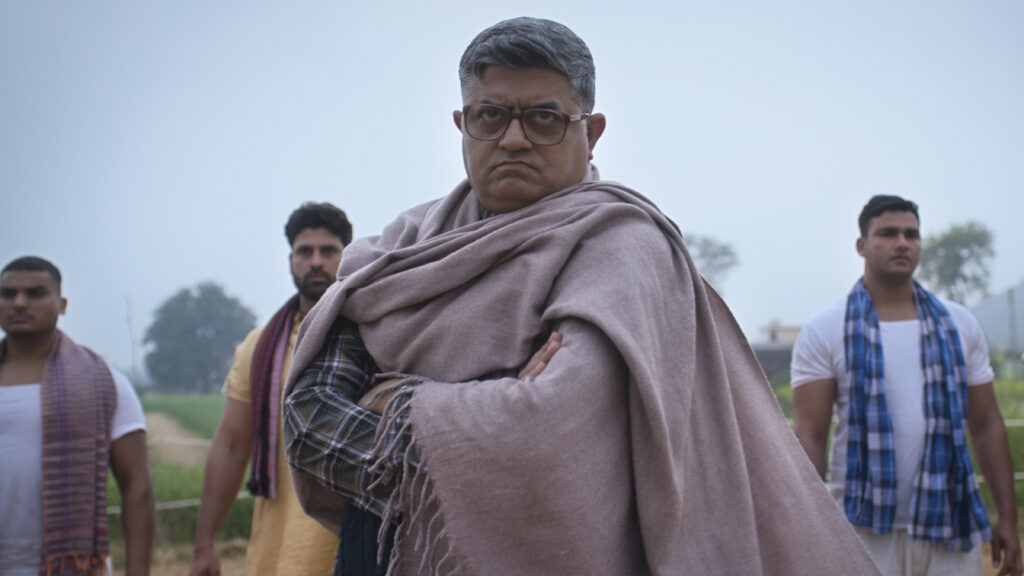
Gajraj Rao’s Banwari remains one of the main reasons returning to this world feels comfortable.
Rao does not need exaggerated comic beats to make Banwari funny. A pause, a suspicious look or his frustration at yet another ridiculous problem usually does more than a lengthy gag could. Renuka Shahane brings the same lived-in ease to the ensemble, ensuring the Jha family still feels like a family rather than a collection of characters assembled around the season’s plot.
That familiarity is Season 2’s greatest asset.
Hindustan Times, which rated the season three stars, similarly found that Dhadakpur’s characters and humour remain enjoyable even as the narrative becomes “crowded and bumpy.” Moneycontrol reached a comparable conclusion, describing the sequel as easygoing and endearing while acknowledging that it does not completely reproduce the first season’s freshness.
The ensemble means even detours often remain pleasant to watch.
But pleasant is not always the same as necessary.
Too many stories weaken the mystery
Season 2 clearly wants escalation.
The stolen motorcycle gave the first season one simple question around which almost everything could orbit. The new season instead distributes attention among a mobile tower, an exam, a possible scam, influencer fame, relationships and village politics.
On paper, that sounds richer.
In practice, the series periodically feels as though three different seasons of Dupahiya have been compressed into one. The Indian Express was considerably harsher on this point, arguing that the paper-leak plot lacks the punch of the original season’s central mystery despite the relevance of its subject.
The problem is not that the individual ideas are weak. In fact, several are strong enough that they deserved more space.
The issue is rhythm. A comic mystery benefits from accumulation: one misunderstanding leads to another, alliances shift, and a seemingly insignificant detail suddenly matters. Season 2 too often has to leave one storyline just as it becomes interesting because another character’s subplot is waiting.
That makes portions of the middle stretch feel busier than funnier.
Dinesh Lal Yadav fits the world without hijacking it
Bringing a recognizable Bhojpuri star like Dinesh Lal Yadav into the ensemble could easily have disrupted the tone.
Fortunately, Season 2 does not reorganize Dhadakpur around its new addition. Nirahua enters a world that already exists rather than being treated as a guest star around whom everyone else suddenly revolves.
That restraint matters in an ensemble comedy.
Yashpal Sharma also adds another layer to the village’s politics and power structures, giving the season more room to connect its absurd events with the people who benefit from confusion.
Again, though, the expanded cast contributes to the same structural problem: there are only so many storylines a light rural comedy can carry before “richly populated” begins turning into “overstuffed.”
Season 2 works because Dhadakpur still feels alive
The easiest criticism of Dupahiya Season 2 is that it is not as fresh as the first season.
That is also slightly unfair.
The first season had the advantage of introducing everything: Dhadakpur, its boast of being crime-free, the Jhas, the stolen motorcycle and the increasingly ridiculous search for it. A second season cannot rediscover its own world.
What it can do is prove that there was more to that world than one missing bike.
Season 2 mostly succeeds.
The mobile-tower panic, Bhugol’s bizarre online fame and Roshni’s examination problems all feel like stories that could plausibly happen to these particular characters in this particular village. The humour remains affectionate rather than condescending, which is an important distinction in a genre that can easily reduce rural characters to punchlines.
Sonam Nair also maintains the approachable, family-viewing tone that made the show work the first time. The absurdity grows, but the characters rarely become cartoons purely to manufacture laughs.
That warmth is enough to carry the weaker stretches.
Dupahiya Season 2 could have been sharper with fewer storylines and more patience. Its paper-leak thread deserves greater dramatic weight, while some of the surrounding complications feel like entertaining distractions rather than essential parts of the story.
But Dhadakpur remains difficult to dislike.
The sequel may no longer have the surprise of discovering this village for the first time, yet Gajraj Rao, Sparsh Shrivastava, Shivani Raghuvanshi, Renuka Shahane and Bhuvan Arora make returning worthwhile.
PopcornRealm verdict: 3/5
Season 2 is busier and bumpier than Dupahiya at its best, but its ensemble, warmth and increasingly distinctive sense of rural absurdity keep the ride enjoyable.