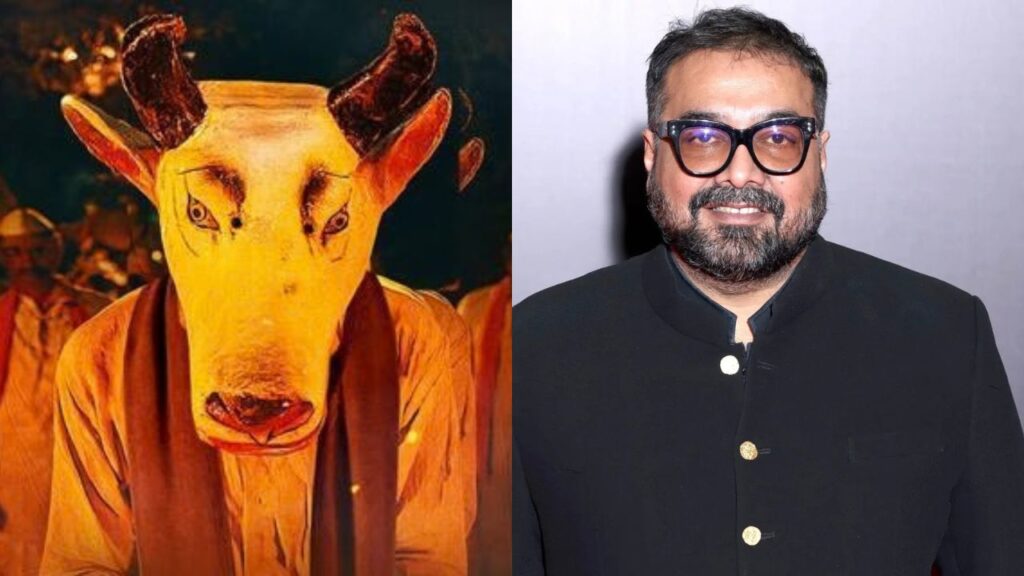
The debate around India’s latest Oscar submission has taken an interesting turn, with Gondhal director Santosh Davakhar responding to Anurag Kashyap’s criticism of the country’s selection process.
Kashyap recently argued that India has repeatedly chosen the “wrong films” to represent the country at the Academy Awards, pointing to acclaimed titles such as The Lunchbox and All We Imagine as Light that were not selected in their respective years. But there is an important distinction in the current controversy: Kashyap has not actually seen Gondhal.
Davakhar has now highlighted exactly that point, asking audiences not to turn Kashyap’s broader criticism of India’s Oscar strategy into a verdict on his Marathi film.
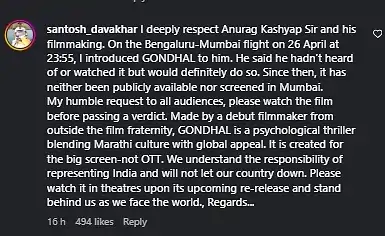
“My humble request to all audiences, please watch the film before passing a verdict,” Davakhar wrote while responding to the discussion.
Kashyap’s criticism was bigger than Gondhal
Asked why India has struggled to make a consistent impact in the Best International Feature Film race, Kashyap gave a typically direct response: “Because we select absolutely wrong films.”
He cited The Lunchbox and Payal Kapadia’s All We Imagine as Light as examples of films he believed India should have submitted. Kashyap also acknowledged that Homebound, India’s submission for the previous Oscars, reached the 15-film shortlist.
Crucially, however, he said it was too early for him to judge Gondhal because he had not watched the movie or many of the other films considered this year. His concern was largely about Oscar campaigning and international visibility. Kashyap suggested that Gondhal should build exposure at film festivals outside India before large amounts are spent on screenings and promotion in the United States.
So this is not quite a filmmaker declaring that Gondhal itself was the wrong choice. It is a disagreement over how India selects and positions films for an increasingly competitive international awards race.
Gondhal already has festival recognition at home
Davakhar also has some evidence behind his confidence in the film.
The psychological thriller, rooted in Maharashtra’s traditional Gondhal ritual and folk-performance culture, earned Davakhar the Silver Peacock for Best Director at the 56th International Film Festival of India in 2025. The IFFI jury praised the film’s use of cultural tradition and its narrative construction.
Gondhal was subsequently chosen by the Film Federation of India from 33 submitted films to represent India in the Best International Feature Film category at the 99th Academy Awards.
Davakhar said he had even introduced the film to Kashyap during a Bengaluru-Mumbai flight on April 26. According to the director, Kashyap told him at the time that he had not heard of or watched Gondhal but intended to do so.
Davakhar is now preparing the film for a theatrical re-release and has asked viewers to see it on the big screen before deciding whether it deserved its Oscar selection.
Being India’s entry is only the beginning
There is also an important distinction often lost when an Indian film is described as being “sent to the Oscars.”
Gondhal is India’s official submission, not an Oscar nominee yet.
Under the Academy’s rules for the 99th Oscars, eligible international films first compete for a 15-film shortlist. Those 15 are then voted down to the five official nominees. The 2027 shortlist is scheduled to be announced on December 15, 2026, followed by Oscar nominations on January 21, 2027.
That is where Kashyap’s point about visibility becomes relevant. Selection gets Gondhal into the race; making Academy voters aware of the film is a separate challenge.
Davakhar, meanwhile, is asking for the discussion to begin with the movie itself. He has described Gondhal as a psychological thriller made by a debut filmmaker outside the established film fraternity, combining Marathi culture with an ambition to connect internationally.
For now, the fairest reading of the exchange is that Kashyap is questioning India’s Oscar machinery, while Davakhar is defending his film from being judged through that debate before people have actually seen it.
Whether Gondhal can turn its Indian festival recognition into international awards momentum will become much clearer when the Academy reveals its shortlist in December.
India’s Oscar Selection Process Explained: How One Film Is Chosen