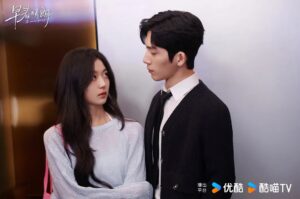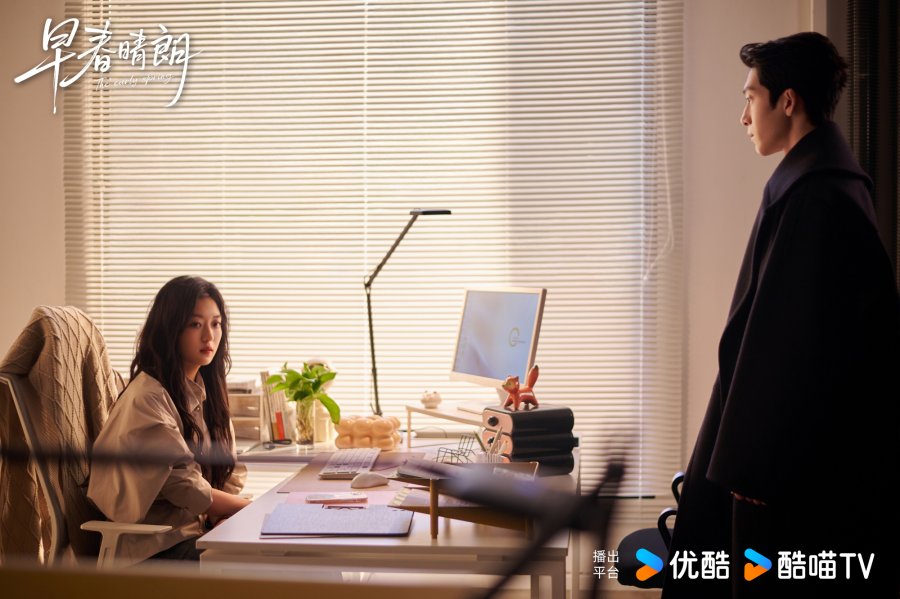
The Early Spring did not become one of 2026’s most talked-about C-dramas simply because viewers wanted another office romance.
The Jing Boran and Sun Qian series debuted at No. 2 on Netflix’s global Non-English TV chart, attracting 2.4 million views and 21.5 million viewing hours during its first partial week. Netflix credited the leads’ chemistry as a major part of its international appeal, while viewer discussions repeatedly returned to several other qualities: Shang Zhitao’s growth, a relationship allowed to be imperfect, and performances that became more rewarding as the story progressed.
The reaction was not universally positive. Some viewers disliked Luan Nian’s behavior or found parts of the romance frustrating. But that division arguably tells us something important about the show: people were debating these characters rather than simply consuming another familiar romance.
Here are five reasons The Early Spring connected so strongly with many viewers.
1. Jing Boran and Sun Qian made the attraction believable
Almost every conversation about The Early Spring eventually arrives at the same subject: chemistry.
Luan Nian and Shang Zhitao do not spend dozens of episodes communicating only through accidental hand touches and carefully interrupted confessions. Their attraction is openly physical, occasionally uncomfortable and tied to the shifting power between them.
Netflix director Chiang Chi-cheng described the casting by saying, “Their contrast and chemistry feel completely natural.” Sun Qian also revealed that an intimacy coordinator helped her feel more comfortable filming romantic scenes.
That work is noticeable because the intimacy rarely feels detached from the relationship. Glances, physical distance and small touches often communicate what these two characters are unwilling to say aloud.
Viewer discussions repeatedly singled this out, with fans describing the pairing as unusually adult compared with more restrained modern C-drama romances.
2. Shang Zhitao actually changes
A weaker version of this story could have made Shang Zhitao little more than the inexperienced employee who eventually wins over her difficult boss.
Instead, her career becomes part of her identity.
She begins as someone unsure of herself inside an intimidating advertising company, but gradually becomes more confident professionally and personally. That development matters even more once the story moves beyond the initial workplace romance and shows her creating a life that does not depend entirely on Luan Nian.
Sun Qian had an unusually personal connection to that journey. She told Netflix that, like her character, she moved from Harbin to Beijing to pursue her career, while Zhitao’s decade-long story coincided with her own tenth year in the industry.
Fans noticed the transformation too. One recurring theme in post-finale discussions was appreciation for Zhitao learning to stand her ground rather than simply waiting for Luan Nian to change.
3. The romance is allowed to be messy
The Early Spring does something more interesting than asking whether two attractive people will eventually date.
It asks whether attraction is enough.
Luan Nian and Zhitao can care deeply for one another and still fail to understand what the other person needs. Their personalities, professional positions and different ways of expressing affection repeatedly create friction.
That makes the relationship frustrating by design. India Today noted that the drama distinguishes chemistry from compatibility, exploring what happens after attraction turns into an actual relationship with expectations, disappointments and accumulated emotional baggage.
Some viewers understandably saw Luan Nian’s behavior as a red flag rather than romantic complexity. But for viewers who embraced the series, watching imperfect people repeatedly get things wrong was part of what made the eventual emotional payoff work.
4. The workplace isn’t just decoration
Many office romances could remove the office entirely without changing much.
The Early Spring would lose a significant part of its story.
Zhitao’s position as a newcomer and Luan Nian’s authority over her affect how they communicate, how other people perceive them and how Zhitao sees herself. The advertising environment also provides competition, ambition and professional insecurity that exist independently of the central romance.
That grounded workplace element was repeatedly highlighted in reviews, which praised the series for allowing career pressure and personal ambition to complicate rather than merely decorate the love story.
It also helps explain why Zhitao’s eventual independence feels meaningful. Her story is not simply about becoming confident enough to be with Luan Nian. It is about becoming confident enough to decide what she wants from work, relationships and herself.
5. The performances made the difficult parts pay off
Neither lead gets an especially easy character.
Jing Boran has to make Luan Nian compelling without pretending his arrogance and emotional limitations do not exist. Sun Qian has the opposite challenge: making Zhitao’s quieter early personality feel like the starting point of an arc rather than passivity.
That becomes particularly important later in the series, when both actors have to sell years of accumulated history.
Viewer reactions after the finale repeatedly praised Jing’s shift into vulnerability and Sun’s increasingly assertive performance. One popular Reddit discussion described the final stretch as the point where Luan Nian being emotionally exposed and Zhitao finally holding her ground made the earlier frustration worthwhile. Another discussion singled out Sun Qian’s performance and the drama’s layered themes among its strongest qualities.
That may ultimately explain The Early Spring better than any single viral romantic scene.
The familiar ingredients are all there: a demanding boss, an inexperienced employee, workplace attraction and separation. What viewers responded to was the way those ingredients developed into something more complicated. The romance could be sexy, irritating, tender and unhealthy at different moments—and the characters were allowed to grow because of those contradictions rather than being magically cured by falling in love.
Its Netflix numbers show that The Early Spring travelled well internationally. The conversations around it explain why: viewers did not just want Luan Nian and Zhitao together. They became invested in whether these two people could actually become capable of building something better.