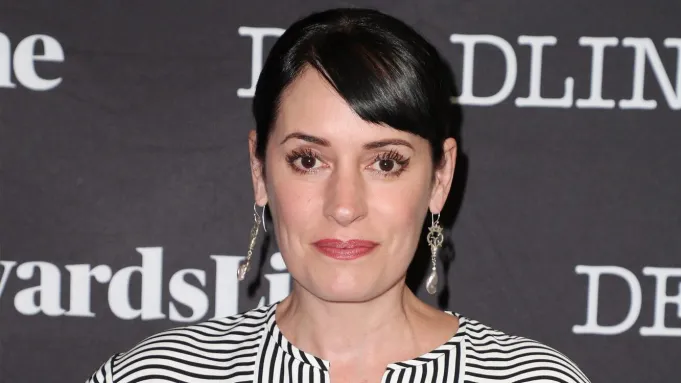
A social media dispute involving Criminal Minds star Paget Brewster quickly escalated over the weekend before ending with a public apology from the actress. Brewster drew criticism after responding to a ScreenRant article about Criminal Minds: Evolution, directing a personal attack toward the journalist who wrote the piece. The exchange sparked a strong reaction from fellow critics and entertainment writers, many of whom accused the actress of crossing a line by targeting a reporter for doing her job.
The controversy began after ScreenRant writer Shealyn Scott published an article discussing changes made to the long-running crime drama following its move from network television to streaming. While the piece acknowledged some positive developments under Paramount+, it also argued that certain creative decisions had weakened elements that originally helped make the series successful. The article appears to have struck a nerve with Brewster, who has played Emily Prentiss in the franchise for nearly two decades.
Paget Brewster’s Post Sparks Backlash
On Saturday, Brewster posted a message directed at Scott on X, formerly Twitter. The post was later deleted, but screenshots quickly circulated online. In the message, Brewster criticized the writer personally rather than addressing the arguments presented in the review.
She wrote: “Hello critic Shealynn Scott. You’re young. You don’t know that bad pics and bad reviews can lead to 350 people losing their jobs. Sell vintage. Work at a shelter. Do something better than what you do now. Because right now you suck.”
The post immediately generated criticism from journalists, reviewers, and social media users. Many argued that entertainment criticism is a normal part of the industry and that publicly attacking a writer over a review was inappropriate. Others pointed out that Scott’s article was relatively measured and included praise for several aspects of the series despite raising concerns about some creative changes.
The situation quickly gained momentum as more industry voices weighed in. What may have started as a frustrated reaction to criticism soon turned into a broader conversation about how public figures engage with journalists and critics online.
Critics Rally Behind the ScreenRant Writer
Among those responding was veteran critic David Rooney, chief film critic at The Hollywood Reporter. Rooney criticized Brewster’s remarks and suggested the response reflected poorly on the actress rather than the journalist.
He wrote: “This is a very bad look. An actor on a long-running show attacking a young reviewer who contextualizes her respectful criticisms with obvious knowledge of the material — says way more about u being thin-skinned than it does about her professionalism. ‘Work at a shelter,’ really?!”
ScreenRant staff members also defended their colleague. Senior writer Andy Behbakht called the comments unacceptable and publicly backed Scott after the online criticism intensified.
Behbakht wrote: “This is disgusting behavior on your part, and really tragic to see you tearing down a young female journalist whom you are literally telling that she ‘sucks’ and that she shouldn’t be in the field that she is in. I stand by my colleague, and you owe her an apology.”
As reactions continued to spread across social media, discussion shifted away from the original article and toward Brewster’s handling of the situation. Many users argued that actors and creators are free to disagree with reviews, but personal attacks against critics rarely end well and often draw even more attention to the criticism itself.
The Review That Triggered the Debate
Scott’s original article focused on the evolution of Criminal Minds after its transition from CBS to Paramount+. The series officially ended its original run in 2020 after 15 seasons before returning in 2022 as Criminal Minds: Evolution.
In her piece, Scott acknowledged that the streaming version introduced several changes that helped modernize the show. She pointed to a higher age rating, new storytelling opportunities, and additions to the cast as examples of positive developments. At the same time, she argued that some changes had weakened what originally made the procedural drama stand out.
Scott wrote: “From details as small as a ratings change to TV-MA— which allows David Rossi (Joe Mantegna) and Emily Prentiss (Paget Brewster) the occasional heated expletive— to new main cast members like Tyler Green (Ryan-James Hatanaka), there’s no doubt that ‘Criminal Minds: Evolution’ has its own unique identity.”
She continued: “Plenty of the continuation’s changes have been received warmly, and ‘Criminal Minds’ unquestionably still works as a gripping crime drama, but there are just as many tweaks that feel more like downgrades— including the new 10-episode season structure. Though logical in theory, the shortened seasons are unfortunately working against ‘Criminal Minds’’ greatest strengths.”
The article was not a negative review of the show overall, but rather an analysis of how the streaming format had altered the series compared to its original network run.
Brewster Issues Public Apology
Less than 24 hours after the controversy erupted, Brewster returned to X with a noticeably different tone. On Sunday, the actress publicly apologized to Scott and acknowledged that her comments were inappropriate.
She wrote: “Hi guys, I was mean to Shealyn Scott last night and I profoundly regret it. Shame on me for insulting a human being for doing their job. I’m very sorry, Shealyn. And I’m sorry to those who follow me that you saw me behave like that. Turns out, last night, I sucked.”
The apology was widely shared online and appeared to help calm the situation. While debates over reviews and criticism are nothing new in Hollywood, the incident serves as another reminder of how quickly disagreements can escalate in the social media era. For many observers, Brewster’s willingness to publicly acknowledge her mistake became the most notable development in a controversy that began with a single review and ended with a public admission of regret.