Peacock’s The Copenhagen Test wants very badly to be a smart, mind-bending espionage series. Created by Thomas Brandon and executive produced by James Wan, the show arrives dressed like prestige television — high concepts, secret agencies, moral dilemmas, and ominous conversations in dimly lit rooms. The problem is that it spends far too long explaining itself before it actually becomes interesting.
By the time the series figures out what it wants to be, viewers may already be wondering why it took eight episodes to get there.
What the show is about (in simple terms)
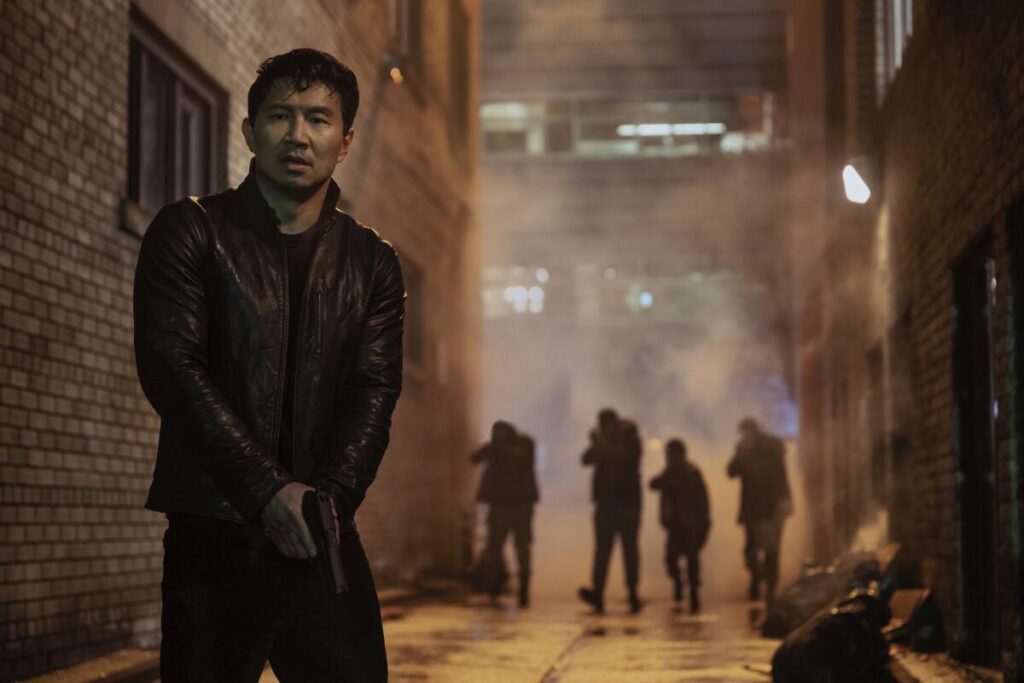
Simu Liu plays Alexander Hale, an intelligence analyst working for a shadowy government sub-agency known as The Orphanage. Analysts work downstairs, operatives upstairs. Alexander desperately wants to move up — but loses out on a promotion to a colleague.
Then things get strange.
Alexander starts experiencing severe headaches, only to discover something far worse: his brain has been hacked. An unknown entity can see and hear everything he does, a terrifying problem for someone handling classified information. Instead of trusting him, the agency brings him upstairs to determine whether he’s a victim… or a threat.
From there, the show spirals into nanotech conspiracies, surveillance paranoia, and philosophical debates about choice, morality, and control.
The biggest problem: too much talking, too little momentum
The first half of The Copenhagen Test is exhausting. Characters repeatedly explain the same premise, recap events we’ve just seen, and monologue exposition as if the audience might blink and miss something crucial.
Episode five opens with three layers of recap — a “Previously on,” followed by character flashbacks, followed by a literal recorded recap. It’s unintentionally hilarious, and also telling. The show doesn’t trust its viewers.
Ironically, this obsession with explaining everything makes the series feel less intelligent, not more. The early episodes feel like a two-hour pilot stretched into four hours of wheel-spinning.
When it finally improves
Things do turn around — eventually.
Episode five, directed by Vincenzo Natali, delivers the show’s first genuinely memorable set pieces. Episode seven introduces its first decent action sequences. The final two episodes finally begin to play with structure and timelines in a way that feels clever instead of evasive.
At that point, The Copenhagen Test starts resembling the show it always wanted to be — tense, tricky, and watchable.
The unfortunate truth? The first four episodes are largely skippable.
Cast & characters: supporting players do the heavy lifting
Simu Liu is perfectly fine as Alexander, but the writing doesn’t give him enough emotional texture early on. Important elements — like his parents being Chinese refugees and his lingering sense of not belonging — arrive too late to deepen his performance in meaningful ways.
Melissa Barrera, as Michelle (a bartender who is very much not just a bartender), shows promise but is stuck in a role more focused on misdirection than genuine relationship-building.
Where the show shines is its supporting cast:
- Brian d’Arcy James is quietly compelling as the controlled, unsettling head of the Orphanage
- Kathleen Chalfant balances warmth and menace as the enigmatic founder, St. George
- Adam Godley steals scenes as Henry, keeping viewers guessing about where his loyalties lie
- Sinclair Daniel stands out as Parker, a character with real personality and an intriguing backstory the show frustratingly underuses
- Saul Rubinek eventually gets to have some fun, once the plot remembers him
In many episodes, the background characters are more engaging than the supposed leads.
Themes explained… again and again
The series is obsessed with ideas like choice, conscience, and moral responsibility — but instead of trusting viewers to understand them, it repeats the same thematic points across multiple scenes, then drops them entirely.
When The Copenhagen Test wants you to get something, it hits you over the head with it. When it doesn’t, it moves on without payoff. The result is uneven storytelling that undercuts its own ambitions.
Visuals & atmosphere
Stylistically, the early episodes are bland. Generic intelligence-agency interiors, Toronto standing in for Washington, and a lot of murky lighting that adds atmosphere but not clarity.
Oddly, the short pre-credits flashbacks in each episode are often more compelling than the main plot — a reminder of how much stronger the show could have been with better focus.
Final verdict
The Copenhagen Test isn’t bad — it’s just wildly inefficient.
There’s a genuinely solid sci-fi espionage series buried here, but it feels like a tight two-part pilot stretched into eight episodes, half of which exist mainly to repeat information. By the time the show finally finds its footing, it’s already asked too much patience from its audience.
If Peacock gives it a second season — and trims the fat — this could evolve into something sharp and engaging. But as it stands, The Copenhagen Test is a case of smart ideas slowed down by overexplaining and under-trusting its viewers.
Rating: ★★½ / 5