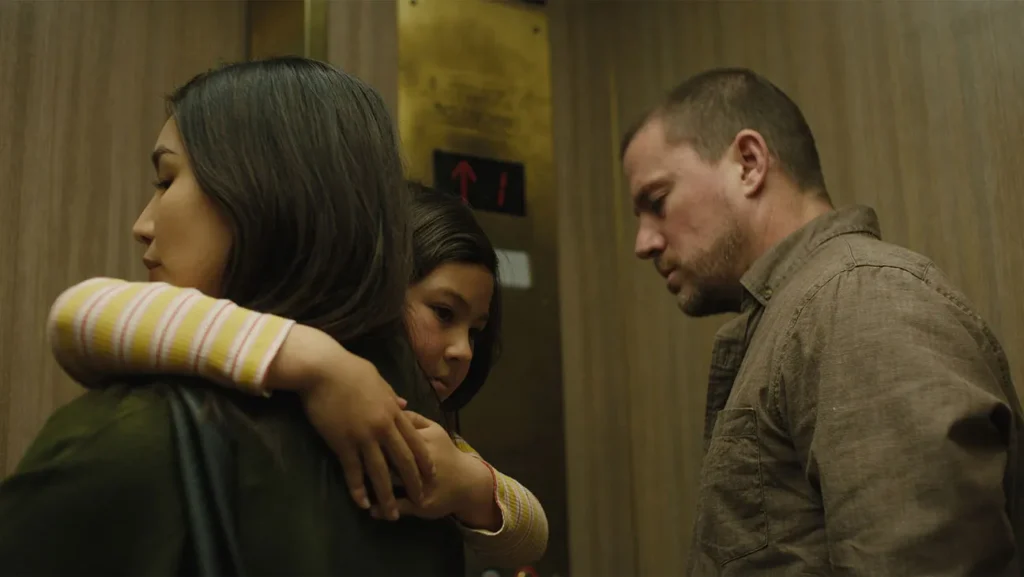
Some films are born from imagination. Josephine comes from something far more painful. Premiering in the U.S. Dramatic Competition at the Sundance Film Festival, filmmaker Beth de Araujo turns a deeply personal childhood experience into a fictionalised yet emotionally raw drama about innocence, trauma, and the unbearable weight placed on a child witness.
This is not an easy watch — nor does it try to be.
The Story: One Morning That Changes Everything
The film centres on Josephine, an eight-year-old girl played by newcomer Mason Reeves. During a quiet Sunday morning walk in a park with her father Damien (Channing Tatum), Josephine briefly runs ahead — a small, everyday moment that spirals into something devastating.
Hidden behind a tree, she witnesses a violent sexual assault. What follows is chaos: police sirens, a chase, an arrest — and then, disturbingly, life simply continues. But for Josephine, nothing is the same again.
As the days pass, the once-lively child withdraws. She becomes fearful, aggressive, and deeply confused, obsessively searching for answers she isn’t old enough to process. The trauma manifests in nightmares, paranoia, and distrust — especially toward men.
Parents Caught Between Protection and Reality
At home, Josephine’s parents struggle to respond. Damien believes in preparing his daughter to defend herself at all costs. His wife Claire, portrayed with quiet restraint by Gemma Chan, fears pushing Josephine into adulthood too quickly — or worse, into a courtroom.
Their conflict deepens when it’s revealed that the assault survivor has left town and is no longer cooperating with authorities. Prosecutors explain that the only person who can keep the accused behind bars is Josephine herself.
For an eight-year-old, the burden is crushing.
As therapists, legal experts, and child witnesses specialists enter the picture, Josephine becomes less about a crime and more about what justice costs when the system leans on someone far too young to carry it.
Performances That Hurt — In the Right Way
Mason Reeves delivers a haunting debut. Her Josephine rarely smiles, often staring blankly or reacting with unsettling intensity. It’s uncomfortable — intentionally so. The film strips childhood joy away and replaces it with vigilance, fear, and rage.
Tatum offers one of his strongest dramatic performances in years, playing a father desperate to help but unsure how. His frustration, guilt, and helplessness feel painfully real. Chan, as always, grounds the film emotionally, embodying a parent trying to hold a family together while carrying her own fear and grief.
What Worked / What Didn’t
What worked:
- A fearless, emotionally honest perspective on childhood trauma
- Strong, restrained performances across the board
- Refusal to sensationalise healing or closure
- A rare focus on the secondary victims of sexual violence
What didn’t:
- The graphic opening scene may be overwhelming for some viewers
- The film’s heavy tone leaves little room to breathe
- Its near two-hour runtime can feel emotionally exhausting
Final Verdict
Josephine is not a film you watch for comfort or catharsis. It is deliberately heavy, deeply unsettling, and emotionally draining — but also necessary. Beth de Araujo doesn’t offer easy answers about justice, healing, or when a child should be told the truth about the world.
Instead, she asks a harder question: What happens when innocence is taken, not from the victim alone, but from the one who sees it happen?
This is a film that may struggle commercially, but its impact is undeniable. Josephine stands as a reminder that trauma radiates outward — and sometimes, the quietest victims carry the deepest scars.