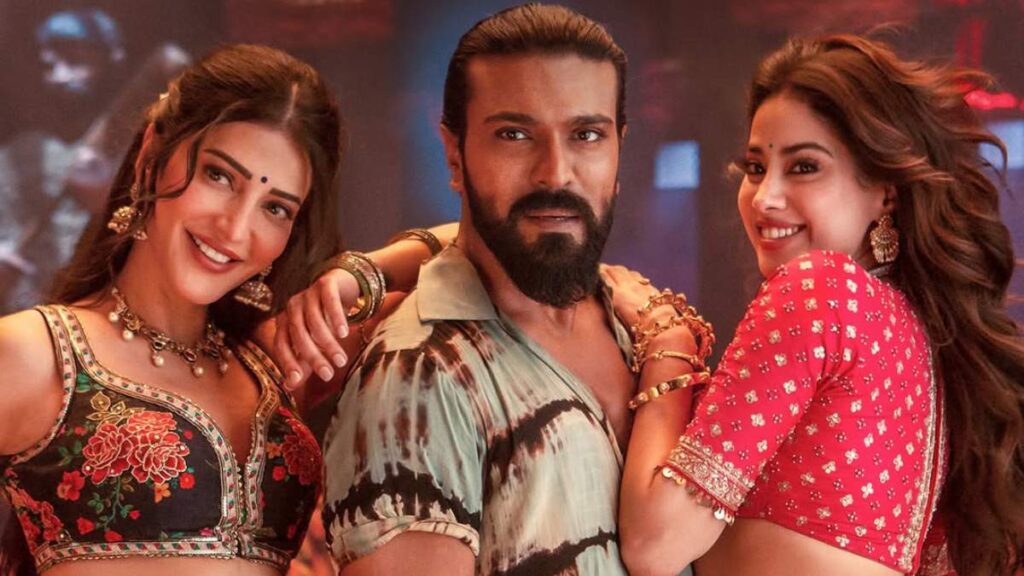
Even as Peddi continues its dream run at the box office, the conversation around the film has shifted away from its collections and towards a growing debate about creative freedom, consent, and how women are portrayed in mainstream commercial cinema. What initially began as criticism directed at director Buchi Babu Sana’s handling of Janhvi Kapoor’s character has now evolved into a larger discussion after lyricist Anantha Sriram publicly questioned the filmmaker’s decision to apologise.
The controversy surrounding Peddi has divided audiences over the past few days. While some viewers praised the film’s emotional and action-driven storytelling, others argued that portions of its romantic track crossed uncomfortable lines. At the centre of the criticism is Achiyyamma, played by Janhvi Kapoor, and how the character was framed on screen.
Now, comments made at the film’s success meet have added another layer to the ongoing debate.
Anantha Sriram Says Creators Are Being Pressured
During a media interaction held as part of Peddi‘s success celebrations, Buchi Babu Sana was asked about his recent apology over scenes that had upset a section of the audience. Before the director could elaborate further, lyricist Anantha Sriram stepped in and admitted that he personally disagreed with the apology.
Speaking in Telugu, Sriram defended a filmmaker’s right to interpret characters through their own creative lens.
“A character behaves the same way… that is the director’s imagination. It is a character created with that imagination. Here, the one who can speak English is great. The way of thinking of PhDs and graduates is the right one.. is increasing.. Those who are vocal on social media, those who are trolling by throwing out words they speak, are being influenced by their opinions. Apart from that, if a director is not even given the freedom to behave like this.. what have we done to creativity?”
His remarks appeared to suggest that social media discourse increasingly influences creative decisions and that filmmakers are being pushed into defensive positions out of fear of backlash.
The comments quickly grabbed attention online, with viewers once again splitting into opposing camps. Some agreed with Sriram’s argument about artistic freedom, while others felt that criticism of problematic portrayals should not be dismissed as online outrage.
“We Will Not Be Able to Make a Great Point in Commercial Films”
Sriram went on to expand on his argument, saying there was a growing tendency to judge similar emotions differently depending on how they were presented.
“That is, if you use big words like vital attraction, hormonal reactions, etc., it is called awesome as if it is done very aesthetically. If the hero speaks his tribal language and says, ‘I will touch you, it is called vulgarity; they say that he looked at you like an object. If you do all this, it is like trampling on creativity. Buchi Babu would have apologised with great politeness, with the intention of hurting someone’s feelings, or else he would have apologised with the intention of not hurting anyone. He may have apologised with the intention of saying that democracy is not 49:51, but 99:1, but if it continues like this, then we will not be able to make a great point in commercial films, except in documentary films in the first place,” he said.
His comments reflected a concern shared by some within the industry that commercial storytelling could become overly cautious if creators constantly fear public criticism.
At the same time, the response online suggested that audiences today are demanding greater responsibility from filmmakers, especially when depicting relationships and consent.
What Sparked the Peddi Backlash?
The controversy began after viewers criticised certain moments involving Peddi, played by Ram Charan, and Achiyyamma, portrayed by Janhvi Kapoor.
Several social media users pointed out that parts of the romantic subplot appeared to blur the distinction between persistence and consent.
One scene, in particular, became the focal point of criticism. In the sequence, Peddi openly expresses his desire to be with Achiyyamma despite her apparent lack of interest. Later in the film, he kisses her during a power cut without receiving her consent.
For many viewers, the scene felt troubling.
Some argued that if similar behaviour had been shown by an antagonist, audiences would have immediately identified it as unacceptable. Since the actions came from the hero, critics questioned why they were framed differently within the narrative.
The backlash also extended to the visual treatment of Janhvi Kapoor’s character. Several viewers accused the film of hypersexualising Achiyyamma through camera angles that focused excessively on parts of her body, despite dialogue praising her beauty in other ways.
The discussion soon spread across social media platforms, with debates emerging over whether criticism of such portrayals amounts to censorship or necessary accountability.
Buchi Babu Sana Promised Changes
Unlike many filmmakers who choose to remain silent during controversies, Buchi Babu Sana directly addressed the criticism.
Acknowledging that some audience members felt uncomfortable with portions of the film, the director issued an apology and assured viewers that their concerns had been heard.
“We have heard the feedback regarding certain scenes in Peddi and have taken it seriously,” he said.
He further added that the team intended to make modifications to the portions that had drawn criticism.
The decision earned praise from some audiences who viewed it as a sign of maturity and willingness to listen. Others, however, felt that filmmakers should stand by their creative choices rather than alter them in response to online conversations.
Box Office Success Continues Despite the Debate
Interestingly, the controversy doesn’t appear to have slowed Peddi‘s momentum at the ticket counters.
The sports action drama continues to attract audiences across several markets and has already crossed the ₹200 crore mark in India, cementing its place among the year’s biggest commercial successes.
Directed by Buchi Babu Sana, the film features Ram Charan in the lead role alongside Janhvi Kapoor. The supporting cast includes Shiva Rajkumar, Divyenndu, and Boman Irani, all of whom play significant roles in the story.
As Peddi continues its theatrical journey, the conversation around it has evolved into something bigger than box office numbers. The debate now sits at the intersection of artistic freedom and audience accountability.
Can filmmakers portray flawed characters without endorsing their behaviour? Should audience criticism influence creative decisions after release? And where exactly should commercial cinema draw the line when depicting romance?
There are no easy answers.
But if the reactions surrounding Peddi have shown anything, it’s that today’s viewers are not just consuming films anymore. They’re actively questioning them, dissecting them, and demanding that entertainment evolves alongside changing social conversations.