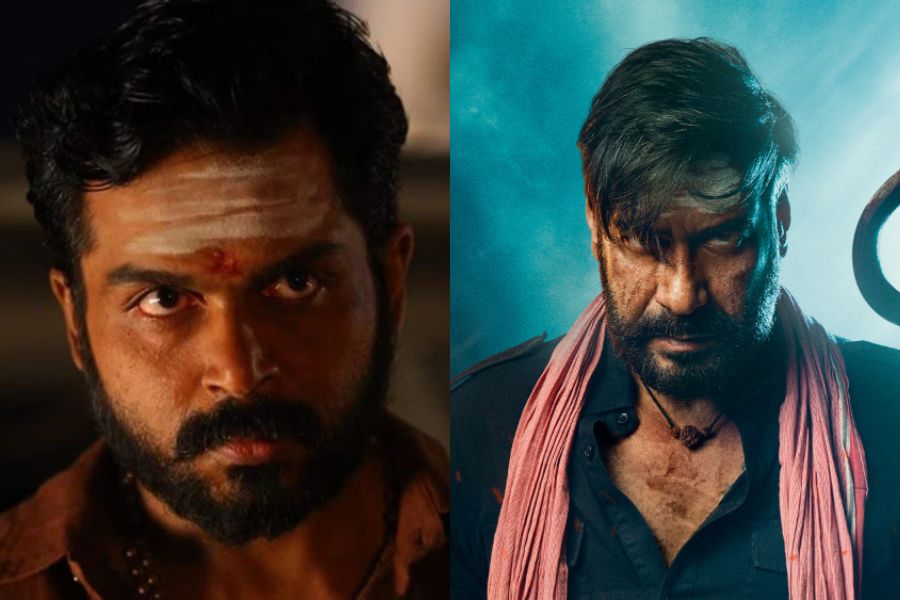
The clash between South Indian originals and their Bollywood remakes has taken a serious legal turn. The producers of Kaithi have moved the Bombay High Court against the makers of Bholaa, alleging violation of copyright and remake rights — a dispute that could have wider implications for how remake deals are handled across the industry.
What started as a successful remake collaboration has now evolved into a full-fledged legal battle involving contracts, unpaid dues, and questions around ownership rights.
From Blockbuster to Courtroom: How It All Began
When Bholaa, starring Ajay Devgn, hit theatres in 2023, it was positioned as the Hindi adaptation of the Tamil hit Kaithi, originally led by Karthi. The film opened strongly at the box office and generated decent buzz, especially around its action-heavy narrative and mass appeal.
But three years later, the focus has shifted away from performance and into legal territory.
The Tamil film’s production house, Dream Warrior Pictures, has now approached the Bombay High Court, claiming that the remake rights tied to Bholaa were violated. According to their plea, they remain the sole owners of Kaithi’s copyright and its remake rights — a claim that sits at the heart of the dispute.
The Agreements That Led to the Dispute
At the center of the controversy lies a series of agreements signed between multiple parties.
As per reports, the process began in February 2020 with an arrangement involving a Reliance Group entity. This was followed by a formal Remake Rights Assignment Agreement in March 2023 between Dream Warrior Pictures and Reliance Entertainment Studios, granting rights for the Hindi remake — which became Bholaa.
However, the situation soon became complicated.
Dream Warrior claims that while the agreement included fixed payments to be made in phases, only the first installment — around ₹1 crore plus GST — was paid. The remaining payments, which were due shortly after the film’s release, were allegedly never cleared.
To add another layer, a second agreement was signed on April 1, 2023, just after Bholaa’s release. This tripartite agreement involved Dream Warrior, Reliance, and Ajay Devgn Ffilms LLP, stating that remake rights would be jointly held while exploitation rights would remain with Reliance.
It’s this overlapping structure of agreements that has now become the core of the legal conflict.
Payment Dispute Turns Into Legal Action
According to Dream Warrior Pictures, repeated reminders were sent throughout 2023 and 2024 requesting pending payments and financial details. However, they claim these communications went unanswered.
Eventually, in October 2024, the production house issued a legal notice demanding approximately ₹4 crore along with interest.
The notice also included a clear warning: failure to pay within 30 days would result in termination of the agreement and reversion of all rights back to Dream Warrior.
By late November 2024, the producers declared that the agreement had been terminated, effectively claiming back all remake and exploitation rights linked to Bholaa.
The Case Expands Beyond One Court
The dispute didn’t stop there.
Dream Warrior also approached the National Company Law Tribunal (NCLT) in Mumbai, seeking insolvency proceedings against Reliance Entertainment over alleged unpaid dues. However, in August 2025, the tribunal dismissed the plea, stating that the matter was essentially a contractual and intellectual property dispute — one that should be resolved in a civil court.
Following that, the producers escalated the issue by filing a commercial intellectual property suit in March 2026 before the Bombay High Court.
Their demand is significant.
They have sought an injunction to stop the distribution, broadcasting, streaming, or monetisation of Bholaa. This includes action against major platforms such as Amazon Prime Video, Zee Cinema, and T-Series.
Jurisdiction Battle Adds Another Twist
Interestingly, one of the first hurdles in the case isn’t about payments — it’s about where the case should even be heard.
The defense has argued that the original agreement clearly states that courts in Chennai have jurisdiction over the matter. According to them, the Bombay High Court cannot be approached based on supplementary agreements.
On the other hand, Dream Warrior maintains that the case has valid grounds to be heard in Mumbai.
After hearing both sides, a single-judge bench led by Justice Sharmila Deshmukh has reserved its order on this jurisdiction issue. The outcome of this decision could determine how the case proceeds further.
The Bigger Picture: Remakes Under Scrutiny
This case goes beyond just Kaithi and Bholaa.
In recent years, Bollywood has increasingly relied on remakes of successful South Indian films. While many of these projects have found commercial success, they have also brought attention to how remake rights are negotiated, executed, and enforced.
Disputes like this highlight the complexities involved — especially when multiple agreements, production houses, and financial structures are in play.
The involvement of OTT platforms also reflects how modern film rights extend far beyond theatrical releases, making such conflicts even more layered.
Where ‘Bholaa’ Stands Today
Despite the legal troubles, Bholaa itself had a fairly solid run when it released.
The film received mixed-to-positive responses from audiences and critics, with performances by Ajay Devgn and Tabu drawing attention. It also featured actors like Deepak Dobriyal in key roles.
However, its future — especially in terms of streaming and monetisation — could now be impacted depending on how the court rules.
A Legal Battle With Industry-Wide Implications
At its core, this dispute is about more than unpaid dues.
It raises questions about ownership, accountability, and how creative rights are protected in an industry that increasingly operates across languages and platforms.
If Dream Warrior’s claims are upheld, it could set a precedent for stricter enforcement of remake agreements. If not, it may reinforce the complexities of multi-party deals in large-scale productions.
For now, all eyes are on the Bombay High Court.
Because what happens next won’t just decide the fate of Bholaa — it could reshape how remake deals are handled in Indian cinema moving forward.