The optics were hard to ignore on Thursday evening in Washington, D.C., as Donald Trump made a high-profile appearance at a private dinner tied to one of the most talked-about media deals right now. Hosted by David Ellison, the gathering wasn’t just another elite networking event — it came at a time when his proposed acquisition of Warner Bros. Discovery is under intense scrutiny. And while the dinner itself was closed-door, everything happening around it made sure it didn’t stay quiet.
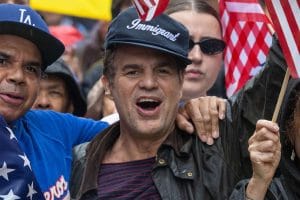
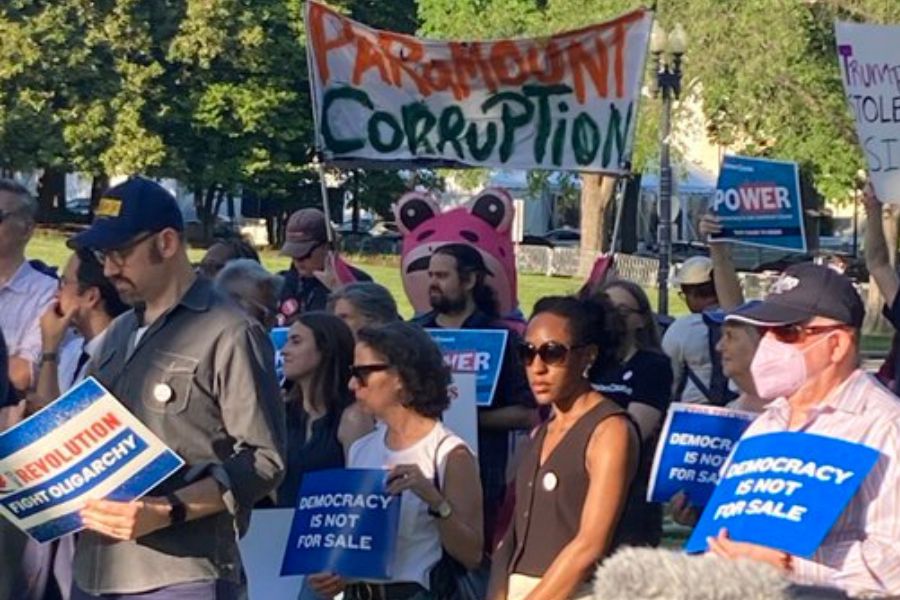
Just across the street on the National Mall, a very different scene was unfolding. Jamie Raskin stood alongside a small but vocal group of protesters, calling out the merger and the dinner itself. He described the event as an “oligarch’s dinner,” suggesting it reflected deeper concerns about political influence and corporate power coming together. The protest wasn’t massive in size, but it carried a sharp message, with signs criticizing media consolidation and warning against what they see as growing control over news narratives.
The criticism didn’t stop there. Norm Eisen took aim at the tone of the event after reading out details from an invitation that had surfaced earlier. The invite described the dinner as a celebration of the First Amendment, honoring both the Trump White House and CBS correspondents. Eisen pushed back strongly on that idea, arguing that the framing felt contradictory, comparing it to celebrating free speech in a way that doesn’t actually protect it. His remarks added another layer to the ongoing debate around the merger.
Meanwhile, inside the venue — the United States Institute of Peace, which has recently been renamed in Trump’s honor — the focus was reportedly more corporate than political. Attendees were expected to come largely from Paramount’s business side rather than its news division, signaling that this was more about deal-making than editorial alignment. Still, the location itself and the timing made it difficult to separate business optics from political symbolism.
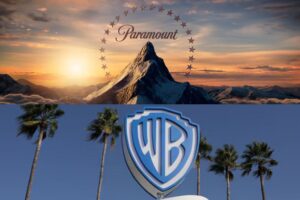
Supporters of the deal, including Ellison, continue to defend the merger as a necessary move in a rapidly changing entertainment landscape. The argument is simple: combining Paramount with Warner Bros. Discovery could create a stronger entity capable of competing with streaming giants like Netflix. In an industry where scale increasingly defines survival, this kind of consolidation is being pitched as strategy, not power play.
But critics aren’t buying that fully. They warn that such a merger could lead to reduced competition, potential layoffs, and a tighter grip over media distribution. The presence of political figures at events tied to the deal only adds fuel to those concerns, making it feel less like a standard corporate acquisition and more like something with broader implications.
Right now, the merger sits in a complicated space — part business move, part political flashpoint. And if Thursday night proved anything, it’s that this deal isn’t just being negotiated in boardrooms anymore. It’s playing out in public, with narratives, protests, and power dynamics all colliding at once.