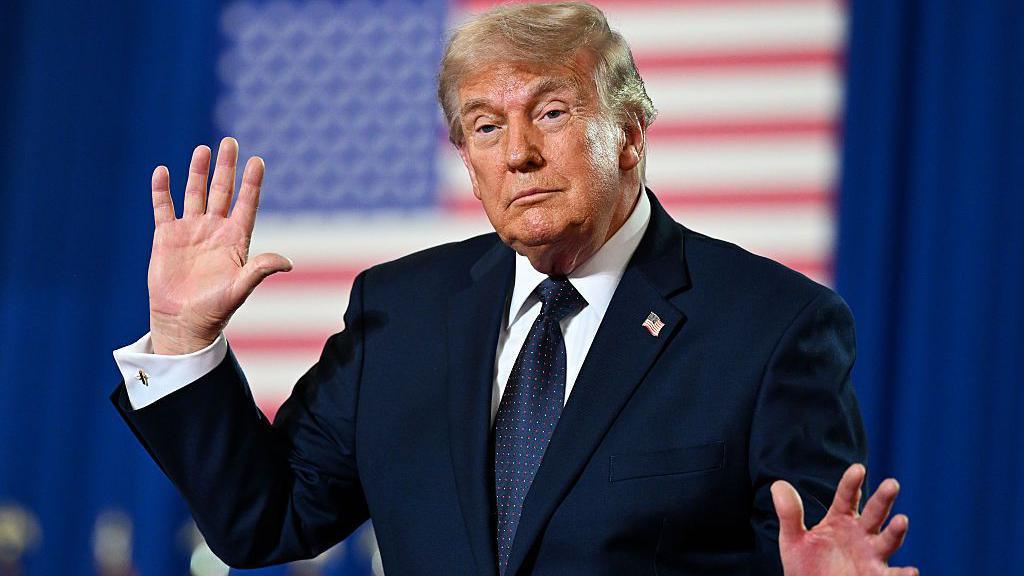
U.S. President Donald Trump has narrowed his legal battle against the BBC, agreeing to dismiss part of his $10 billion defamation lawsuit while continuing to pursue claims against the British public broadcaster itself. The latest court filing removes two BBC commercial entities from the case but leaves the main legal dispute intact ahead of a trial scheduled for next year.
The development marks another chapter in the high-profile lawsuit that stems from a BBC Panorama documentary about the January 6, 2021, Capitol attack. While the broadcaster has acknowledged an editing error and apologised for creating a misleading impression, it continues to reject Trump’s allegations of defamation.
Trump dismisses claims against BBC subsidiaries
According to The Telegraph, Trump has agreed to dismiss his claims against BBC Studios Distribution and BBC Studios Productions, the broadcaster’s commercial and production divisions. Court documents reportedly state that both parties will bear their own legal costs and attorney’s fees following the dismissal.
The filing states, “All claims in this action asserted against the Studios Defendants are hereby dismissed with prejudice, with each party to bear its own costs and attorney’s fees. President Trump shall continue prosecuting his causes of action against defendant British Broadcasting Corporation.”
Although those subsidiaries are no longer part of the litigation, Trump’s lawsuit against the British Broadcasting Corporation itself remains active. The case continues to seek $10 billion in damages, alleging defamation and violations of trade practices.
Lawsuit centres on Panorama documentary
Trump originally filed the lawsuit in a Florida court in December, arguing that a BBC Panorama programme edited footage of his January 6 speech in a way that falsely suggested he directly encouraged violence at the U.S. Capitol.
According to the complaint, the documentary condensed portions of Trump’s remarks to create the impression that he said, “We’re going to walk down to the Capitol… and I’ll be there with you. And we fight. We fight like hell.” Trump argues that the edited version damaged his reputation and formed the basis of his legal action.
The controversy surrounding the documentary also had significant consequences within the broadcaster. The fallout reportedly led to the resignations of BBC Director General Tim Davie and Head of News Deborah Turness. The BBC later apologised for the edit, acknowledging that it created “the mistaken impression” that Trump had made “a direct call for violent action.” However, the broadcaster has consistently maintained that the mistake does not amount to defamation and has rejected Trump’s demand for financial compensation.
U.S. government may join the case
The legal battle could become even more significant following reports that the U.S. government is considering participating in the proceedings. According to the Financial Times, court filings indicate that government lawyers informed the Florida court they are evaluating whether to formally join the case.
The BBC has opposed that possibility, arguing in its own court filing that any government participation would create “a conflict of interest” because Trump is both the plaintiff and the sitting U.S. President.
The broadcaster has also argued that the Panorama documentary was never broadcast or made available within the United States, disputing one of the key allegations contained in Trump’s complaint.
With only part of the lawsuit now dismissed, the central defamation case remains on track. Unless a settlement is reached beforehand, Trump’s lawsuit against the BBC is currently scheduled to go to trial in February 2027, where both sides are expected to continue defending their sharply opposing positions.