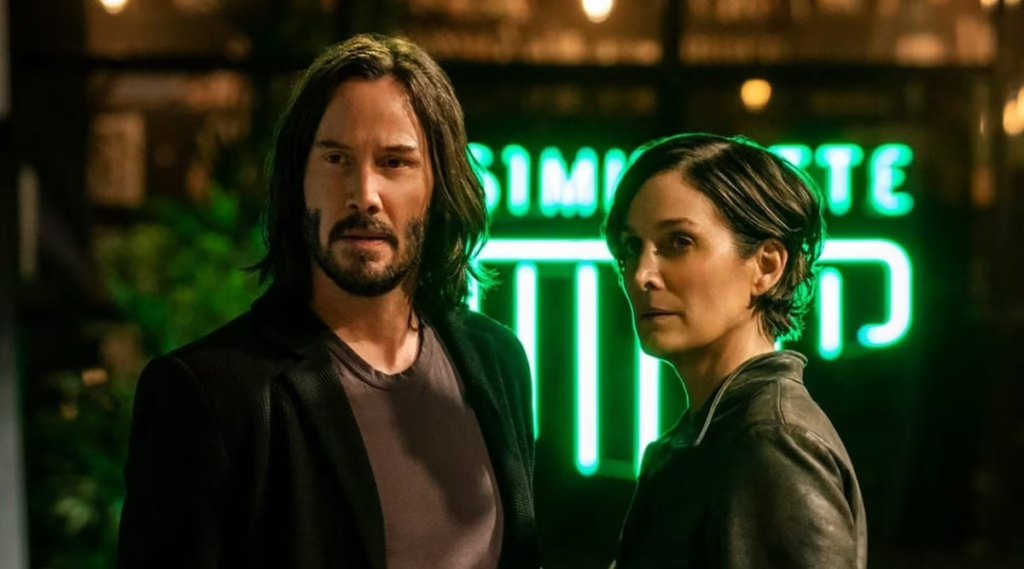
After years of courtroom drama, appeals, bankruptcy filings, and nonstop industry speculation, the long-running legal fight surrounding The Matrix Resurrections has finally reached another major turning point. Warner Bros. and Village Roadshow have now reportedly settled a massive financial dispute connected to the fourth Matrix film, bringing one of Hollywood’s messiest post-pandemic lawsuits closer to its end.
According to multiple industry reports, Village Roadshow has paid around $57 million to Warner Bros Discovery as part of a reworked settlement arrangement tied to the release of The Matrix Resurrections. The dispute originally exploded back in 2022 after Village Roadshow accused Warner Bros of damaging the movie’s financial performance by releasing it simultaneously in theaters and on streaming during the height of the pandemic-era streaming wars.
At the time, Warner Bros was aggressively pushing HBO Max subscriptions under former leadership, and several filmmakers, actors, and production companies publicly criticized the strategy. The company’s controversial “same-day streaming” model became one of the most debated decisions in Hollywood during the Covid period because studios were sacrificing traditional box office revenue in order to strengthen streaming platforms. The Matrix Resurrections ended up becoming one of the highest-profile examples of that chaos.
What makes this settlement especially complicated is that the numbers involved changed dramatically over time. Warner Bros had initially secured a much larger judgment worth roughly $125 million against Village Roadshow during arbitration proceedings. But after appeals and legal restructuring, the financial situation shifted. Reports now say the final $57 million figure was reframed as damages instead of forcing Village Roadshow to maintain ownership obligations tied to the movie itself.
That detail matters because Village Roadshow reportedly no longer holds any ownership stake in The Matrix Resurrections. In simple terms, Warner Bros now fully controls the film outright. Earlier in the legal process, Village Roadshow had been expected to contribute nearly half the movie’s financing costs in exchange for co-ownership rights and future profits. However, appeals court rulings eventually determined the struggling company could not be forced into buying half the film under those terms. The result completely changed the structure of the case.
The legal war became even uglier after Village Roadshow entered Chapter 11 bankruptcy proceedings last year. Once considered one of Hollywood’s biggest co-financing players, the company had backed major franchises and blockbuster titles for decades alongside Warner Bros. But financial instability, changing studio economics, and multiple failed investments reportedly pushed the company into serious trouble over the last few years.
Ironically, the entire conflict started because of a movie that itself became deeply divisive among audiences. Directed by Lana Wachowski, The Matrix Resurrections arrived with enormous expectations but received mixed reviews from critics and fans. While some appreciated its self-aware and emotional approach to revisiting the franchise, many others felt the film lacked the groundbreaking impact of the original trilogy. At the box office, the movie struggled to reach blockbuster numbers, partly because of the simultaneous streaming release and lingering pandemic effects on theaters.
Still, even with the disappointing commercial response, the Matrix franchise itself remains hugely valuable in Hollywood’s eyes. The intellectual property still carries strong recognition globally, and studios continue looking at long-term franchise expansion opportunities whenever possible. That’s one reason the legal battle remained so important behind the scenes — ownership and derivative rights connected to The Matrix universe could mean major future money.
Another interesting twist came when Alcon Media Group reportedly secured derivative rights connected to the Matrix franchise and several other titles acquired from Village Roadshow’s library. Industry insiders believe this could eventually open doors for future spin-offs, expanded projects, or streaming content tied to the franchise under different partnership structures.
At the center of all this is a larger Hollywood story about how drastically the entertainment business changed after the pandemic. The streaming race forced studios into aggressive decisions that many creatives and partners never fully accepted. Warner Bros faced backlash not only from production companies but also from stars, filmmakers, and agents who believed theatrical revenue and backend deals were being sacrificed for subscriber growth.
In many ways, the Matrix Resurrections lawsuit became symbolic of that entire era. What started as a dispute over one movie slowly turned into a broader industry conversation about contracts, streaming rights, studio power, and the future of theatrical releases. Even now, years later, Hollywood is still dealing with the aftershocks of those decisions.
And honestly, there’s something weirdly fitting about all of this happening around The Matrix. A franchise built around control, illusion, corporate systems, and alternate realities somehow ended up trapped inside one of the most confusing and layered studio legal battles in recent memory. Just like Agent Smith joked in the film itself — stories in Hollywood never really end.